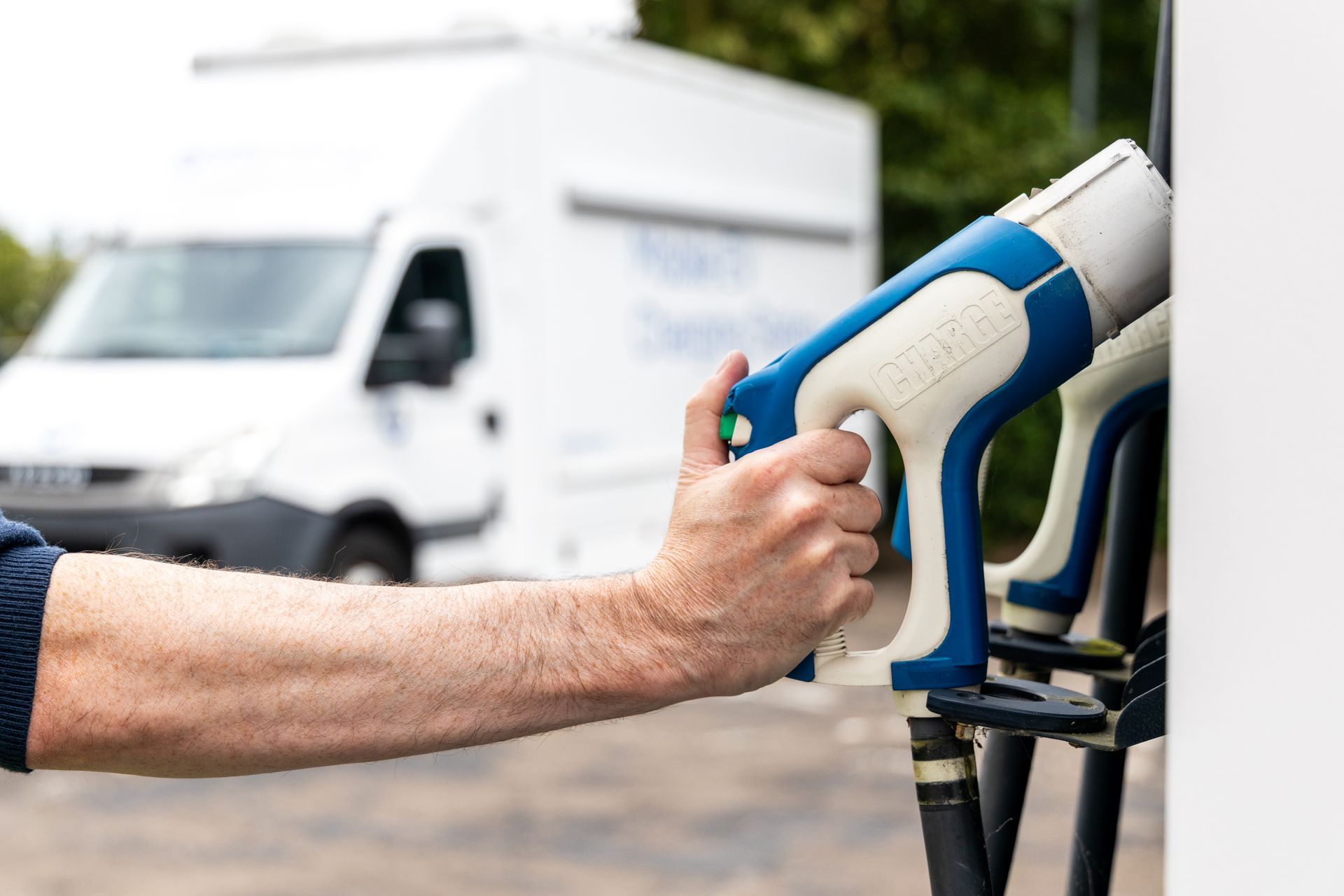


Your Guide to the Electric Car Charging Plug
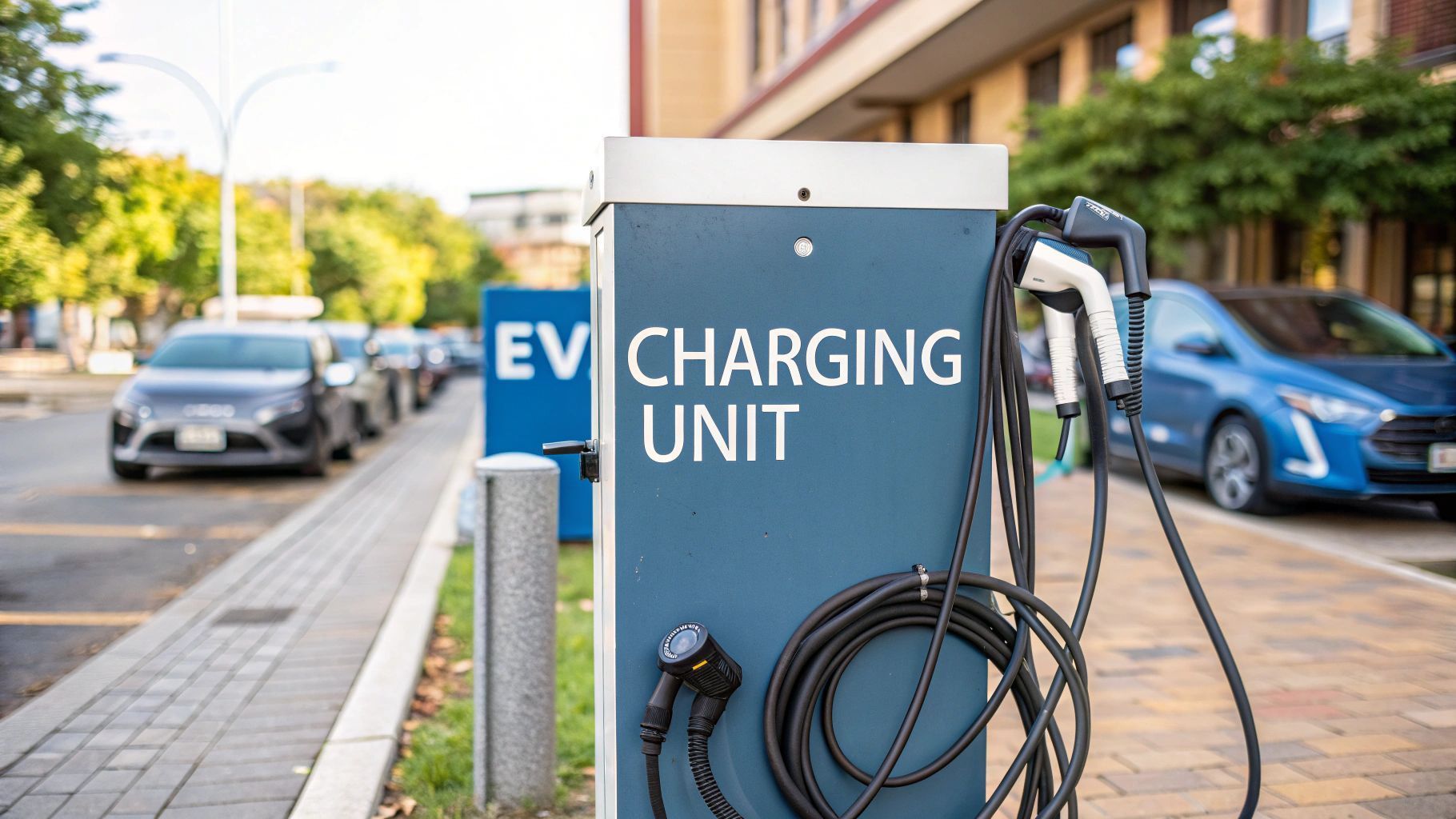
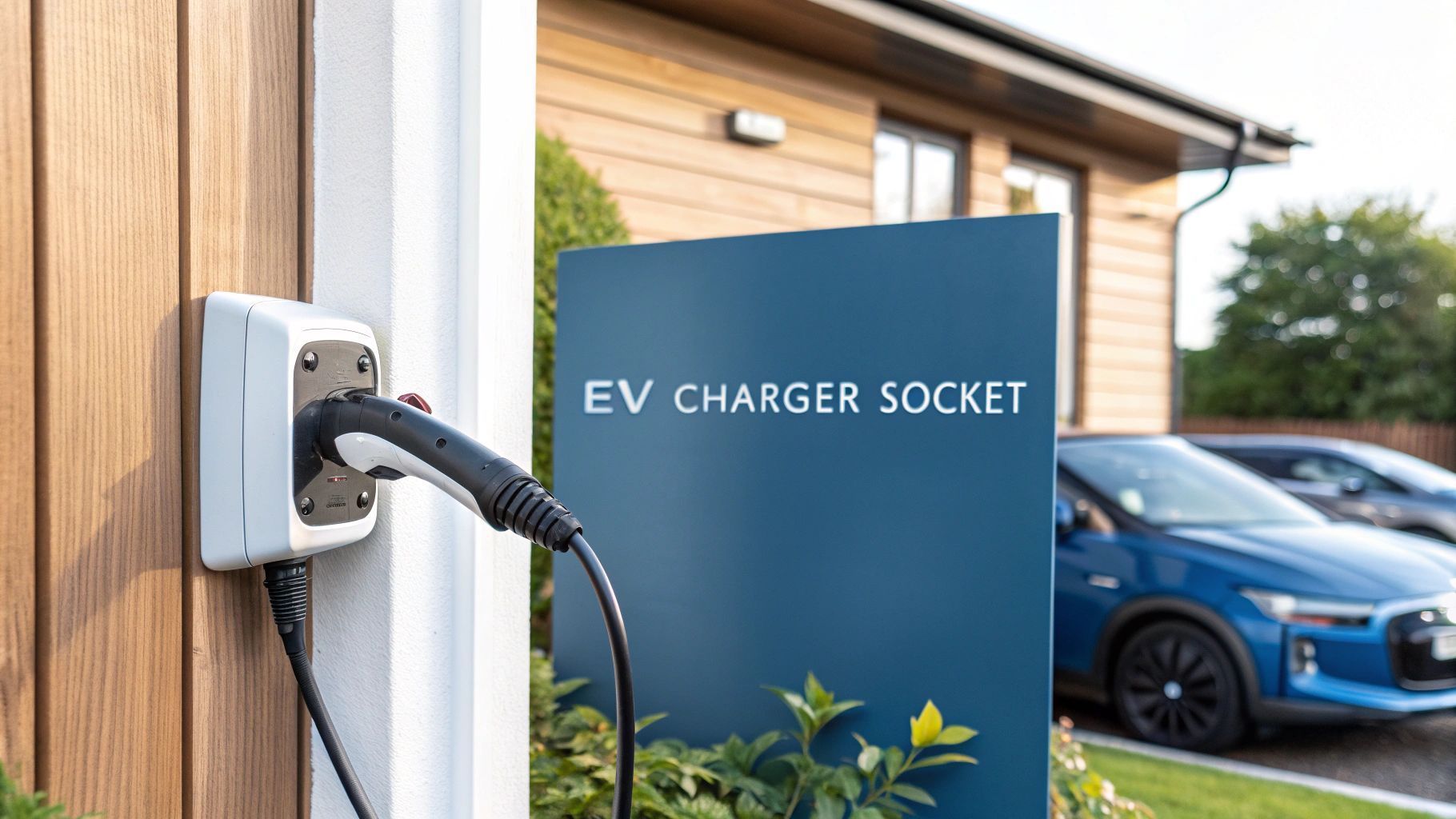
Let's talk about electric car charging plugs. Staring at a wall of different cables and connectors can feel a bit like trying to find the right key for a lock you have never seen before, but honestly, it is simpler than it looks.
Think of each plug as the specific handshake your car needs to start taking on power. This guide will walk you through the different plugs you will come across in the UK, from the one you’ll use at home to the big guns that deliver rapid top-ups on a long motorway journey.
Understanding Your Electric Car Charging Plug
We’ll explore why not all plugs are created equal and how the one you choose directly impacts how quickly you can get back on the road. It’s all about laying a solid foundation before we jump into specific connector types, the crucial difference between AC and DC power and the surprisingly lucrative business of mobile EV charging.
As electric cars become a common sight on British roads, the network supporting them is growing at a serious pace. The UK's charging infrastructure saw a massive 27% expansion year-on-year in the first half of the year alone. Between January and June, an impressive 8,670 new public charge points were installed across the country.
That brought the grand total of public devices to 82,369 , which works out to 110,486 individual connectors spread across 40,479 locations. You can find out more about the expansion of EV charging infrastructure in the UK.
The Rise of Mobile Charging Solutions
While fixed public chargers are popping up everywhere, the real game-changer for convenience and enterprise is mobile charging. Imagine a service that brings the charger directly to your car, completely cutting out the need to hunt for a station and wait in a queue. This is the simple, powerful advantage of mobile charging services like ZAPME , which deliver power on demand.
For EV drivers, especially those without a driveway for home charging, this is a lifesaver, but the bigger story is the business opportunity it opens up for operators. Running a mobile charging service has dramatically lower overheads than installing and maintaining fixed posts, yet it offers a direct and flexible path to profitability.
Monetising On-Demand Power
An operator with a mobile electric car charger can build a healthy income through a few different channels. The most obvious model is charging a premium for the convenience of an on-demand service, either on a per-kWh basis or through a simple call-out fee. This is especially valuable in 'charging deserts'—those areas with plenty of EVs but hardly any public stations.
The flexibility of a mobile unit means an operator can go where the demand is highest—from busy city centres during the workday to residential streets in the evening—maximising vehicle uptime and revenue.
Beyond that, operators can lock in lucrative contracts with commercial fleets. Businesses running electric vans or taxis need their vehicles on the road making money, not sitting idle at a charging station. A mobile service can top up these vehicles during their downtime at depots or on-site, providing a vital service that businesses are more than willing to pay a premium for. This creates a stable, recurring revenue stream, turning a single mobile charging unit into a seriously profitable enterprise.
Decoding UK Charging Connector Types
Stepping into the world of electric car charging can feel a bit like learning a new language, especially when it comes to plugs and connectors, but do not worry, it is far simpler than it looks. In the UK, things have become quite standardised, making it pretty easy for drivers to find the right fit.
Think of the different plugs like the nozzles at a petrol station; your car is built for a specific type and knowing which is which is all you need for hassle-free charging. This is your field guide to the common EV charging plugs you'll find across Britain. We’ll break them down, one by one, so you can confidently plug in whether you’re at home or on the motorway.
The Everyday Hero: Type 2 Connectors
The Type 2 connector is the undisputed champion of home and destination charging in the UK and right across Europe. If the EV world had a universal plug like the USB-C on your phone, this would be it.
Its smart, seven-pin design is versatile enough to handle both single-phase power for your home wallbox and more powerful three-phase connections at public AC points. This means it can deliver charging speeds anywhere from a gentle 3.7kW top-up to a much quicker 22kW . You’ll find Type 2 sockets on nearly all home chargers and public AC posts at supermarkets, car parks and workplaces.
The Rapid Charging Powerhouse: CCS Connectors
Next up is the powerful sibling of the Type 2: the CCS (Combined Charging System) plug. Its design is pure genius. It’s basically a standard Type 2 connector with two extra-large DC pins sitting just below it. These additional pins are the secret to its superpower, unlocking seriously high-speed DC rapid and ultra-rapid charging.
This clever 'combined' design means a car with a CCS port can use both the slower Type 2 AC chargers and the incredibly fast DC chargers without needing a second socket. It is now the go-to standard for new EVs in the UK, handling speeds from 50kW all the way up to a blistering 350kW . You’ll find CCS connectors at most motorway service stations and dedicated charging hubs, perfect for when a quick boost is essential.
The big takeaway here is that the CCS standard lets a single port on your vehicle handle everything. From a slow overnight charge at home to a 20-minute rapid top-up on a long journey, it’s made modern EV driving incredibly convenient.
The relationship between the power source, the charging plug and the vehicle is the foundation of the whole EV ecosystem. This infographic breaks down that simple but crucial hierarchy.
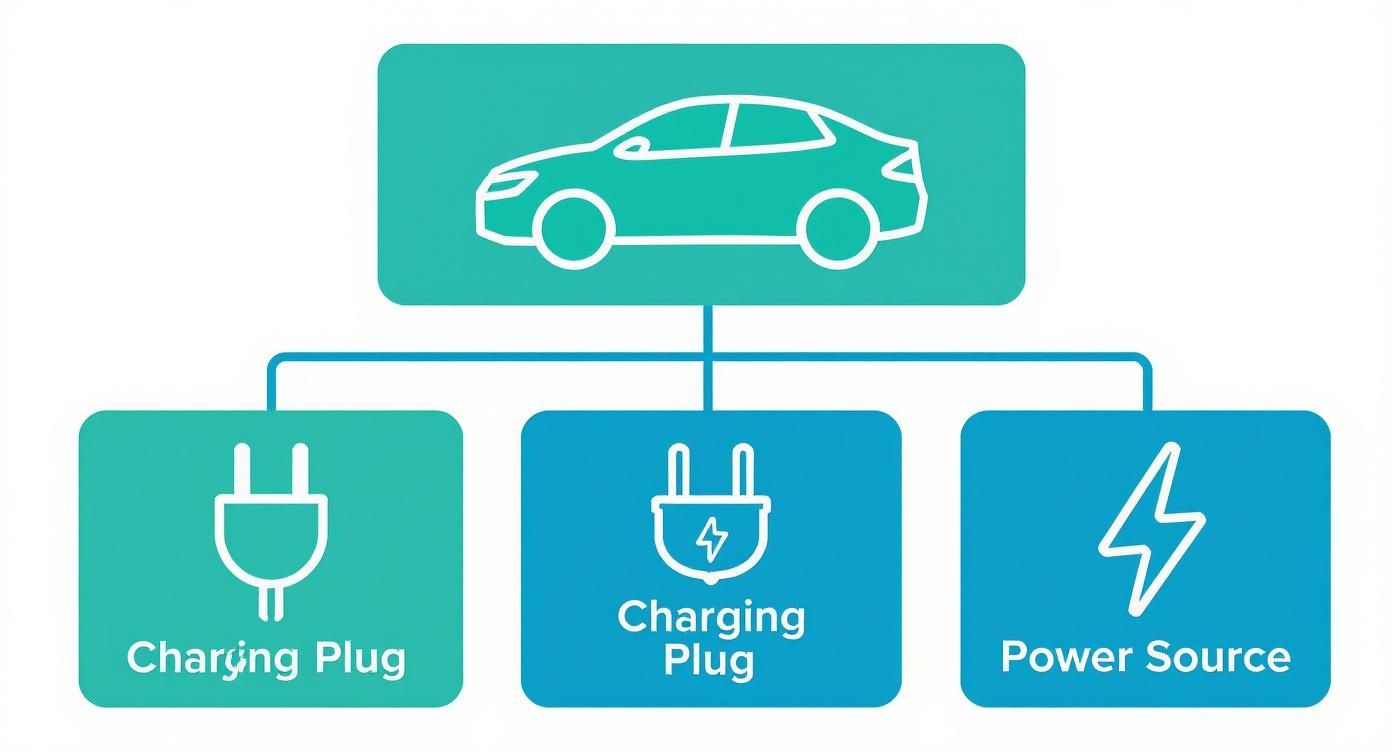
As the diagram shows, the car relies on the right plug to connect to the right power source. It is that straightforward.
The Specialist: CHAdeMO Connectors
Finally, we have the CHAdeMO connector. This standard originated in Japan and is mainly found on vehicles from Asian manufacturers, like the early Nissan LEAFs and the Mitsubishi Outlander PHEV. It’s a dedicated DC rapid charging plug, so you cannot use it for slower AC charging.
While CHAdeMO was an early pioneer in the rapid charging game, it’s becoming less common in new vehicles sold in Europe, as most brands have now shifted to the CCS standard. However, there are still plenty of CHAdeMO-compatible cars on UK roads, so you will find that most rapid charging hubs still provide at least one CHAdeMO connector to serve them. To make sure you find a station with the right plug, you can learn more about EV charging compatibility and use apps to filter by connector type.
UK Electric Car Charging Plug Comparison
To pull it all together, here’s a simple comparison of the main electric car charging plug types you'll encounter in the UK.
| Plug Type | Charging Type | Typical Power Output | Commonly Found On | Primary Use |
|---|---|---|---|---|
| Type 2 | AC | 3.7kW - 22kW | All new EVs | Home, workplace & destination charging |
| CCS | DC | 50kW - 350kW | Most new EVs | Motorway & public rapid charging |
| CHAdeMO | DC | Up to 50kW | Nissan, Mitsubishi | Public rapid charging for specific models |
Getting to know these three main connector types—Type 2 for your daily needs, CCS for high-speed travel and CHAdeMO for specific models—is all it takes. Once you know what your car uses, you will be able to charge confidently wherever your journey takes you.
Understanding AC and DC Charging Speeds
If you’re new to electric vehicles, the difference between AC and DC charging can feel a bit technical at first, but do not worry, the concept is pretty simple once you get the hang of it and it’s the key to understanding why your car charges at different speeds in different places.
Think of it like this: AC charging is your trusty garden hose connected to the kitchen tap. It is steady, reliable and perfect for topping up your car's battery overnight at home. You wake up every morning with a full "tank," ready for the day.
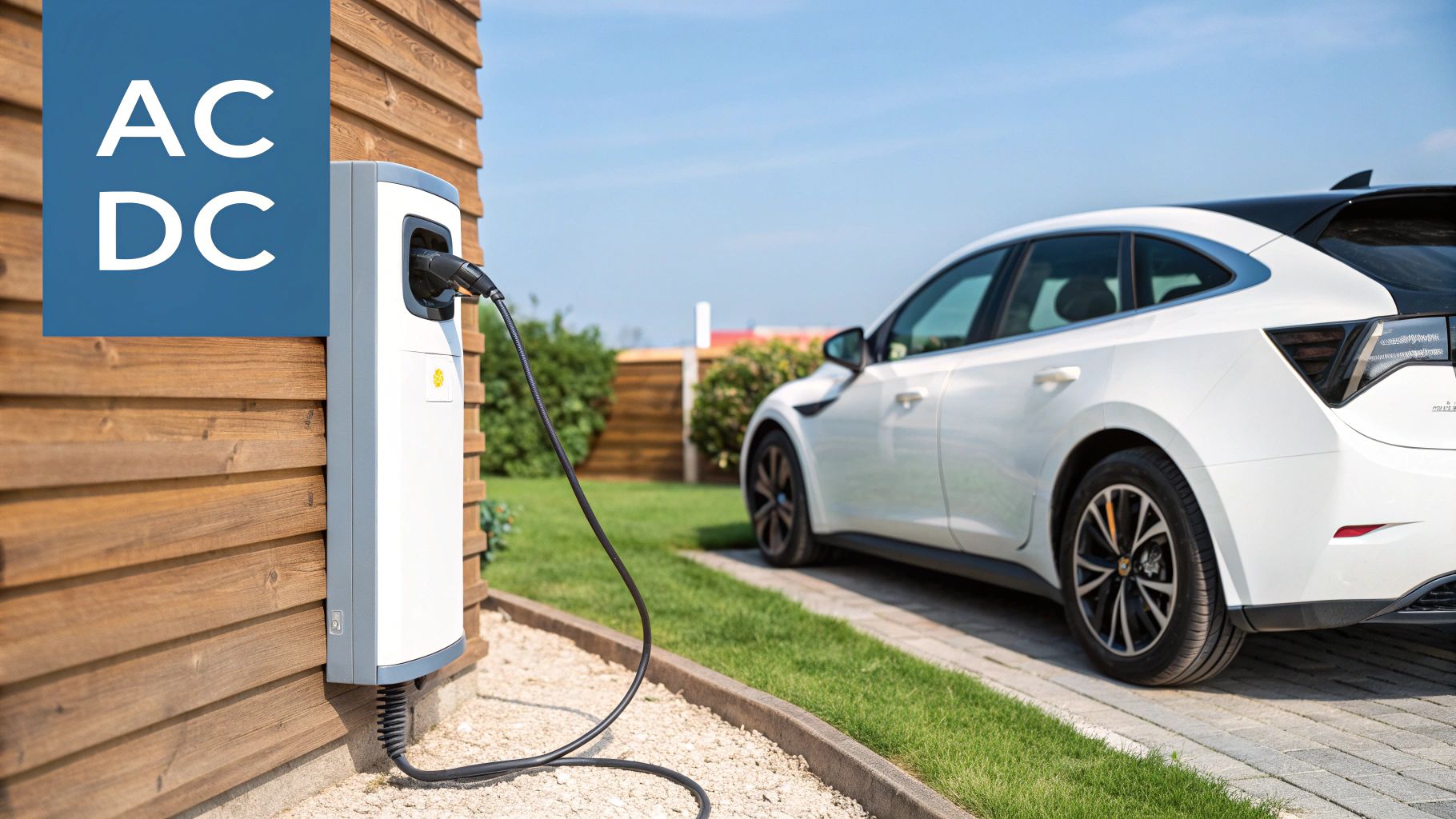
Now, imagine you need to fill a swimming pool in ten minutes. The garden hose will not cut it. You’d need a fire hose. That powerful, high-pressure blast of water is DC charging . It delivers a massive amount of energy in a very short time, making it ideal for those quick top-ups on a long journey.
Why Do We Need Two Different Types?
It all comes down to the electricity itself. Your EV's battery can only store Direct Current (DC) power, but the electricity that flows from the national grid into your home is Alternating Current (AC). This mismatch is where the magic happens.
When you plug in at home using a standard AC charger (like a Type 2), the AC electricity has to be converted into DC power inside your car. Your vehicle has an onboard converter that handles this job. Think of this converter as a funnel—it can only process electricity so fast, typically at speeds between 7kW and 22kW . This internal bottleneck is why AC charging is the slower, steadier option.
DC rapid chargers, the kind you find at motorway services using CCS or CHAdeMO plugs, have a clever workaround. They contain a huge, powerful converter right inside the charging unit itself.
By converting the electricity from AC to DC before it even enters your car, these chargers completely bypass your vehicle's smaller onboard converter. This allows them to pump a powerful stream of DC power straight into the battery at incredible speeds, ranging from 50kW to over 350kW .
That direct delivery system is exactly why you can add hundreds of miles of range in the time it takes to grab a coffee and stretch your legs. If you want to get into the nitty-gritty, we have a full guide explaining how an AC to DC battery charger works.
The Right Tool for the Right Job
Once you understand this difference, planning your charging becomes second nature.
AC charging is the backbone of daily EV life. It is cheaper, gentler on your battery's long-term health and perfectly suited for the hours your car spends parked at home or at the office.
DC charging is your secret weapon for long-distance travel. It makes cross-country trips not just possible, but practical, slashing downtime and getting you back on the road quickly. It’s a vital part of the public infrastructure that makes owning an EV a viable choice for everyone.
The UK's charging network is growing fast to support both needs. By the end of October, the network had reached 86,798 charging points across 44,142 locations. That is a 23% increase in just one year, with over 15,000 new chargers making it easier than ever to find the right plug when you need it. You can read the full statistics on the UK's charging network growth.
Mobile Charging: The Profitable Business Opportunity
So far, we have looked at electric car charging plugs from the driver's seat, but what if you switched sides? Instead of being a consumer of energy, you could become a provider. The rise of mobile EV charging is creating a huge business opportunity, built on a simple idea: bringing the power directly to the car, wherever it’s parked.
This is not just a minor tweak to the existing model; it is a game-changer. It completely sidesteps the usual headaches for drivers—no more hunting for a fixed charging station, no more waiting in a queue and no more hanging around while the car charges. For an entrepreneur, this opens up a flexible, scalable and highly profitable entry point into the booming EV support industry.
The Financial Advantages of Mobile Charging
The most compelling argument for starting a mobile charging business? Dramatically lower overheads. Forget the eye-watering costs of installing fixed charging infrastructure. Setting up a traditional station means big spending on securing land, major groundwork, grid connection fees and the hardware itself.
A mobile charging unit, on the other hand, is a self-contained asset. It neatly bypasses the red tape and massive capital outlay tied to permanent installations. This lean approach means you can get into the market fast and start generating revenue almost immediately. An operator can expect to earn a significant income, with potential profits reaching into the tens of thousands of pounds per year from a single unit, especially when targeting high-demand areas and securing commercial contracts.
Building Diverse Revenue Streams
A mobile charging business isn’t just a one-trick pony. Smart operators can build a profitable enterprise by tapping into several distinct revenue streams, each catering to a different customer need.
The most common models include:
- Per-kWh Pricing: Charging customers for the energy they use, typically with a premium for the convenience of a mobile top-up.
- Call-Out Fees: A standard fee for the service call itself, covering your travel and operational costs before you even plug in.
- Emergency Roadside Assistance: Marketing the service as a rapid-response solution for drivers who’ve run out of charge—a direct answer to range anxiety.
This flexibility lets you tailor your pricing to the situation, whether it’s a pre-booked appointment or an urgent roadside rescue. The combination of service fees and energy charges means an operator can generate substantial revenue from each call-out, contributing to a very healthy annual income.
Targeting High-Value Customers and Locations
Success in this game is all about strategy. A mobile unit gives you the agility to go where the demand is, rather than waiting for customers to find you. One of the most lucrative markets is "charging deserts"—areas packed with EV owners but starved of public charging points.
Think of residential areas full of flats and terraced houses with no off-street parking. For these drivers, home charging simply isn't an option. A mobile service that can top up their vehicle overnight or while they're at work becomes an essential, premium service they are more than willing to pay for.
Beyond that, you can pinpoint commercial hotspots and create efficient routes to serve multiple customers in one trip:
- Business Parks and Office Complexes: Employees get a full battery while they work.
- Shopping Centres and Supermarkets: Shoppers return to a fully charged car.
- Hotels and Tourist Destinations: Offer on-demand EV charging as a premium amenity for guests.
By analysing local demographics and traffic patterns, you can map out routes that maximise your revenue per mile, turning your vehicle into a highly efficient profit-making machine.
The Cornerstone of Profitability: Commercial Fleets
While one-off consumer call-outs provide a steady income, the financial bedrock of a truly successful mobile charging business is securing contracts with commercial fleets. Businesses running electric vans, taxis, or delivery vehicles depend on keeping their vehicles on the road. Every minute a vehicle sits idle at a public charger is a minute it is not earning money.
Mobile charging solves this problem perfectly. An operator can set up a subscription-based contract to charge an entire fleet during its scheduled downtime, like overnight at the depot or during driver breaks. A single fleet contract can generate thousands of pounds in consistent monthly revenue, providing the financial security to grow the business, invest in more units and expand the service area. By offering a bespoke charging solution, you become an indispensable partner for businesses making the switch to electric. You can explore a detailed breakdown of the economics of mobile EV charging to see just how powerful this model can be.
How to Maximise Your Mobile Charging Earnings
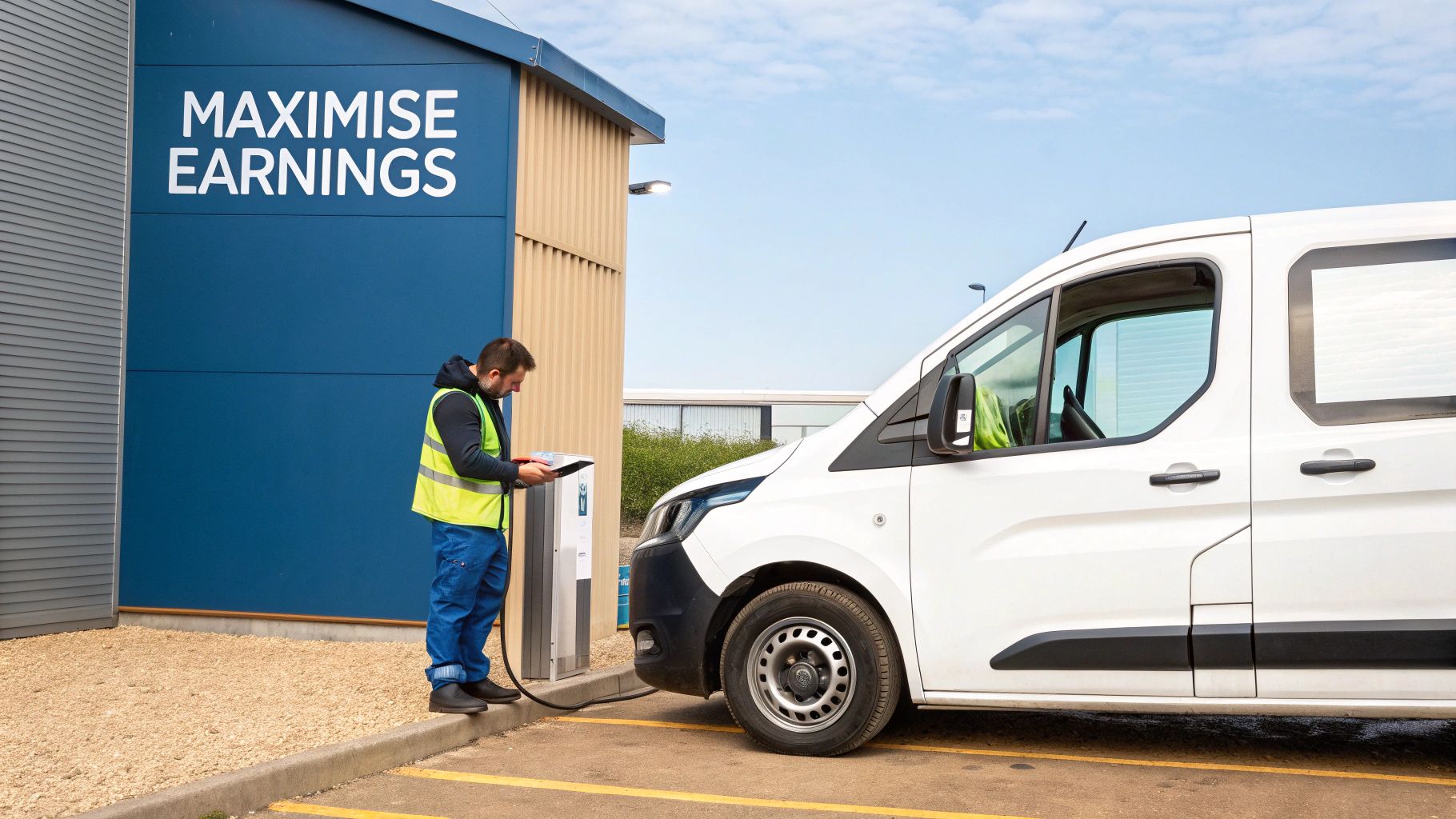
Running a mobile electric vehicle charging business is about more than just having the right electric car charging plug and a power source on wheels. If you want to turn this venture into a seriously profitable enterprise, you need a smart strategy. It all comes down to identifying the most lucrative opportunities, pricing your services intelligently and building relationships that guarantee repeat business.
The real magic of a mobile service is its flexibility. Unlike a fixed charging station, you are not waiting for customers to come to you; you’re going directly to where the demand is. Let's walk through the key tactics for maximising your earnings and establishing a successful mobile charging operation.
Identify and Serve Charging Deserts
Your first move should be to become a local expert on 'charging deserts'. These are areas with a high concentration of electric vehicles but a frustrating lack of public charging infrastructure. Think of dense urban neighbourhoods full of flats or terraced houses where nobody has a driveway or off-street parking.
For people living in these spots, charging at home is a non-starter. They’re completely reliant on a public network that’s often inconvenient or simply does not exist. By positioning your service as the go-to solution for these stranded drivers, you can build an incredibly loyal and grateful customer base. Use local data and EV registration maps to pinpoint these hotspots and focus your marketing efforts right there.
Implement Dynamic Pricing Models
A one-size-fits-all price list will leave money on the table. A dynamic model, on the other hand, lets you adjust your rates based on several factors, which can seriously boost your income. This approach ensures you’re always charging what the service is worth at any given moment.
Consider setting up variable rates based on:
- Time of Day: Charge a premium during peak hours, like early evenings when people get home from work and offer slightly lower rates for off-peak bookings.
- Location: A call-out to a remote charging desert or an affluent area can command a higher price than a job in a place with plenty of other options.
- Demand: During local events, bank holidays or periods of high EV traffic, a surge pricing model can reflect the spike in demand for your services.
This strategy helps you capitalise on high-demand situations while staying competitive during quieter periods.
By treating your mobile charging unit less like a utility and more like a premium, on-demand service, you can justify higher price points. Customers are paying for the ultimate convenience—power delivered directly to their car, on their schedule.
Forge Strategic Partnerships
Proactively building partnerships with local businesses can create stable, recurring revenue streams. Lots of places see on-site EV charging as a valuable perk to attract and keep high-value customers, but they do not have the means to install fixed infrastructure. This is where you come in.
Try approaching businesses like:
- Hotels and Guest Houses: Offer charging as a premium add-on for overnight guests, maybe even integrating your service into their booking system.
- Shopping Centres and Retail Parks: Provide a 'charge while you shop' service, letting customers return to a full battery.
- Corporate Offices and Business Parks: Set up contracts to offer workplace charging for employees—a hugely sought-after perk.
These partnerships do not just provide consistent income; they give you access to a captive audience of EV drivers, which cuts down your customer acquisition costs.
Secure Lucrative Commercial Fleet Contracts
While individual customers provide a steady flow of business, the real financial cornerstone of a mobile charging operation is servicing commercial EV fleets. Companies running electric vans, taxis, or delivery vehicles need maximum uptime. Every minute a vehicle spends at a public charger is a minute it is not out on the road earning money.
Your mobile service is the perfect solution. You can charge their entire fleet during scheduled downtime, like overnight at their depot or during shift changes. This solves a major operational headache for them and provides immense value. Securing just one or two of these long-term contracts can provide a significant, stable income stream, turning your mobile unit from a service vehicle into a highly profitable asset.
Got Questions About EV Charging Plugs?
As we have unpacked the different types of electric car charging plugs and the rise of mobile power, a few common questions tend to pop up. This final section tackles them head-on, giving you clear, straightforward answers to help you navigate the world of EV charging with confidence.
Can I Use Any Public Charger with My Electric Car?
Not always. While the UK and Europe have largely settled on the Type 2 plug for AC and CCS for DC charging, you will still find some older stations or vehicles using a CHAdeMO connector. It is always best to check that the station has the right plug for your car before you set off.
Most new EVs sold in the UK come with CCS compatibility, which is now the go-to standard for new rapid chargers. Using a smartphone app like Zap-Map to filter for chargers that work with your car can save you a whole lot of time and frustration.
Is Running a Mobile EV Charging Business Really Profitable?
Yes, it can be very profitable. The business model works because the start-up costs are much lower than installing fixed chargers, which can involve eye-watering expenses for groundwork and grid connections.
Profit comes from smart pricing, planning efficient routes to keep travel costs down and targeting high-demand customers like commercial fleets or people living in flats without their own charging points. Securing regular contracts creates a reliable revenue stream and success really hinges on offering a dependable, convenient service where it is needed most. An operator can build a substantial income by becoming the go-to solution in these underserved spots.
What's the Main Benefit of Mobile Charging for an EV Owner?
The number one benefit is unmatched convenience . Mobile charging brings the power right to your car, wherever it’s parked. It completely cuts out the hassle of finding a public charger, waiting for it to be free and then waiting again while your car charges. It is a huge time-saver and a game-changer for anyone without access to home charging.
This kind of service effectively kills range anxiety by ensuring a charge is available whether you are at work, at home, or out doing the weekly shop. It turns charging from a chore into something that just happens in the background.
For an EV driver, mobile charging means freedom. It decouples your daily schedule from the availability of a fixed charging post, putting you back in control of your time.
Can I Use an Adapter If a Charger Has the Wrong Plug?
You can find some basic adapters, like one to connect a Type 1 car to a Type 2 cable, but they are not a practical, everyday solution and are often not recommended for high-power charging. More importantly, you absolutely cannot adapt between DC standards like CHAdeMO and CCS .
Relying on adapters is not a solid strategy. There are safety concerns and you will often face big drops in charging speed. The best and safest approach is always to use a charging station equipped with the right native connector for your vehicle.
How Does Charging Affect My EV Battery's Health?
Constantly hitting your battery with high-powered DC rapid chargers can, over a long period, cause it to degrade faster than slower AC charging would. That said, modern EVs have incredibly sophisticated battery management systems designed to protect against this kind of damage.
For day-to-day use, slower AC charging is generally seen as the healthier choice for your battery's long-term life. To get a better handle on how this works, this guide to understanding battery cycle count for EV battery health is a great resource. In short, regular, gentle charging is the key to getting the most out of your battery.
Ready to turn the growing demand for EV charging into your own profitable business? ZAPME offers pioneering mobile EV charging solutions that allow you to deliver power on demand. Find out how you can launch your mobile charging service at https://www.zapme.biz.