

EV Chargers Workplace: A Practical Guide for Your Business
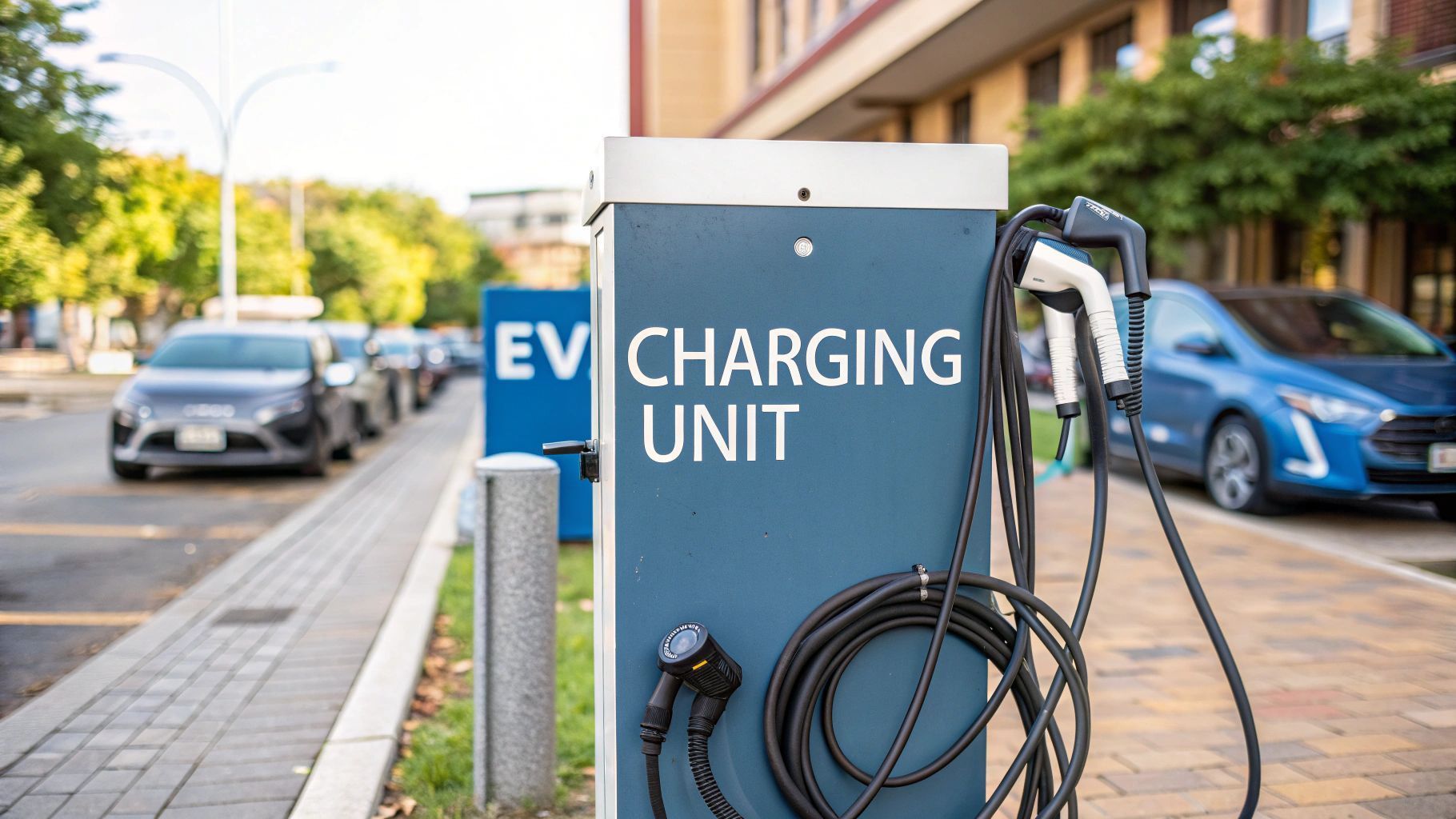
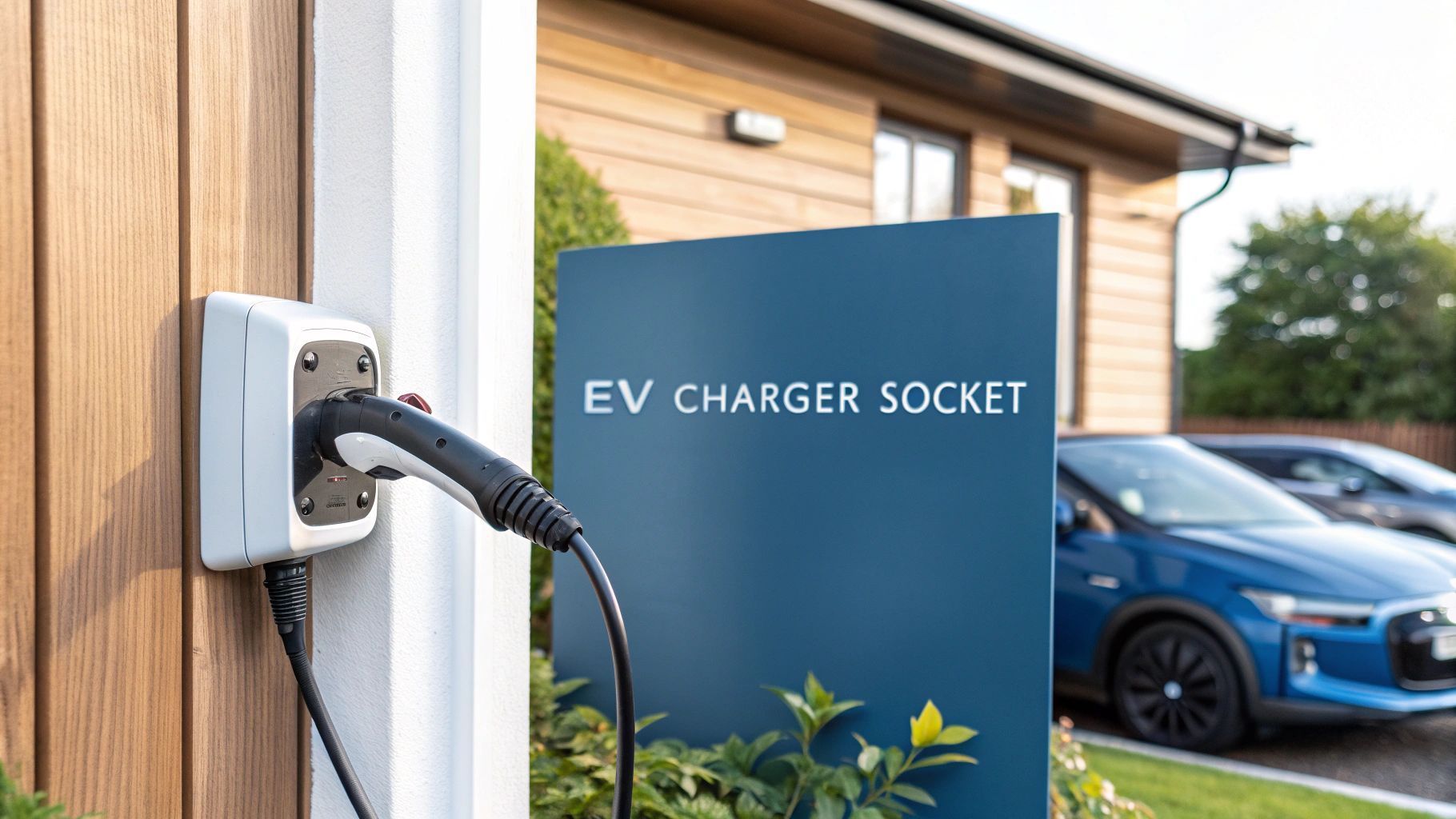
Installing EV chargers at your workplace is not just a nice-to-have perk anymore; it’s a strategic business decision. As the UK continues its rapid shift to electric vehicles, offering on-site charging has become essential for attracting top talent, hitting your sustainability targets, and future-proofing your operations.
Why Your Workplace Needs EV Chargers Now
The whole conversation around EV chargers at work has changed. It has moved beyond a simple employee benefit and is now a core piece of modern business infrastructure. With EV ownership on the rise, your team will start to expect charging facilities.
In fact, a recent survey found that 42% of EV drivers see workplace charging as a key factor in their job satisfaction. If you are not providing it, you could be at a real disadvantage in a competitive hiring market.
Beyond keeping your team happy, installing chargers is a visible and impactful step towards corporate sustainability. It shows you are serious about reducing your company's carbon footprint and makes it easier for your staff to switch to greener transport. Integrating EV charging is a powerful part of developing a robust corporate social responsibility strategy , aligning your operations with bigger environmental goals.
Overcoming Cost and Complexity with Mobile Charging
Let's be honest, many businesses hesitate because they picture high costs and the disruption of digging up the car park for fixed charging points. But there is a smarter way. Flexible and mobile EV charging solutions offer a practical and financially astute alternative.
Mobile chargers completely remove the need for expensive groundwork, complex wiring, or the planning permissions that come with permanent installations.
This flexibility is a game-changer. A single mobile unit can service multiple parking bays, adapting to demand without you having to sink a huge amount of capital upfront. This approach is perfect for businesses in leased properties or for anyone wanting to test the waters before committing to a full-scale fixed infrastructure project.
The real opportunity here is turning this amenity into a revenue stream. With mobile chargers, you can easily set tariffs for employees, visitors, and even the public, creating a new source of income from your car park.
Instead of being a sunk cost, your charging solution becomes a profitable asset. This model completely reframes the proposition, making the decision to install EV chargers not just environmentally responsible but commercially smart. You can learn more about turning this investment into a business advantage in this comprehensive workplace EV charging stations profit guide.
Developing Your Workplace Charging Strategy
Putting together a successful workplace EV charging programme all starts with a solid plan. A bit of forward-thinking here ensures your investment meets today's needs but is also ready for what's coming next, saving you from costly mistakes down the line. It really boils down to understanding your own specific environment and what you need from it.
The first practical step is a proper site survey. This is not just about picking a convenient spot in the car park; it's a deep dive into your existing electrical infrastructure. Before you even think about buying chargers, you need to know your site's maximum capacity, find the best connection points, and get a clear picture of any limitations you might be working with.
This initial review is what will tell you the smartest places to deploy chargers, whether you are going for fixed units or mobile ones. You will want to think about things like visibility, making sure they are accessible for all employees (including those with disabilities), and how close they are to your main power sources to keep installation simple and affordable.
Planning Your Charging Capacity
Once you have a clear picture of what your site can handle, you can get into capacity planning. This is all about calculating the necessary power output ( kW ) and the total energy ( kWh ) you will need to keep your employees and any fleet vehicles topped up and ready to go.
This is not guesswork. You need to base this on real data, such as:
- The number of employees who are already driving EVs.
- How many more you expect to switch over in the near future.
- The average daily commute for your team.
- The specific charging needs of any company fleet vehicles.
Think about it: a business with a sales team that needs its vehicles fully charged and ready to go every single morning has completely different demands than an office where staff just need a quick top-up during the day. Getting these usage patterns right is crucial for designing a system that actually works for everyone.
The visual below shows how these strategic benefits all link together, starting with attracting talent and flowing right through to creating new revenue streams.
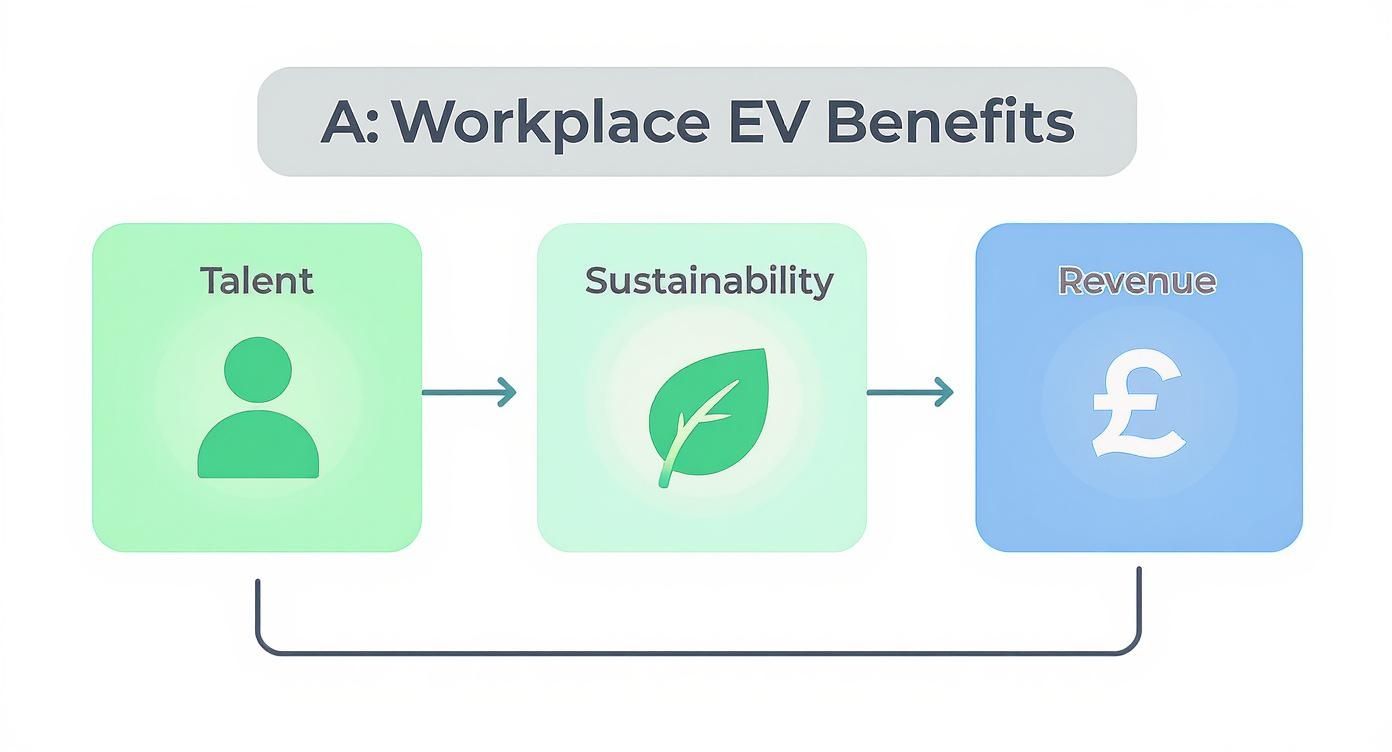
As you can see, investing in EV charging is a holistic business decision. It's something that gives your brand reputation a boost while also improving your bottom line.
Future-Proofing Your Investment
Whatever you do, your strategy has to be scalable. The UK’s workplace EV charging market is growing incredibly fast. There were around 50,640 workplace charging units installed recently and that number is expected to jump to an estimated 169,150 by 2030 . This kind of growth means businesses can start small and expand as demand picks up, making it a smart option for organisations of all sizes. You can learn more by checking out this comprehensive UK workplace electric vehicle charging guide.
Often, a phased approach makes the most sense. You could begin with a few mobile chargers to test the waters and see what the demand is really like, all without a massive upfront investment.
The key takeaway is to build a plan that can evolve. Your initial setup should be a foundation you can easily build upon as more employees make the switch to electric vehicles.
This kind of forward-thinking protects your initial investment and ensures your workplace stays an attractive place for top talent. As EV adoption becomes the norm, your charging infrastructure will be just as essential as your Wi-Fi. Planning for that now is what separates the proactive businesses from those who will inevitably be left playing catch-up. A flexible strategy that embraces scalable solutions, like mobile charging, is the smartest way to get ready for the electric future.
Choosing Your Chargers: Mobile vs Fixed
Once your strategy starts taking shape, you will face a big decision: what kind of chargers will you actually install? This choice defines your entire workplace charging setup and it usually comes down to two paths – traditional fixed units or flexible mobile chargers.
While fixed chargers have been the default for years, taking a closer look reveals that mobile solutions are often a far more practical and financially savvy option for modern businesses.
Fixed wallbox or pedestal chargers come with some serious and often hidden complications. The installation usually involves disruptive and expensive groundwork, like digging trenches for armoured cables and pouring concrete bases. This is not just messy; it often requires planning permissions and can put parts of your car park out of action for ages.
For any business in a leased property, this level of permanent change is frequently a non-starter. Landlords are, quite rightly, hesitant to approve major infrastructure works they will be left with after you're gone. This is where mobile EV chargers really start to make sense for the workplace.
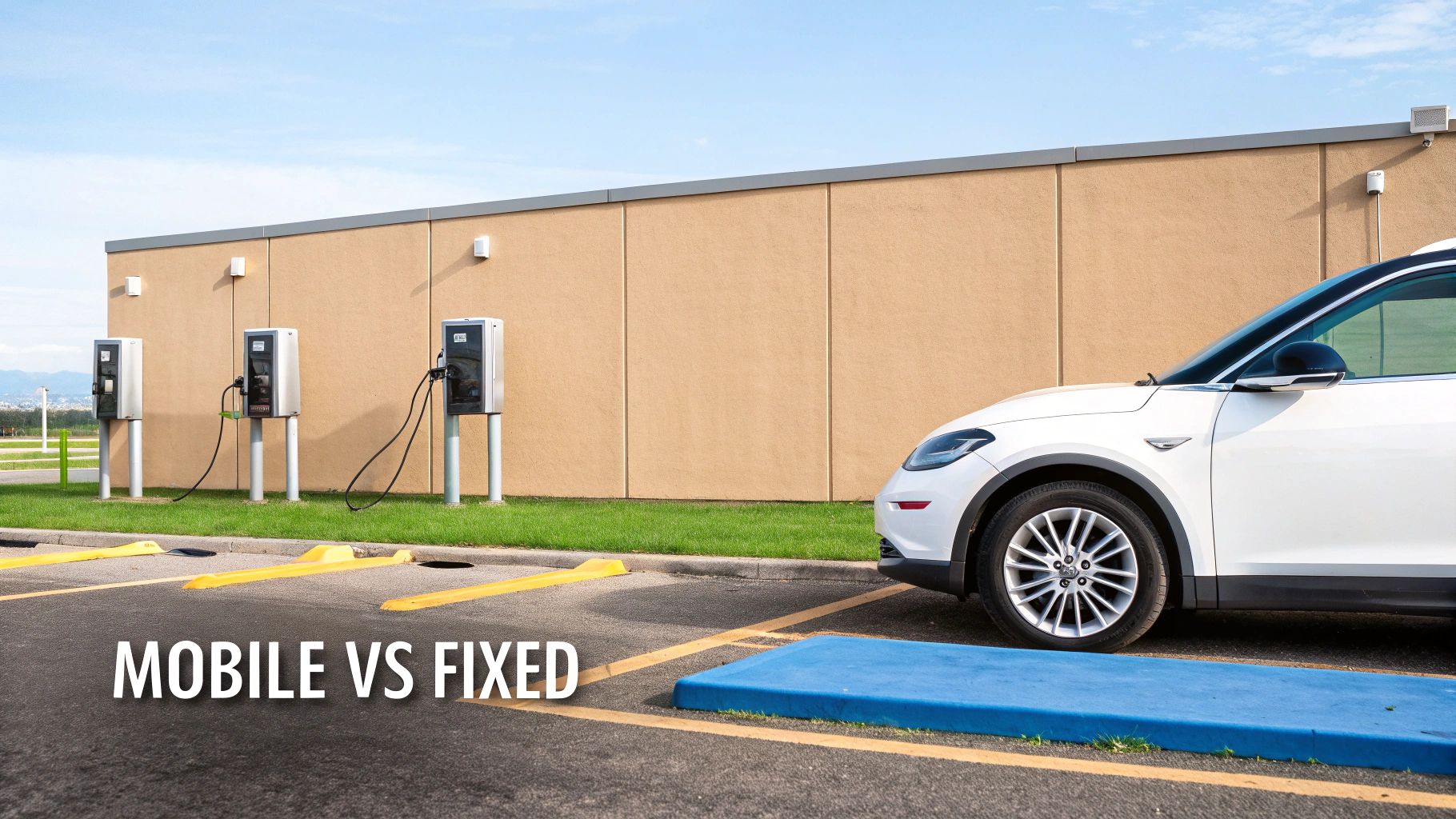
The Flexibility of Mobile Chargers
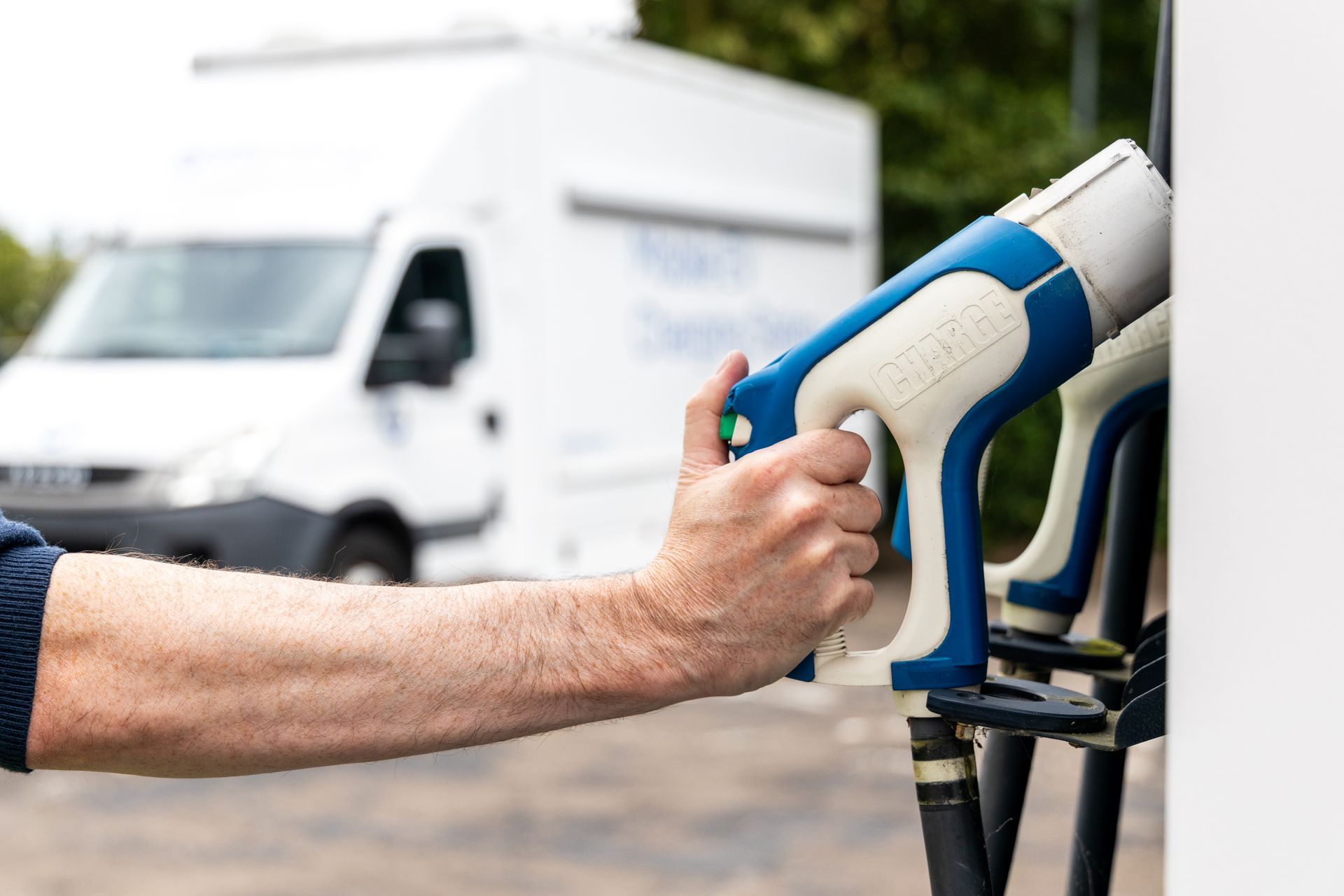
Mobile EV chargers, like the ones we provide at ZAPME, completely bypass the headaches of fixed installations. They are self-contained units that can be deployed anywhere in your car park without needing any permanent groundwork. This gives you incredible flexibility to adapt as your needs change.
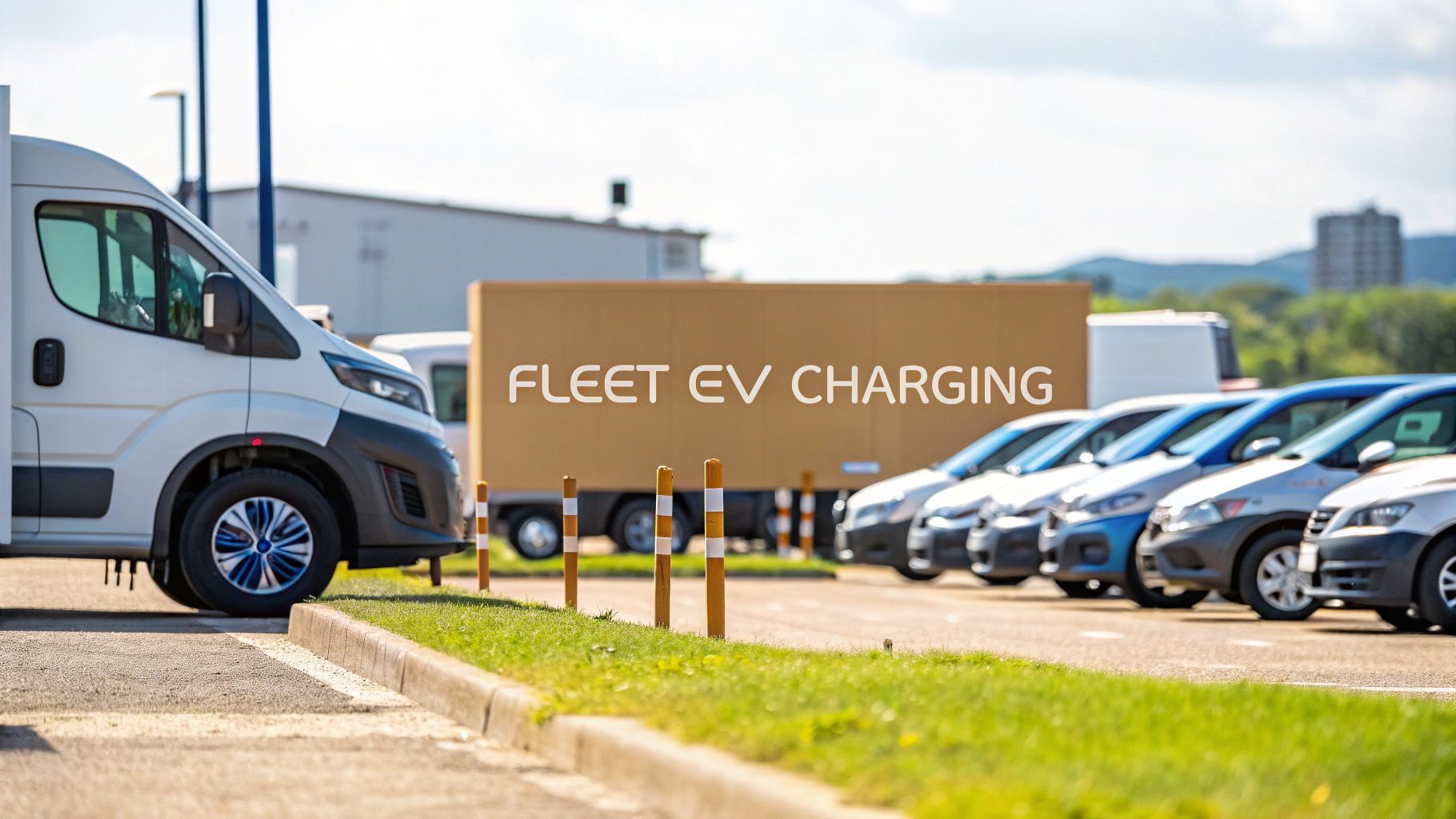
Think about a real-world scenario: a company manages a fleet of delivery vans across three small, leased depots. Installing fixed chargers at each site would be a logistical and financial nightmare, involving separate negotiations with three different landlords.
Instead, by using a fleet of mobile chargers, the company can put them exactly where they are needed on any given day. If one depot gets a sudden rush of vehicles needing a top-up, extra chargers can be moved there instantly. This agility keeps their fleet charged and ready without being tied to a fixed spot on a map.
A single mobile charging unit can service multiple parking bays throughout the day. This dramatically improves the efficiency of your investment as you do not need a dedicated charger for every single EV-driving employee.
This approach also lets you 'test the water'. You can start with just one or two mobile units to gauge real-world demand from your staff. As more employees switch to EVs, you simply add more units to your setup, scaling your provision perfectly in line with demand—all without any more disruptive installation work.
For a deeper dive, you can explore more about the future of stationary vs mobile EV charging solutions in our detailed guide.
Choosing between fixed and mobile chargers comes down to weighing up the long-term benefits of flexibility against the permanence of a traditional installation. Here is a quick comparison to help you decide.
Mobile vs Fixed EV Charger Comparison
| Feature | Mobile EV Chargers (e.g. ZAPME) | Fixed Wallbox/Pedestal Chargers |
|---|---|---|
| Installation | No groundwork needed. Deploy instantly. | Requires trenches, cabling, and concrete bases. |
| Cost | Lower upfront cost, no civil engineering fees. | High initial investment in installation and hardware. |
| Flexibility | Highly flexible; move units to meet demand. | Permanent and immovable. Location cannot be changed. |
| Scalability | Easy to scale; simply add more units as needed. | Difficult and expensive to add more charge points. |
| For Leased Sites | Ideal for rented properties; no landlord issues. | Often prohibited by lease agreements. |
| Revenue Model | Easily turned into a profitable service. | Primarily a cost centre or employee amenity. |
Ultimately, mobile chargers offer a dynamic solution that aligns with the fluid nature of modern business operations, turning a potential logistical headache into a straightforward, profitable asset.
Turning Charging into Profit
Perhaps the most compelling argument for mobile EV charging is the opportunity to turn a workplace amenity into a profitable business venture. Instead of seeing charging as just another cost, you can operate it as a service, creating a new and consistent revenue stream.
The financial model is simple but powerful. As the operator of the mobile charger, you have complete control over the pricing. You can set a specific tariff per kilowatt-hour (kWh) for employees, visitors, or even the general public if your car park is accessible.
This model allows you to do much more than just cover your electricity costs; you can build in a healthy profit margin, turning every charging session into income. The ZAPME platform, for example, gives you all the tools needed to manage users, set tariffs, and process payments seamlessly.
How Much Could You Actually Earn?
Let's break down how much you could realistically make. The key is setting a tariff that is competitive yet profitable.
Imagine your commercial electricity rate is £0.25 per kWh . You decide to set your charging tariff for staff and visitors at £0.45 per kWh . This gives you a clear profit of £0.20 for every single kWh delivered.
Here is how the numbers could stack up for just one mobile charger:
- Average EV Charge: A typical EV might need a 20 kWh top-up during the workday.
- Profit Per Charge: At a margin of £0.20/kWh, that is a £4.00 profit per vehicle.
- Daily Earnings: If your mobile unit services just five cars a day, your daily profit is £20.00 .
- Annual Revenue: Operating 250 workdays a year, that single charger could generate £5,000 in pure profit .
Now, imagine scaling this. With three mobile units, your annual profit could realistically hit £15,000 . This revenue does not just offset the initial cost of the chargers; it actively contributes to your company's bottom line, year after year. The ability to generate this kind of return is a game-changer, making mobile charging a smarter long-term investment for any forward-thinking business.
Navigating Funding and Safety Regulations
So, you have decided on the right chargers for your workplace. What's next? Getting a handle on the finances and making sure everything is safe and compliant are two of the biggest hurdles. Luckily, there is a good amount of support available to make the whole process easier and more affordable, along with clear guidelines to keep your setup secure.
The initial cost of installation is often the main sticking point for businesses. To soften the blow, the UK government created the Workplace Charging Scheme (WCS), a voucher-based system that significantly cuts the cost of getting charge points installed. This grant is designed to help businesses, charities, and public sector organisations make the switch.
First rolled out in 2016, the WCS has been a game-changer for expanding the UK's workplace charging network. It's the most significant grant of its kind and since its launch, it has helped fund the installation of a massive 63,777 charging sockets in workplace car parks.
Getting to Grips with the Workplace Charging Scheme
The WCS grant is pretty generous. It can cover up to 75% of the total cost for both the purchase and installation of EV charge points, with a cap of £350 per socket . What's more, a single business can claim for up to 40 sockets across all its sites, making it a powerful incentive for companies of all sizes.
To qualify for the scheme, your organisation needs to tick a few boxes:
- Be a registered business, charity, or public sector organisation.
- Be based in England, Wales, Scotland, or Northern Ireland.
- Have dedicated off-street parking for your staff or fleet.
- Either own the property or have the landlord's permission to install the chargers.
The application process itself is surprisingly straightforward. You start by filling out an online form with the Driver and Vehicle Licensing Agency (DVLA). Once you get the green light, they will send you a unique voucher code. You just pass this code on to your OZEV-approved installer and they will take care of the rest, applying the discount directly to your final bill. It is a simple way to make your EV project much more achievable.
For those looking beyond grants, it's also worth exploring the different finance options for EV chargers available to spread the cost.
Putting Health and Safety First
While funding is important, the safety of your people and your property has to be the top priority. Bringing new electrical equipment into the workplace is not something to take lightly. A professional risk assessment is not just a good idea—it’s an absolute must.
This assessment should be carried out by a qualified electrician or a dedicated safety professional. They will pinpoint any potential hazards, from the risk of overloading your electrical system to simple trip hazards from trailing cables. If you are using flexible mobile chargers, the focus will be on safe deployment and smart cable management to keep walkways clear and safe.
A safe charging environment is not a one-and-done job. It's about ongoing diligence, clear instructions for users, and regular equipment checks to keep everyone protected.
Putting simple, effective safety measures in place for daily use is crucial. You will want to establish clear protocols for your team, covering things like how to safely connect and disconnect vehicles, what to do if a fault occurs, and who to call for help. Regular maintenance is just as vital. Setting up a schedule to inspect chargers and cables for any signs of wear and tear will help you catch problems before they become accidents.
Finally, do not forget fire safety. With any high-power electrical installation, you need to be prepared. Understanding the correct procedures for your workplace is critical and that includes knowing about the right fire extinguishers for electrical equipment. By combining financial incentives with a solid safety plan, you can roll out a workplace charging solution that is both cost-effective and completely secure.
Managing Your Workplace Charging Network
Once your EV chargers are installed, the focus naturally shifts to day-to-day operations. This is where you transform the hardware into a smoothly run service that benefits everyone, from your fleet drivers to visiting clients. Good management means getting the billing right, setting smart tariffs, and using software to keep everything running efficiently.
The good news is that modern systems make this surprisingly straightforward. You are not just providing a plug; you are managing a small network. This involves setting up payment models that suit your needs, whether it's a simple pay-as-you-go system for staff or a fully integrated solution for your company fleet.
Establishing Your Billing and Tariff Strategy
Setting the right price is the key to making your charging network sustainable. Your tariff needs to be competitive enough to encourage use but also structured to cover your costs and, ideally, turn a profit. It's not just about the electricity bill—you also need to factor in maintenance, software subscriptions, and any admin time.
A profitable model might look something like this:
- Work out your base cost: Pinpoint your commercial electricity rate per kWh.
- Add your margin: Include a markup to cover ongoing operational expenses and generate revenue.
- Set the public price: This is the final price per kWh that users will pay.
- Keep an eye on the market: Regularly check local public charging rates to make sure your pricing stays attractive.
For example, if your electricity costs you £0.25 per kWh, you could set a user tariff of £0.45 per kWh. That £0.20 margin might seem small but it adds up quickly, turning a potential business expense into a reliable new revenue stream. Mobile chargers, in particular, make this kind of model incredibly easy to roll out.
Leveraging Smart Charging Software
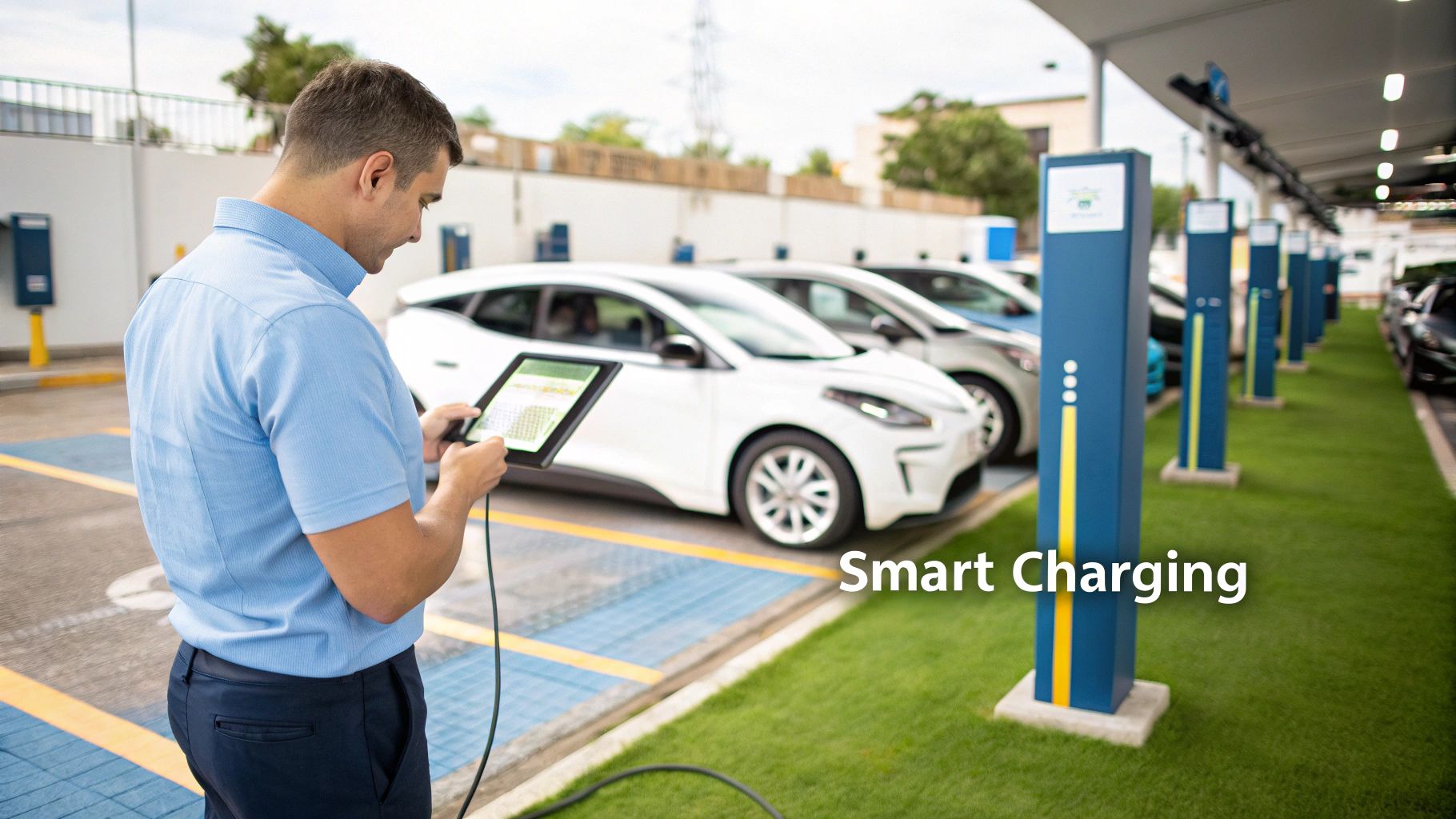
Intelligent software is the brain behind a successful charging network. It automates most of the heavy lifting, allowing you to manage the entire system with minimal effort. This technology is what makes EV chargers in the workplace a genuinely manageable asset rather than a logistical headache.
Smart charging platforms bring several game-changing benefits:
- Load Balancing: This feature is a must-have. It automatically distributes the available power across all active chargers, preventing your site’s electrical supply from getting overloaded. It guarantees a stable and safe experience for everyone, even when the car park is full.
- Scheduled Charging: You can programme chargers to run during off-peak hours when electricity is cheapest. This simple tweak can dramatically slash your energy costs without anyone noticing a difference.
- Usage Analytics: Good software provides detailed data on charging patterns, peak usage times, and energy consumption. This insight is gold when you are making decisions about future expansion or adjusting tariffs.
By using smart management tools, you shift from reactively fixing problems to proactively optimising your network for cost-efficiency and user satisfaction.
This level of control ensures your chargers run seamlessly. The data you collect not only helps manage current demand but also gives you a clear roadmap for scaling up as more of your team makes the switch to electric. Workplace charging has become a vital piece of the national infrastructure, with an estimated 33,000 sockets now installed across the UK—a figure that rivals the number of public charge points. To understand its growing importance, you can read more about the UK's workplace charging network. A well-managed network ensures you are playing an effective part in this national effort.
Workplace EV Charging Questions Answered
When you start thinking about bringing EV charging to your workplace, a lot of questions come up. It's only natural. Making a smart investment means getting clear, straightforward answers. Here, we will tackle some of the most common queries we hear from businesses, focusing on the practical side of things like revenue, daily management, and the big advantages of flexible mobile charging.
How Much Money Can We Actually Make from Mobile Chargers?
This is usually the first question on everyone's mind and the answer is better than you might think. Operating mobile EV chargers is not just about offering a perk; it's a real chance to open up a new revenue stream for your business. The secret is setting a smart tariff.
Your profit is simply the margin between what you pay for electricity and the rate you charge drivers.
Let's walk through a realistic example:
- Your Electricity Cost: Say your commercial rate is £0.25 per kilowatt-hour (kWh) .
- Your Charging Tariff: You set a competitive rate of £0.45 per kWh for staff and visitors.
- Your Profit Margin: That leaves you with a £0.20 profit on every kWh you sell.
So, how does that stack up in the real world with just one mobile charger? A typical driver might only need a 20 kWh top-up to get them through the day. At a £0.20/kWh profit, that single session earns you £4.00 in pure profit .
If that one unit serves just five cars a day, you are suddenly looking at £20.00 in daily profit .
Over a standard 250-day working year, a single mobile charger could generate £5,000 in annual profit . With a small fleet of three units, that could easily climb to £15,000 .
This is not just about covering your costs. This is about turning your car park into an asset that actively contributes to your bottom line.
How Do We Stop Staff from Hogging the Chargers All Day?
This is a very common worry but it is one that is easily solved with the right setup. The goal is fair access for everyone, not letting a few early birds monopolise the chargers until home time. Thankfully, modern charging systems—especially those paired with mobile units—come with software that lets you set clear, automated rules.
One of the most effective tools is idle fees . It's a simple concept: once a car is fully charged, a per-minute fee kicks in if it stays plugged in and blocks the bay. It is a powerful nudge to get drivers to move their vehicles once their session is done.
Another great option is setting time limits. For a standard charger, a two-to-four-hour session is often plenty for the average commute. You can enforce these limits right from your management software, which can even send automated reminders to users when their time is almost up.
Are Mobile Chargers Powerful Enough for Our Needs?
Absolutely. There is a persistent myth that 'mobile' automatically means 'slow' but that could not be further from the truth. Today's mobile EV chargers are engineered to be seriously powerful and efficient, with a whole range of charging speeds to match what different workplaces need.
You can find mobile solutions offering everything from standard Level 2 charging (perfect for employees topping up during the day) to powerful DC fast charging for fleet vehicles that need to get back on the road in a hurry.
It is all about choosing the units that fit your operation. You can mix and match, providing a convenient trickle charge for most staff while having a rapid charger on hand for your sales team's vehicles. The flexibility is the whole point.
What if We Lease Our Business Premises?
This is exactly where mobile EV chargers for the workplace shine. If you are in a leased property, you already know how difficult it can be to get a landlord's approval for major groundwork. Digging up the car park for trenches and concrete foundations is a permanent change and it is a non-starter for many property owners.
Mobile chargers completely bypass this headache.
Because they require zero permanent installation , you can roll them out without making any lasting changes to the property. That means no painful negotiations with landlords and no need for planning permission.
And when your lease is up? You just pack them up and take them with you to your new location. This freedom makes them the ideal solution for any business that does not own the ground it stands on.
Ready to turn your workplace car park into a profitable, future-proofed asset? At ZAPME , we provide flexible, powerful mobile EV charging solutions that require no installation and generate revenue from day one. Discover how our chargers can work for your business by visiting us at https://www.zapme.biz.