

AC and DC Chargers Explained for UK EV Drivers
The big difference between AC and DC chargers boils down to one simple thing: where the power conversion happens. AC chargers send Alternating Current to your car, leaving the vehicle's own internal converter to change it into Direct Current for the battery. In contrast, DC chargers do this conversion work themselves, feeding Direct Current straight into the battery for much, much faster charging.
The Core Difference: AC vs DC Charging
To really get your head around this, think of your electric vehicle's battery like a bucket that can only be filled with one type of liquid: Direct Current (DC) power. It is the only form of energy your EV battery can actually store. The problem is, the electricity supplied from the UK's National Grid to our homes and businesses is a completely different type: Alternating Current (AC).
This mismatch means a conversion has to happen somewhere. Every EV comes with a built-in piece of kit called an on-board converter . Its one and only job is to take the AC power from the wall and transform it into the DC power the battery needs. The size and capability of this on-board converter are what ultimately limit how fast your car can charge from an AC source.
How Each Charger Type Works
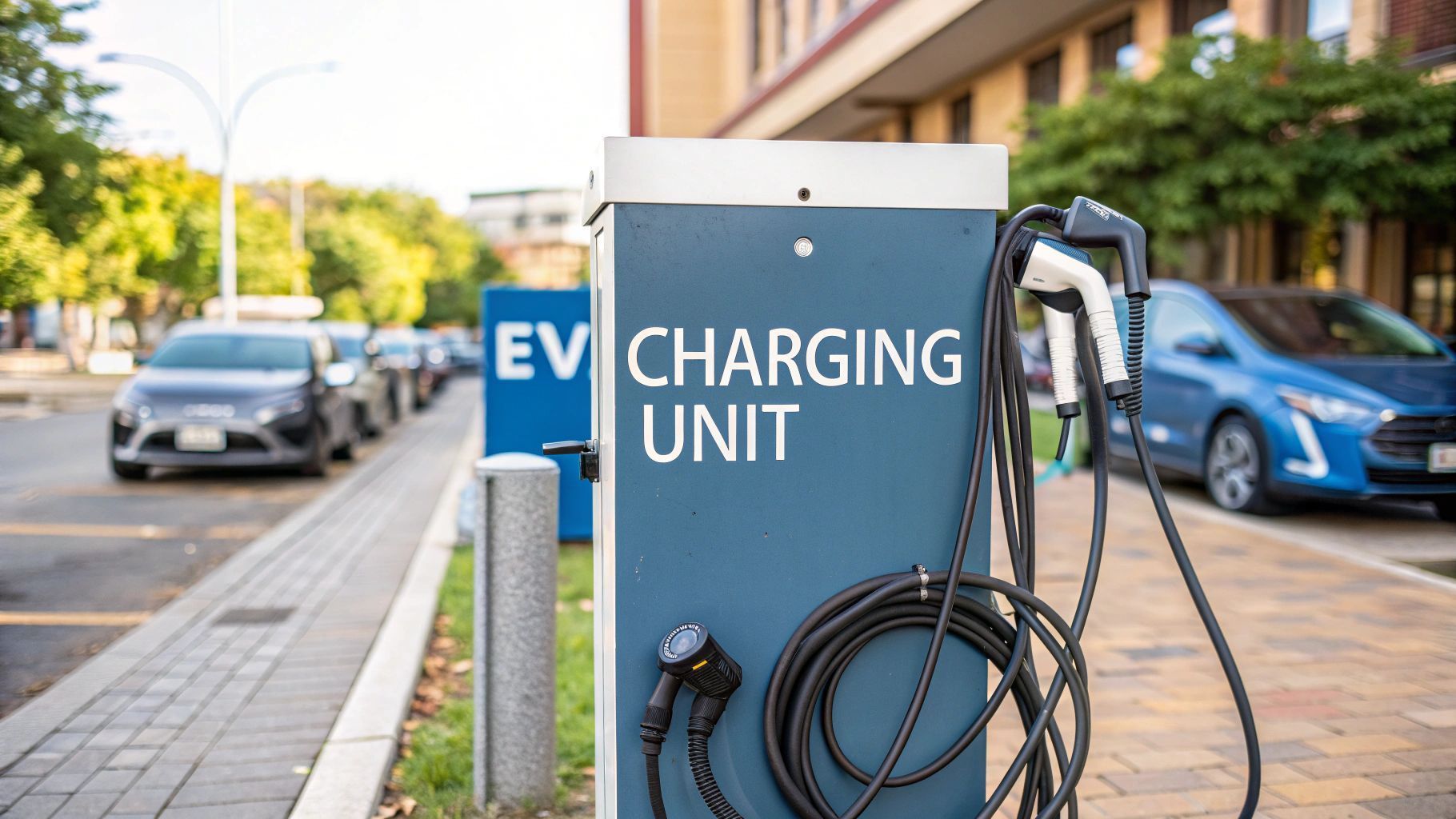
An AC charger works a bit like a standard garden tap. It simply lets the AC electricity flow from the grid, through the cable and into your car. From there, your vehicle’s on-board converter does all the heavy lifting, slowly changing the power from AC to DC before it gets to the battery. Because these on-board converters are kept relatively small to save space and weight, their power is limited, usually somewhere between 7kW and 22kW .
A DC charger on the other hand is more like a high-pressure fire hose. The large, powerful converter is not in your car—it is located inside the charging unit itself. This massive external unit converts the grid's AC power to DC before it even enters your vehicle.
This approach allows the charger to completely bypass your car’s smaller on-board converter and blast a powerful stream of DC electricity directly into the battery. It is precisely why DC chargers can offer 'rapid' or 'ultra-rapid' speeds of 50kW , 150kW or even more, slashing charging times from hours to minutes. For a more detailed breakdown, you can learn more about how an AC to DC battery charger operates in our comprehensive guide.
This simple diagram shows you exactly how the power flows from the grid to the battery in both scenarios.
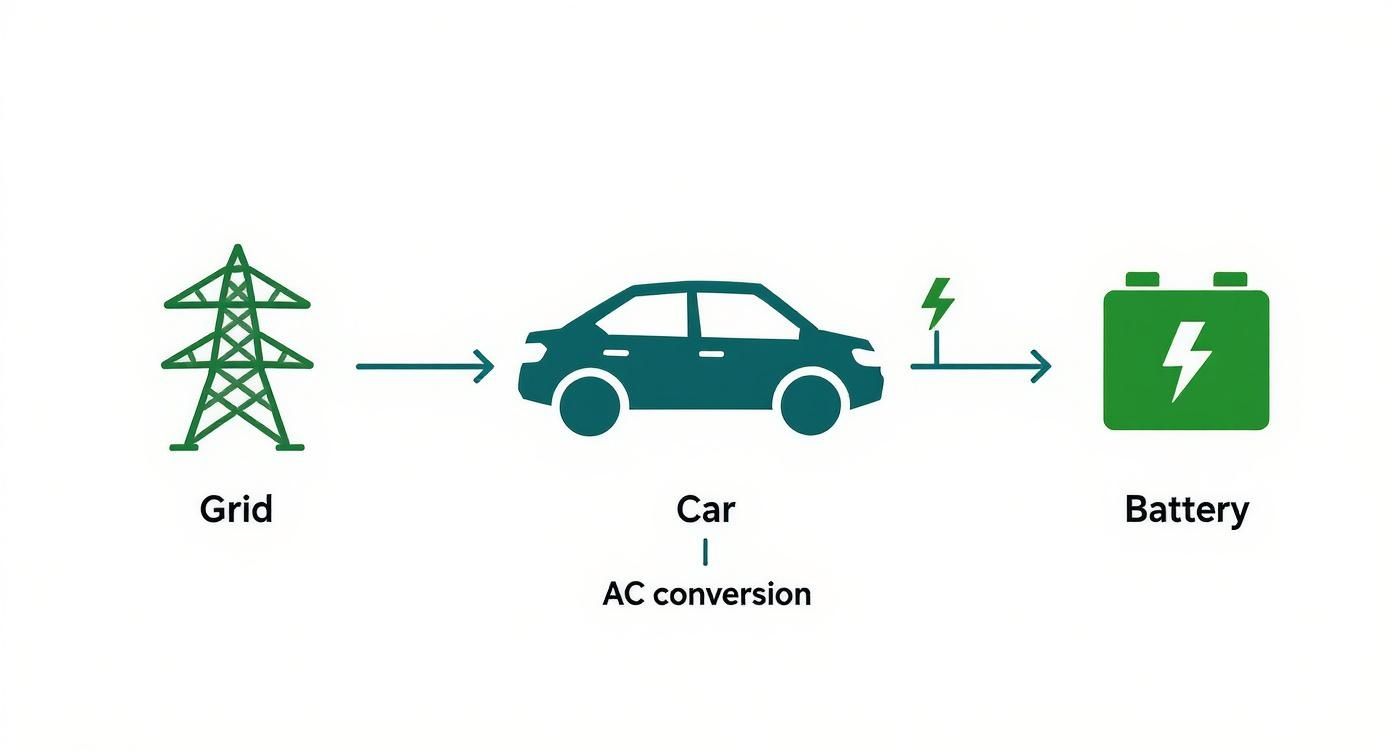
As you can see, the key takeaway is that the location of the power conversion is what separates the two. Once you grasp this fundamental principle, you’re on your way to building an effective EV charging strategy for any situation.
To make things even clearer, here’s a quick side-by-side comparison.
AC vs DC Charging at a Glance
This table gives you a quick summary, comparing the essential characteristics of AC and DC electric vehicle chargers.
| Feature | AC Charger | DC Charger |
|---|---|---|
| Power Conversion | Inside the vehicle (on-board converter) | Inside the charging unit (external converter) |
| Charging Speed | Slower ( 3kW - 22kW ) | Much faster ( 50kW - 350kW+ ) |
| Best For | Overnight home/workplace charging, top-ups | Motorway services, rapid top-ups, fleet operations |
| Cost & Complexity | Lower cost, simpler installation | Higher cost, complex installation, grid connection |
| Typical Connector | Type 2 | CCS (Combined Charging System), CHAdeMO |
| Size | Compact, wall-mounted or small posts | Large, freestanding units |
Essentially, the choice between AC and DC is not about which one is "better" overall but which one is right for the job. For daily, long-dwell charging, AC is perfect. For getting back on the road quickly during a long journey, DC is the only way to go.
How AC Chargers Power Your Daily Journeys
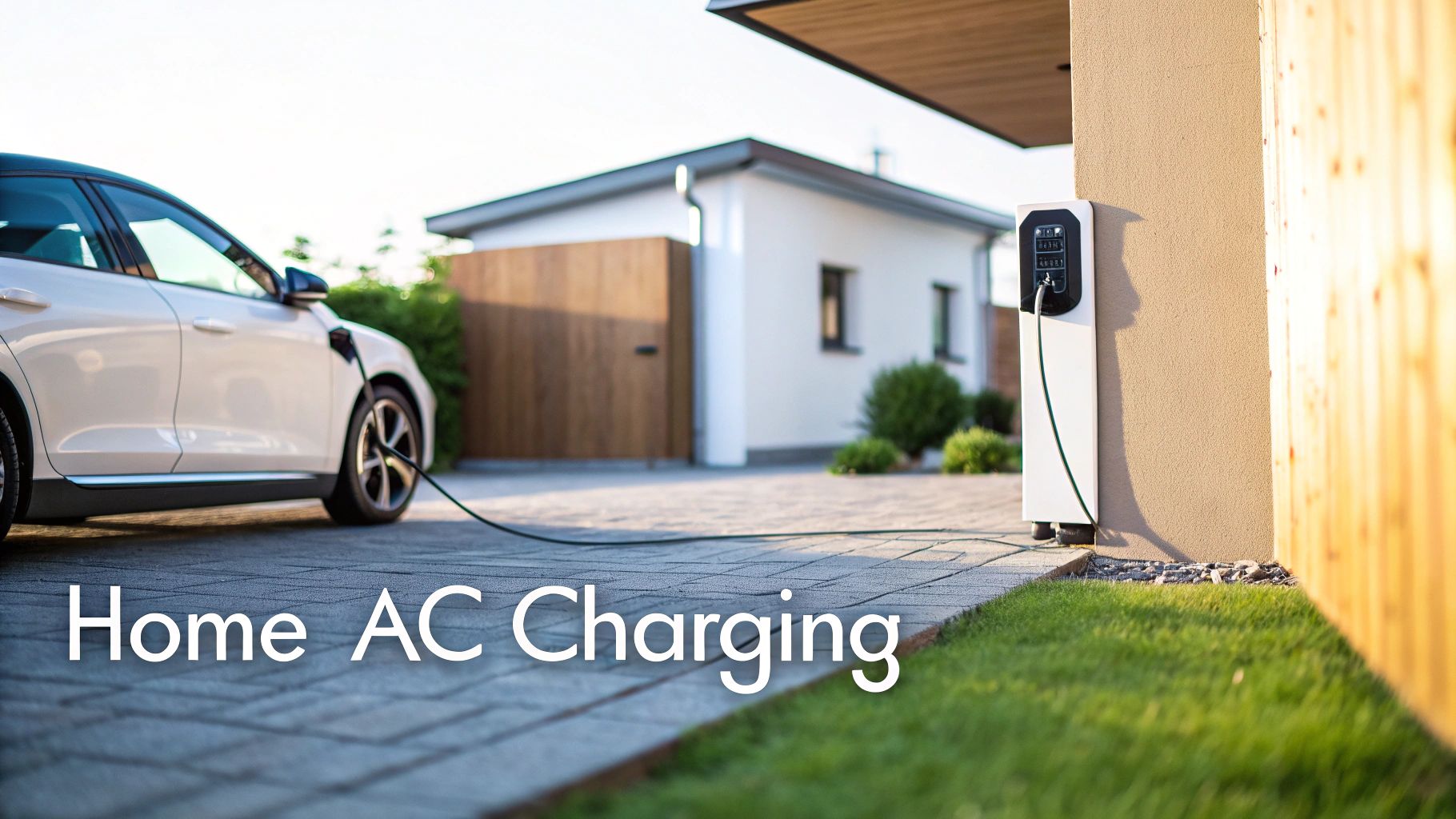
While the ultra-fast DC chargers tend to grab all the headlines, it is the humble AC charger that quietly does most of the heavy lifting in the world of electric vehicles. They are the most common and accessible way to keep your EV topped up, forming the reliable backbone of a convenient and affordable ownership experience.
The beauty of AC charging is its straightforward design. When you plug your car into an AC point at home, work or the supermarket, it simply feeds alternating current from the grid straight to your vehicle. From there, your car's own on-board charger (OBC) takes over, doing the crucial job of converting that AC power into the DC power the battery can actually store.
This internal conversion is precisely why AC charging is slower than its DC counterpart. Your car's on-board charger is a compact, efficient bit of kit designed for a slow, steady charge over several hours—not for breakneck speed. This makes it a perfect match for the long periods your car spends parked anyway.
Understanding Common AC Power Levels in the UK
In the UK, you’ll generally come across three standard power levels for AC chargers. Each one offers a different charging speed suited to different scenarios and knowing the difference helps you plan your top-ups far more effectively.
- 3kW Chargers: Often called ‘slow’ chargers, you’ll typically find these in older home setups or on public lampposts. They add around 10-15 miles of range per hour , making them ideal for leisurely overnight charging when you’re in no rush at all.
- 7kW Chargers: This is the sweet spot and the most common power level for modern home wallboxes and a huge number of public destination chargers. A 7kW unit delivers a much more practical 25-30 miles of range per hour , which is more than enough to fully charge most EVs overnight.
- 22kW Chargers: Known as ‘fast’ AC chargers, these are less common at home because they require a three-phase electricity supply, which most UK houses do not have. You're far more likely to see them at workplaces, retail parks and other commercial spots. They can add up to 80 miles of range per hour but only if your car’s on-board charger is capable of handling that much power.
The UK’s public network is still dominated by these lower-power AC chargers, as they continue to meet the majority of day-to-day charging needs. A recent government report showed there were 86,021 public charging devices in the UK, with 47,882 (56%) of those falling into the 3kW to 8kW power band. You can dive deeper into the numbers by reading the latest government statistics.
Why AC Charging is the Bedrock of EV Ownership
The widespread use of AC charging is no accident; it offers real-world advantages that make it the default choice for most charging sessions. Its slower pace is not a bug, it is a feature that aligns perfectly with driver habits and promotes better battery health.
By charging slowly overnight with an AC charger, you wake up to a full battery every single day. This simple routine avoids putting unnecessary strain on the grid and is gentler on your vehicle’s battery system, promoting its long-term health.
This method is also much kinder to your battery. The steady, controlled flow of energy generates less heat than a high-power DC charge, which helps preserve the battery's capacity and overall lifespan for years to come. For daily driving, commuting and local errands, AC charging is simply the smartest, most sustainable way to power your electric life.
Unlocking Speed with DC Rapid Chargers
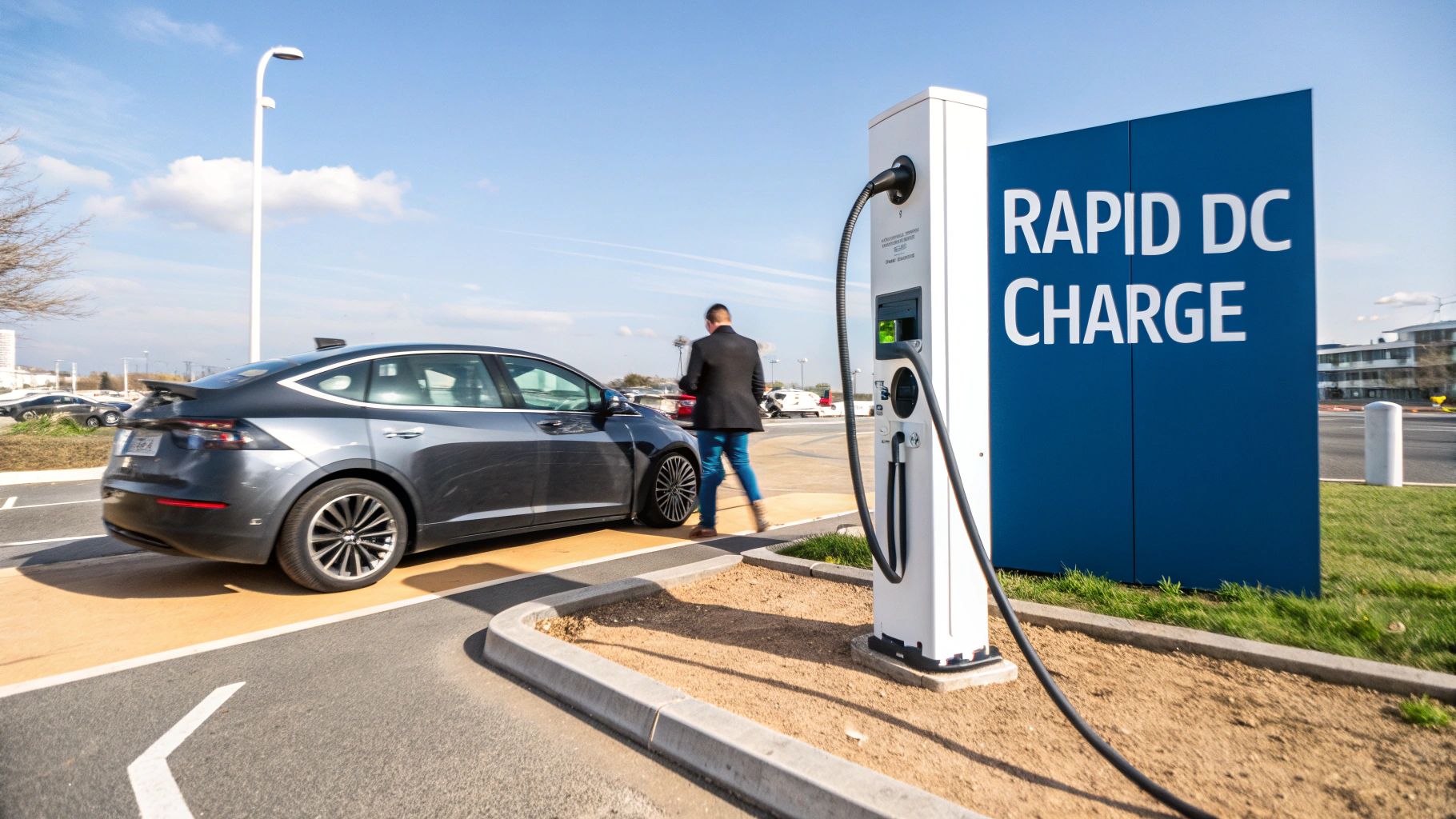
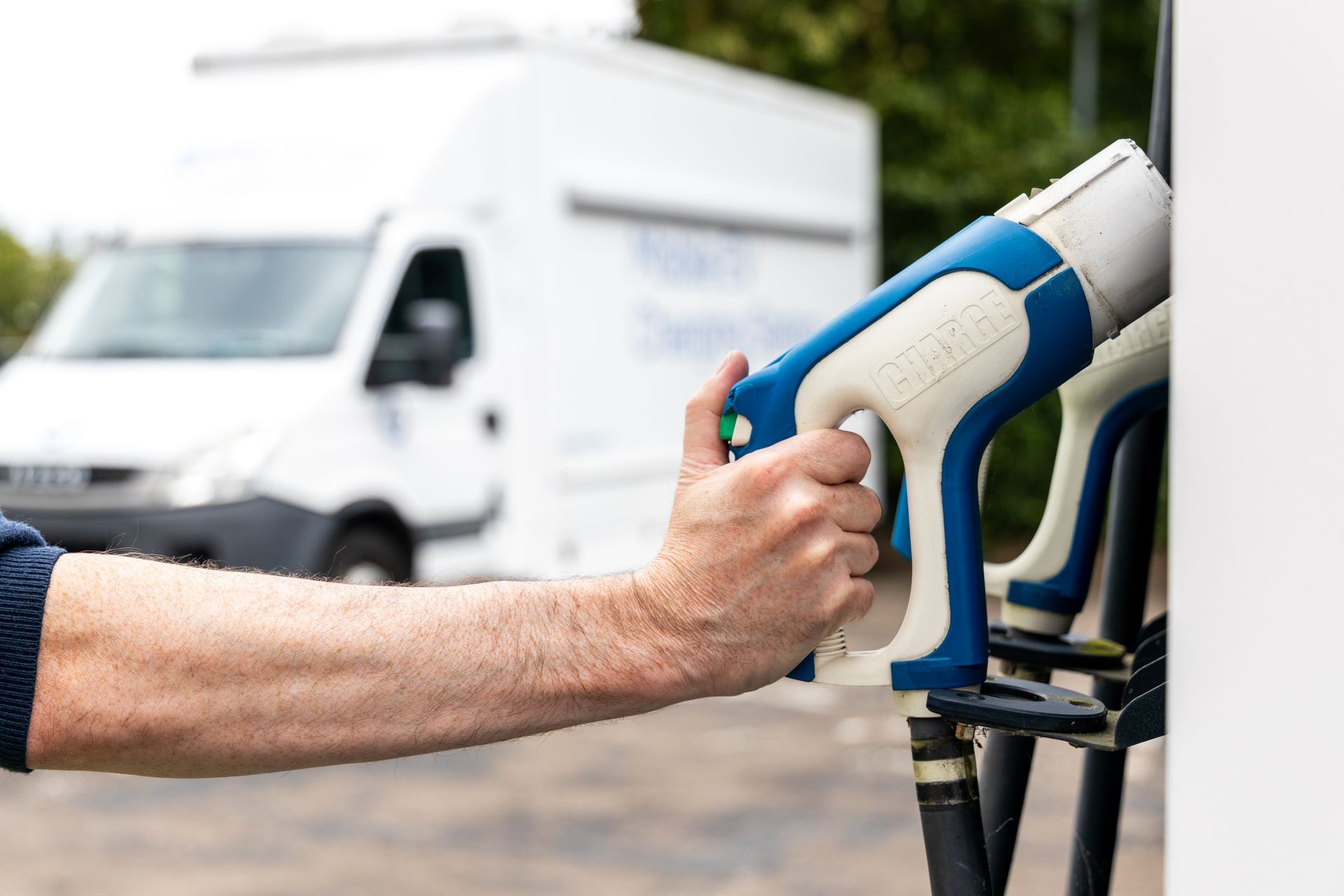
Unlike AC chargers, which have to use your car's relatively small onboard converter, DC rapid chargers bring their own heavy-duty converter to the party. This allows them to bypass your car's internal kit and send high-voltage direct current straight into the battery. Think of it as the difference between filling a swimming pool with a garden hose versus a fire engine's pump.
This direct-to-battery approach is the secret to their incredible speed. It is what makes them an essential part of the public charging network and the go-to solution for taking the anxiety out of long-distance driving.
From Rapid to Ultra-Rapid Charging
The world of DC charging is broken down into power tiers and knowing the difference helps you manage your time at a pit stop. Each level offers a serious jump in charging speed.
-
Rapid Chargers (50kW): For a long time, these were the gold standard. A 50kW rapid charger can comfortably add around 150 miles of range in an hour , making them a familiar and reliable sight at supermarkets and public car parks.
-
Ultra-Rapid Chargers (150kW+): These are the true game-changers. Delivering power at 150kW, 350kW or even more, they can add 100 miles of range in the time it takes to grab a coffee —often in just 15-20 minutes for a modern EV.
This incredible speed is why ultra-rapid DC chargers are quickly becoming the new norm. The UK's public network has seen a huge shift, with these powerful units now outnumbering the older AC rapid chargers for the first time. A recent industry report noted that the number of ultra-rapid DC chargers has hit 8,619 , a 23% jump from the previous year, all thanks to the rollout of high-powered charging hubs. You can read more about the growth of the UK's charging network.
Where You Will Find DC Chargers
Given their power demands and higher cost, DC chargers are installed where speed is everything. You will not find one in a typical home garage; instead, they form the backbone of the UK's long-distance travel network.
You will see them lining motorway service stations and at dedicated public charging hubs. These sites are designed for drivers who need to stop, get a significant top-up and get back on their journey with minimal fuss.
DC charging fundamentally changes the mindset of an EV driver. It shifts the focus from hours of waiting to a convenient short break, making an electric cross-country road trip just as feasible as one in a petrol car.
By providing a quick "refuelling" experience, these powerful ac and dc chargers work in harmony. While AC charging handles the daily top-ups at home or work, DC chargers ensure that no destination is ever out of reach.
The Mobile DC Charging Business Opportunity
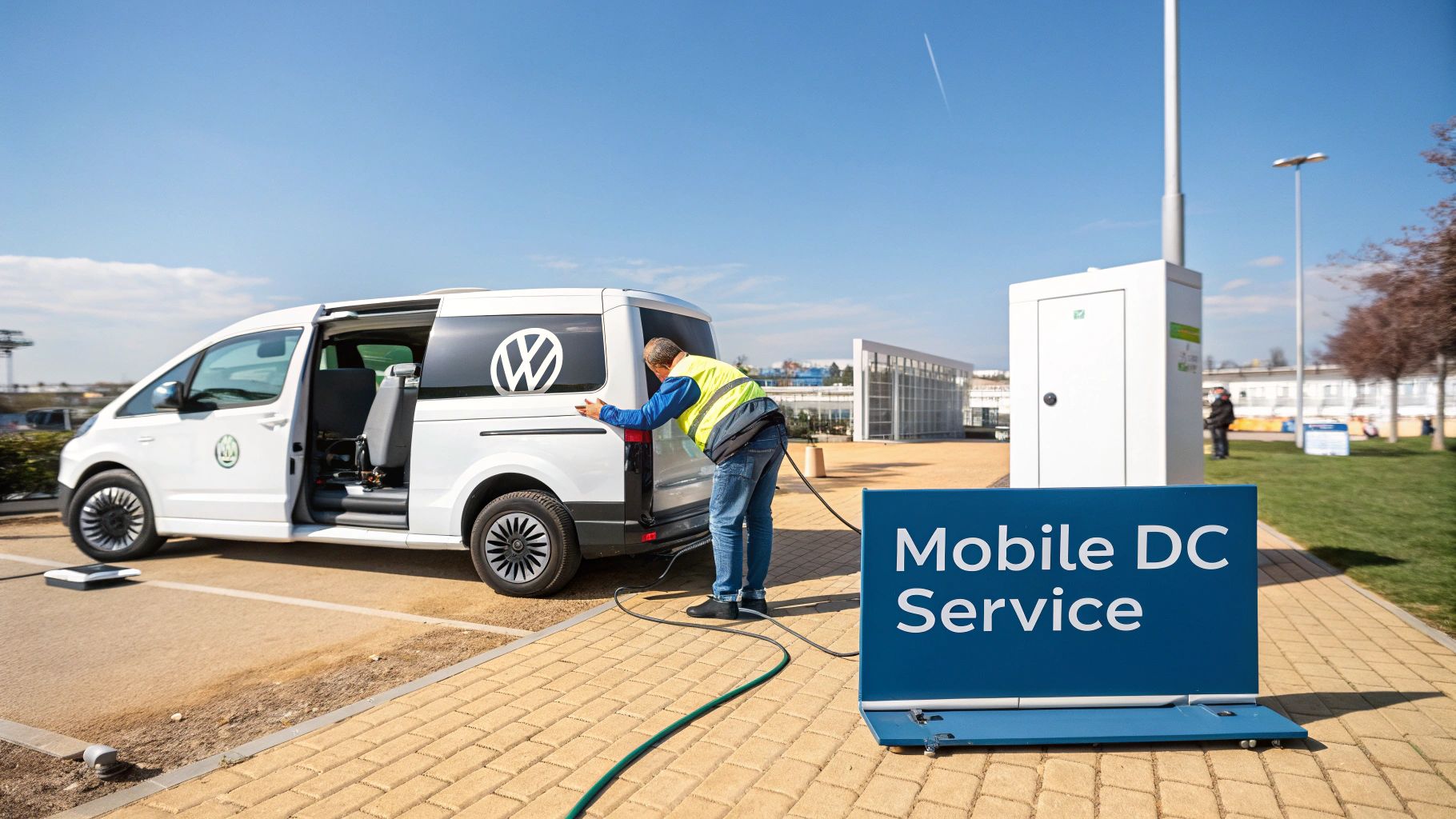
While fixed AC and DC chargers are the bedrock of the public network, there is a far more agile and profitable model making waves: mobile DC charging . This is not about waiting for drivers to find you. It is about breaking free from static infrastructure to deliver rapid charging exactly where it is needed, creating a powerful new revenue stream for operators on the move.
The advantage of mobile charging is its premium, on-demand service. Picture this: an EV driver is stranded with a flat battery. For them, it is a disaster. For a mobile charging operator, it is a high-margin service call. You take the charger directly to the customer, whether they are stuck on the side of the road, managing a fleet at a depot or running a pop-up event. This service tackles the biggest fears for any EV driver—range anxiety and the dread of being stranded miles from a working charger. For entrepreneurs, it unlocks a lucrative market with surprisingly low overheads.
Crafting a Profitable Mobile Charging Model
The business case for mobile DC charging is built on a refreshingly simple revenue structure. Forget the huge capital investment, planning permission headaches and grid connection delays of fixed chargers. A mobile unit lets you get up and running almost overnight and the earnings from a single unit can be impressive.
An operator can generate significant income from just one service call. A typical pricing model involves a call-out fee plus a charge for the energy delivered.
-
Call-Out Fee: This is your base charge for travelling to the customer. A standard fee of £100 to £150 is typical, covering your time, fuel and vehicle wear. In many cases, this fee alone ensures the job is profitable before you have even sold a single kilowatt of electricity.
-
Per-kWh Pricing: On top of the call-out fee, you charge for the energy itself. Given the convenience and urgency of the service, a premium rate between £0.70 and £1.00+ per kilowatt-hour (kWh) is easily justified, reflecting the immediate, on-demand nature of the rescue.
Let’s run the numbers on a single job. A driver needs a 20kWh top-up. With a £125 call-out fee and charging at £0.85 per kWh , the total revenue is £142 . A fleet operator who completes just three of these calls per day could see a monthly revenue of over £12,700 . This turns an EV driver’s misfortune into a solid business opportunity.
The Financial Advantages Over Fixed Infrastructure
One of the most appealing parts of the mobile charging business is its lean operational model. The barriers to entry are worlds away from the sky-high costs and red tape of installing permanent DC rapid chargers. This makes it a genuinely accessible venture for all sorts of businesses.
Mobile mechanics, breakdown recovery services and fleet management companies can slot mobile charging right into their existing operations. It is a brand-new service to offer their customers, turning vehicle downtime into direct revenue. A single mobile unit can cover a huge area, responding to calls across an entire city or region without being chained to one spot.
The real power of mobile DC charging is its agility. An operator is not just sitting there waiting for the market to come to them; they are actively going where the demand is. From busy city centres to remote festival sites, you can maximise the unit’s use and profit potential.
This flexibility is everything. A mobile unit can serve different needs all day long. It might rescue a stranded driver in the morning, provide top-up charging for a delivery fleet in the afternoon and then be stationed at a weekend market, generating income the entire time. To see a full financial breakdown, read our guide on the economics of mobile EV charging .
The comparison to fixed chargers is stark. A permanent ultra-rapid DC station can cost tens of thousands of pounds and take months to deploy while you wait for grid upgrades and council approvals. A mobile unit, on the other hand, gives you a much faster route to market with a lower initial investment. You can start earning from day one, making it a powerful tool in the evolving world of ac and dc chargers .
Choosing the Right Charger for Your Needs
Deciding between AC and DC charging is not about picking a winner. It is about choosing the right tool for the job. Your perfect strategy depends entirely on who you are and what you need, whether you are a private driver, a fleet manager or a taxi operator. Getting this balance right is the key to an efficient and cost-effective EV experience.
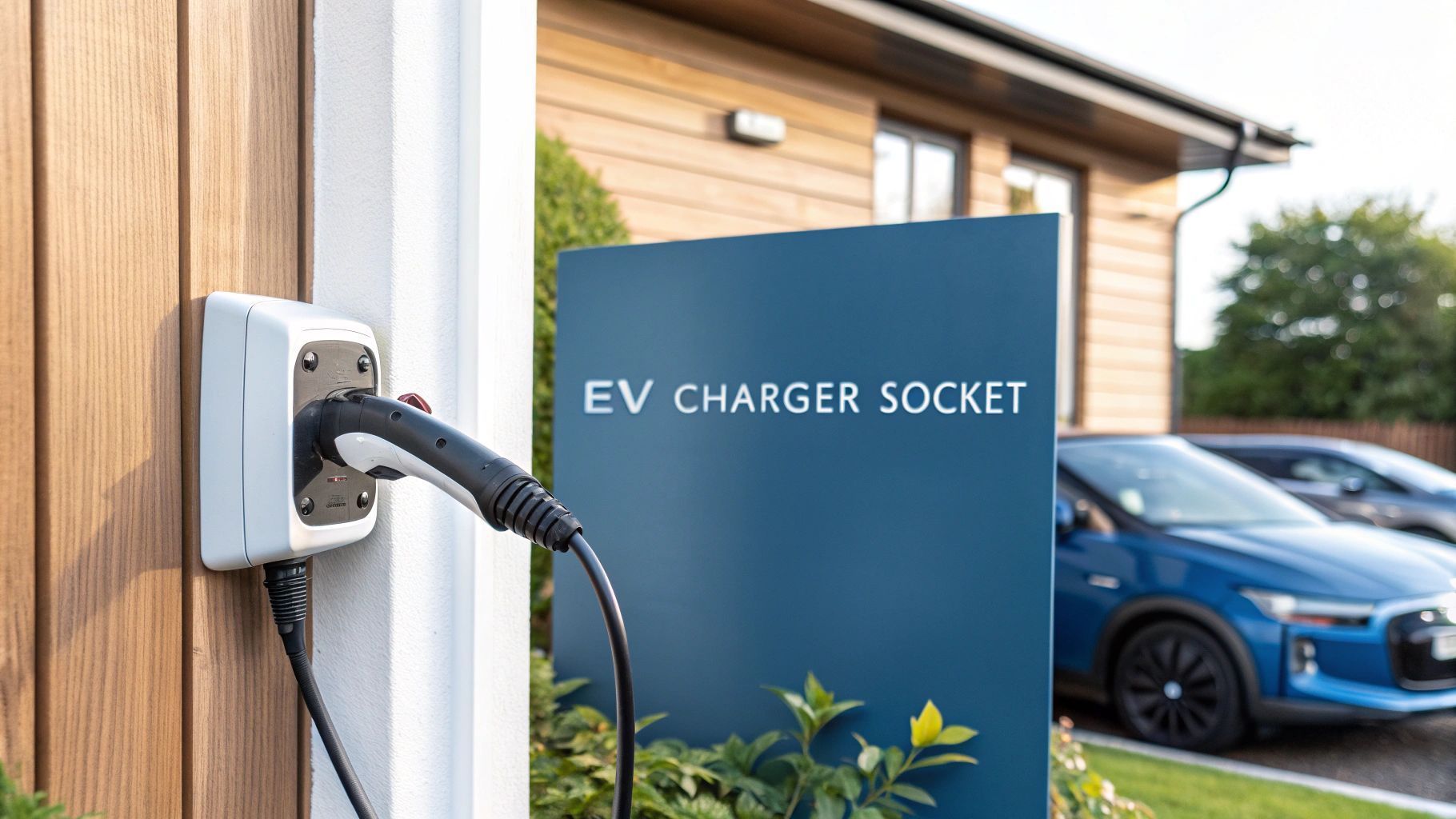
For most private EV drivers, the strategy is wonderfully simple. An AC charger at home is the foundation of daily driving. It offers ultimate convenience and the lowest running costs, letting you top up overnight using cheaper off-peak electricity tariffs.
You wake up every morning with a full battery, ready for the day's commute without a second thought. Public DC chargers then become a tool for special occasions—reserved for those long-distance journeys where a rapid top-up is essential to get you back on the road quickly.
Strategies for Commercial Operators
For businesses and fleet operators, the choice between AC and DC chargers becomes a critical operational decision. The goal is to maximise vehicle uptime while minimising charging costs, which usually means a blended approach is best.
Depot-based charging is the most common strategy. Here, a fleet of vehicles returns to a central location at the end of the day, a scenario perfectly suited for AC charging.
- Overnight AC Charging: Installing multiple AC chargers at the depot allows the entire fleet to recharge simultaneously overnight. This takes full advantage of lower electricity rates and ensures every vehicle starts the day with 100% charge.
- Maximised Uptime: By charging during scheduled downtime, vehicles are always ready to go during operational hours, preventing lost revenue.
- Reduced Infrastructure Costs: AC infrastructure is significantly cheaper and easier to install than a bank of high-power DC units, making it a more scalable solution for large fleets.
However, for vehicles that are on the move all day, like delivery vans or service vehicles, depot charging is not always enough. In these cases, drivers must strategically use the public DC rapid charging network for quick top-ups between jobs to complete their routes.
Tailored Solutions for Specific Use Cases
Different professions have unique demands and that calls for a flexible charging plan. A taxi driver, for instance, operates in a completely different rhythm to a delivery driver. Their vehicle is their office and any time spent charging is time they are not earning.
For a taxi driver, a hybrid charging strategy is essential. They might use slower AC charging at a rank during a quiet period or a lunch break but a 20-minute stop at an ultra-rapid DC charger between fares is what keeps them on the road during peak hours.
This blended model provides the perfect balance. Slower, cheaper AC top-ups can be used opportunistically, while fast DC charging provides the rapid energy boost needed to accept the next fare without a long delay. By aligning your choice of AC or DC charging with your daily habits and financial goals, you can build a perfect strategy that works for you.
Cost and Infrastructure Realities for AC and DC
Deciding between AC and DC charging is not just about speed. The real story lies in the vastly different costs and infrastructure demands, which explains why you see one type on almost every street and the other reserved for motorways. The financial and logistical commitments for each are worlds apart.
For AC chargers, the barrier to entry is pretty low. The hardware is simpler, making it cheaper to produce. Installation is also far more straightforward, often just needing a hook-up to a standard single-phase or three-phase electrical supply that most commercial buildings and many homes already have.
This simplicity is why AC charging has become the go-to for widespread deployment. Homes, workplaces and shopping centres can install these units without needing major, costly grid upgrades, making them the default choice for everyday top-ups.
The Higher Stakes of DC Infrastructure
In stark contrast, DC rapid chargers are a whole different beast—a much bigger financial and logistical undertaking. The initial cost of the unit is substantially higher because all the complex power conversion technology is packed inside. This is not a simple wallbox; it is a heavy-duty piece of industrial kit.
But the biggest hurdle is plugging it into the grid. The immense power draw of a 150kW or 350kW charger often overwhelms the local electricity network. This frequently means expensive and time-consuming grid upgrades are non-negotiable, involving new substations and high-capacity cabling. The planning and execution for this can stretch out for months, sometimes even years.
The higher price you pay at a public DC charger is not just for the speed. It reflects the enormous capital investment in the hardware and grid connection, plus the high operational costs from 'demand charges' that energy companies levy for high-power usage.
These factors explain why the price per kilowatt-hour is so much higher for public DC charging. Operators have a much larger investment to recoup and they need to do it quickly. If you want to dive deeper into the numbers, you can explore our guide on how to calculate a kilowatt-hour . The cost is not just about the electricity used but the entire infrastructure built to deliver it at speed.
This fundamental difference in cost and complexity is why AC chargers are everywhere, while DC chargers are strategic assets reserved for key transport hubs and long-distance travel routes.
Cost and Installation Comparison
To make things clearer, let’s break down the key differences between setting up AC and DC charging stations. The table below outlines everything from the initial hardware costs to the complexity of getting them up and running.
| Factor | AC Charger | DC Charger |
|---|---|---|
| Hardware Cost | Relatively low. Simpler internal components. | Substantially higher due to complex internal power converters. |
| Installation | Simple. Connects to existing single/three-phase supply. | Complex. Often requires major grid upgrades, new substations. |
| Timeline | Fast. Can be installed in a matter of hours or days. | Slow. Planning and grid work can take months or years. |
| Space | Minimal. Small footprint, often wall-mounted. | Significant. Requires a large, dedicated ground-mounted unit. |
| Ideal Use Case | Home, workplace, retail parking (long-dwell top-ups). | Motorway services, fleet depots, public hubs (rapid charging). |
As you can see, the choice is not just a technical one; it is a strategic and financial decision. AC chargers provide accessible, low-cost coverage for daily use, while DC chargers offer mission-critical speed for drivers on the move but at a much higher price point for the operator.
Frequently Asked Questions
When you are getting to grips with EV charging, a few common questions always pop up. Here are some straightforward answers to the queries we hear most often from drivers and business owners.
Do All Electric Vehicles Support Both AC and DC Charging?
Pretty much, yes. Nearly every fully electric vehicle (BEV) sold today is built to handle both AC and DC charging. The real difference, though, is in the speed. Every EV has an on-board charger for AC power but not all of them are kitted out to take advantage of the fastest DC charging speeds.
It is also worth remembering that plug-in hybrids (PHEVs) usually only support AC charging because their batteries are so much smaller. The best advice? Always check your vehicle’s spec sheet to know exactly what it can handle before you pull up to a rapid charger.
Is DC Fast Charging Bad for My Car's Battery?
This is a really common worry but the good news is that the impact is tiny. It is true that high-speed DC charging creates more heat than a slow AC charge but modern EVs are incredibly smart. They all come with a sophisticated Battery Management System (BMS) that acts like a bodyguard for your battery.
The BMS carefully controls the charging speed and temperature to prevent any damage. For day-to-day driving, a slow overnight AC charge at home is the kindest option for your battery. Think of DC fast chargers as a tool for long journeys or when you need a quick top-up – using them this way is perfectly safe and will not meaningfully shorten your battery’s life.
Why Is Public DC Charging More Expensive than Home AC Charging?
It all comes down to the cost of the hardware and the power behind it. DC rapid chargers are seriously expensive pieces of kit to buy and install. They often need major, costly upgrades to the local electricity grid just to handle the sheer amount of power they draw.
On top of that, the operators get hit with higher electricity bills from their suppliers, including hefty 'demand charges' for pulling so much power so quickly. All these substantial costs are then passed on to the driver, which is why you pay a premium for the speed and convenience of a rapid charge.
Can I Install a DC Charger at Home?
While it might be technically possible in some rare cases, for virtually every homeowner, it is completely impractical and unnecessary. DC chargers demand a three-phase power supply and a grid connection that is far beyond what a normal residential home has. The installation costs would be astronomical.
A 7kW AC wallbox is the gold standard for home charging. It provides more than enough juice to fully charge your car overnight, which is easily the most convenient and cheapest way to handle your daily driving needs.
Ready to explore a more flexible and profitable charging solution? ZAPME offers mobile DC charging units that deliver rapid power wherever it's needed. Discover how you can serve stranded motorists, support your fleet, or create a new revenue stream. Learn more at https://www.zapme.biz.