

Your Guide to a Portable Car Charger Business
Think of a portable car charger as a power bank but for your electric vehicle. It’s a mobile unit designed to deliver a charge on-demand, freeing you from the constant hunt for a fixed charging station. It’s the ultimate flexible solution, perfect for everything from a roadside emergency to a convenient daily top-up.
The New Era of On-Demand EV Charging
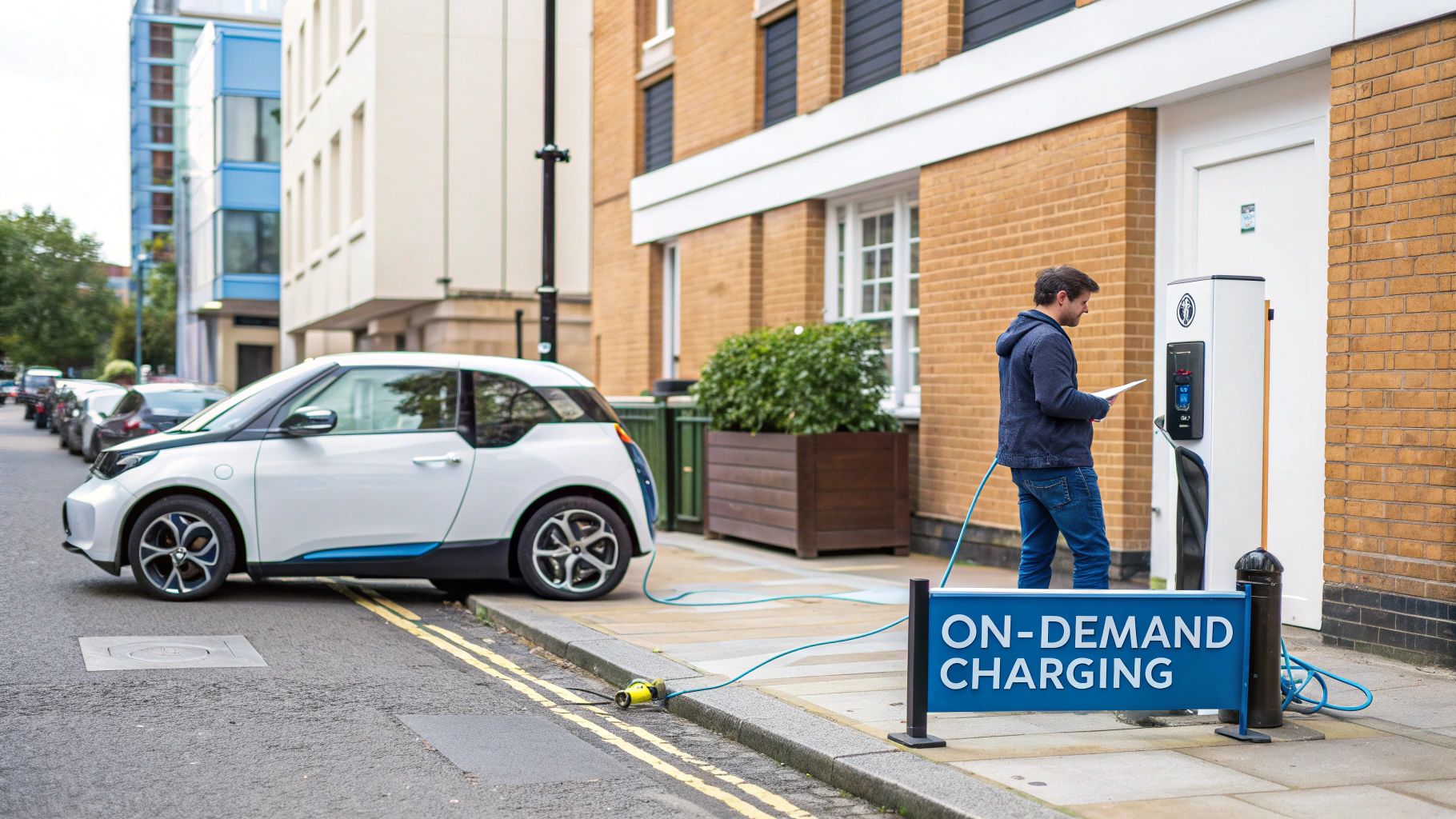
Imagine delivering power exactly where it’s needed whenever it’s needed. This is the new reality made possible by portable car chargers which are quickly evolving from a simple emergency backup to the very foundation of a flexible, on-demand power service. The primary advantage of mobile charging is its unparalleled convenience and the ability to turn a growing infrastructure gap into a profitable business opportunity.
Here in the UK the switch to electric vehicles is happening faster than the charging infrastructure can keep up in many places. This growing gap creates a massive opportunity for mobile charging solutions to solve the everyday headaches EV owners face and for operators to earn a significant income.
Key Scenarios for Mobile Charging
So where does a portable car charger really shine? Let’s look at a few practical situations where it becomes a total game-changer:
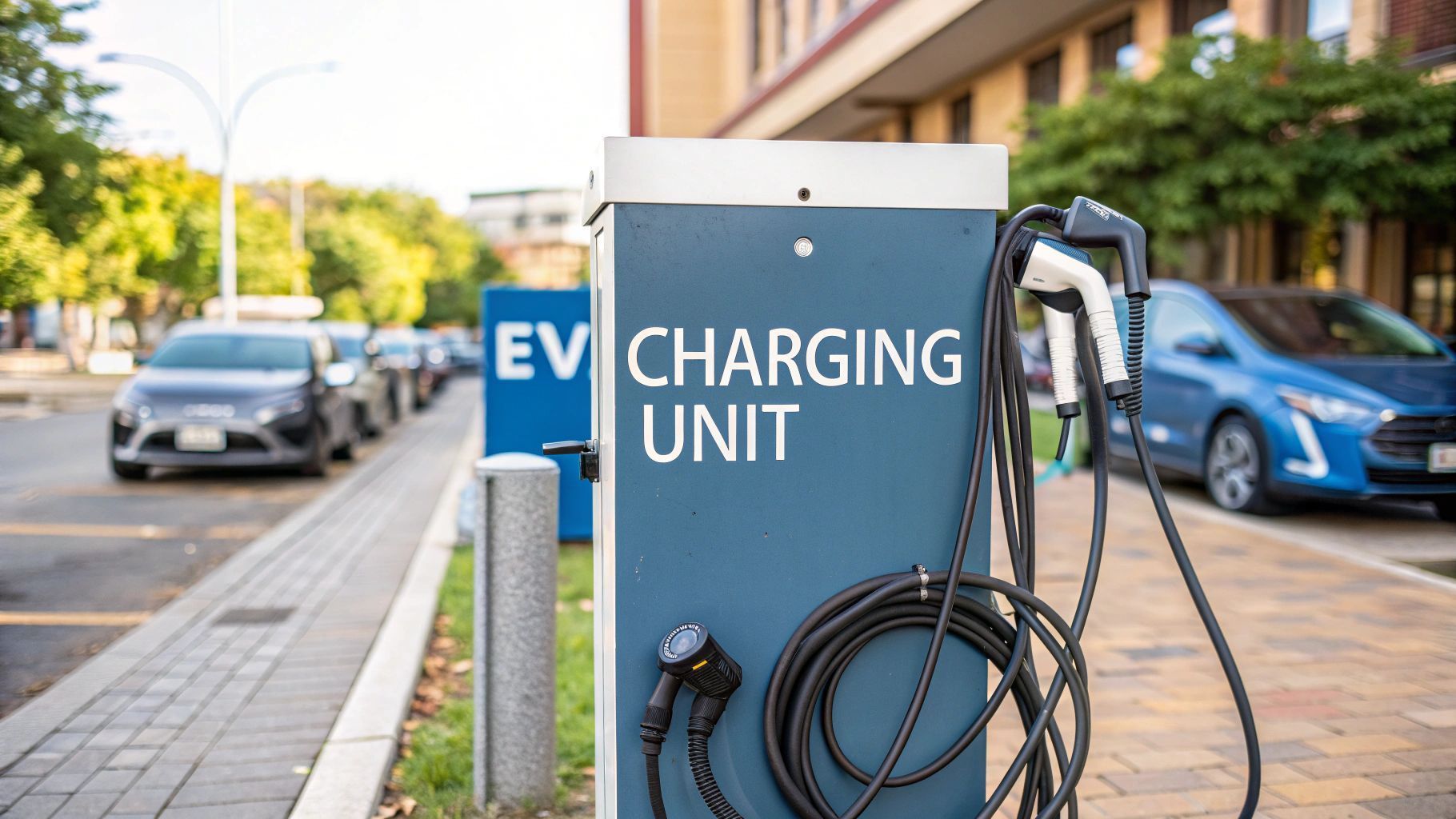
- Urban Residents: For drivers living in flats or homes without a dedicated driveway mobile charging offers a brilliantly simple way to power up without having to rely on often-occupied public stations.
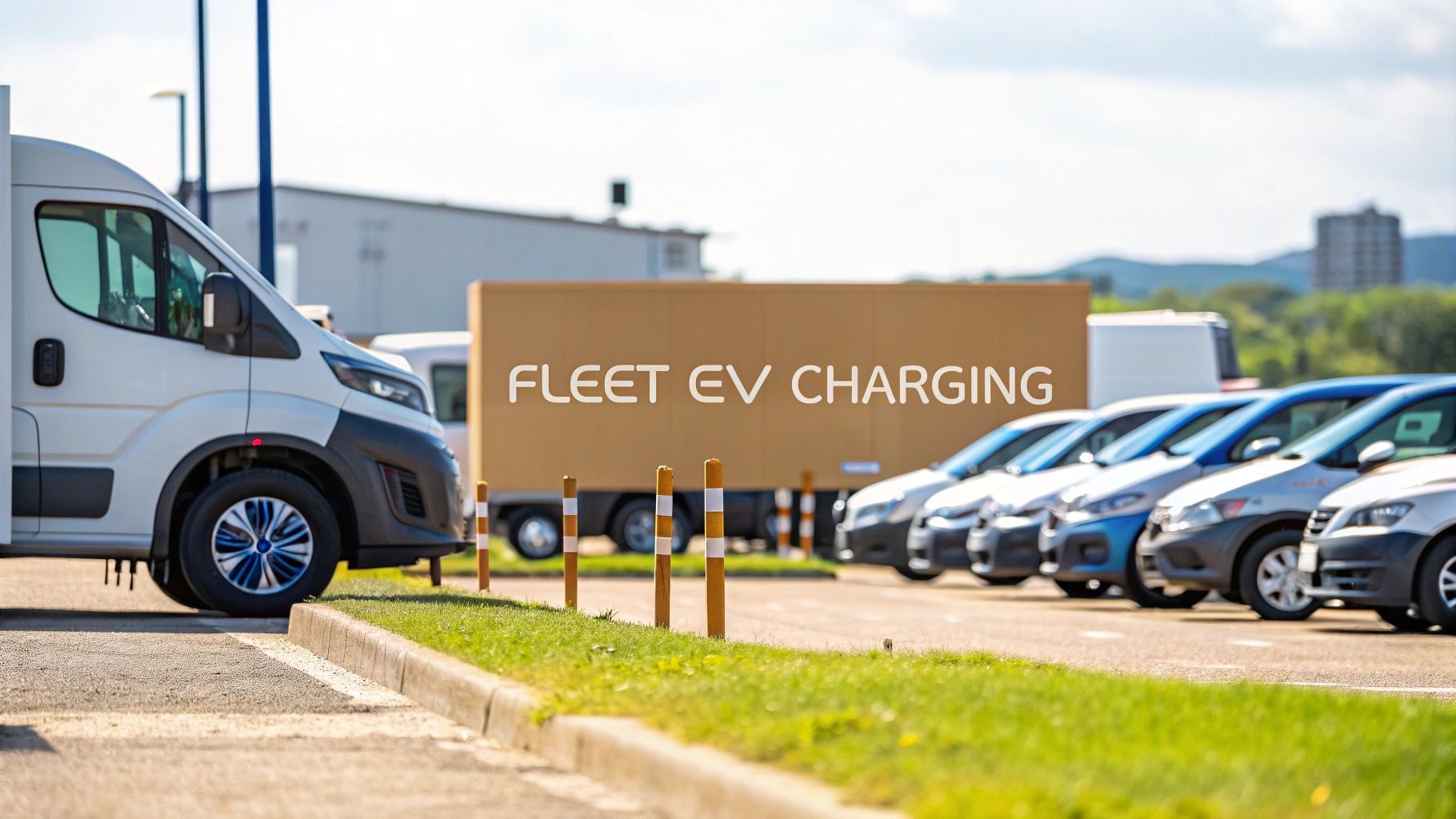
- Commercial Fleets: Businesses can charge their entire fleet of vehicles overnight at a central depot, making sure every van and car starts the day with a 100% battery.
- Events and Venues: Think festivals, outdoor markets or rural attractions. These temporary locations can now offer EV charging as a premium service even if they have little to no access to the grid.
- Roadside Assistance: A flat EV battery no longer has to mean calling a recovery vehicle. A mobile charging service can get a stranded driver a quick boost to get them safely back on their journey.
This rising demand has sparked a booming industry. The global market for Level 2 portable EV chargers was valued at a huge USD 1.41 billion in 2024 and is set to climb even higher. The UK's share is expanding rapidly driven by the swift uptake of EVs in our cities. You can discover more insights about the portable charger market and its impressive growth trajectory.
For an aspiring entrepreneur this technology is more than just a gadget; it's a business in a box. It gives you the power to deliver an essential service directly to your customers completely sidestepping the massive costs and logistical nightmares of installing fixed charging points and opening up a direct path to substantial earnings.
Understanding the UK’s EV Charging Landscape
To really grasp the opportunity for a mobile charging business you have to look at the state of public EV charging in the UK today. While the network has grown impressively it’s facing some very real challenges—the kinds a portable charger service is perfectly built to solve.
The UK's public charging network has certainly come a long way. By mid-2025 the country had around 84,218 public EV charging devices which is a massive 30% jump from the year before. This growth shows a clear commitment to going electric but the raw numbers don't paint the full picture. You can read a full analysis on EV charging trends to get a deeper sense of what's happening.
Despite this progress the actual experience for many EV drivers is far from smooth. Chargers aren’t spread evenly across the country with cities often well-equipped while rural areas are left behind. This creates 'charging deserts' that fuel genuine range anxiety. Even in places with plenty of chargers you can find yourself stuck in long queues at peak times, not to mention the frustration of finally finding a unit only to discover it’s out of order.
Filling the Gaps in the Existing Network
This is where a portable car charger business finds its real purpose. It’s not about competing with the fixed public network; it’s about complementing it by filling in all the awkward gaps.
Think of the public charging network as the national motorway system. It’s the essential backbone connecting major towns and cities but it doesn't reach down every single side street or into every remote village.
A mobile charging service acts like a fleet of local delivery vans. It brings a direct, convenient and personal service right to the customer's doorstep—whether that’s a city-centre flat, a business park or a stranded car on a quiet country lane. This convenience is a premium service that customers are willing to pay for, creating a lucrative business model for the operator.
This approach introduces a vital new layer of convenience. It closes that crucial 'last mile' power gap, getting energy precisely where the fixed infrastructure can’t. For an operator this isn't just about providing an emergency top-up; it's about offering a premium, on-demand service that solves a persistent headache for a growing number of EV owners.
By operating flexibly you can go where the demand is, sidestepping the limitations of a static network. This agility is the core strength of a mobile business model allowing you to build a loyal customer base by delivering a level of reliability and convenience that fixed chargers simply can’t match. You become the go-to solution for guaranteed power, turning infrastructure weaknesses into your business’s greatest strengths and most profitable opportunities.
Calculating Your Mobile Charging Business Earnings
Turning a high-quality portable car charger into a real business comes down to one thing: understanding your potential earnings and costs. You're not just selling electricity; you're offering a premium on-demand service that people will happily pay extra for. The key to making a substantial profit is building a smart pricing structure that reflects that value.
By thinking beyond a simple cost-per-kilowatt-hour model you can create a business with several income streams. Each model speaks to a different customer need, letting you maximise the money you can make from your portable unit. The charger is your tool but it's your service strategy that will drive a healthy return on investment.
Building Diverse Revenue Streams
A solid mobile charging business rarely just sticks to one pricing method. Instead the smart operators mix different models to match what the market wants and keep the cash flowing. This way you’re not just sitting around waiting for emergency calls—you're actively earning from different types of customers.
Here are a few proven models you could bring into your own venture:
- Pay-As-You-Go Charging: This is the simplest approach. You charge a set price per kilowatt-hour ( kWh ) delivered much like a public charging station but with a convenience fee layered on top.
- Emergency Call-Out Fee: When a driver is stranded with a dead battery your service is a lifeline. A fixed call-out fee plus the cost of the energy is a standard—and very profitable—way to handle roadside assistance.
- Business and Residential Contracts: Why not offer retainer services to local businesses with small fleets? Or to blocks of flats that don't have their own charging points? This creates a predictable recurring income each month.
The trick is to view your portable car charger as the heart of a flexible service. By blending these models you can cater to everyone from the stranded motorist to the corporate fleet manager, turning one piece of equipment into a multi-faceted revenue machine and maximising your earnings.
A Realistic UK Earnings Scenario
Let's walk through a simple business case for a single operator here in the UK. We'll balance the initial investment in the gear and vehicle running costs against realistic demand to see what the earnings could look like.
Picture an operator in a medium-sized UK city. Their main costs are the portable charger, a suitable van, insurance and the electricity to charge the unit itself. On the income side they could realistically average four to five call-outs a day , mixing emergency jobs with pre-booked appointments. With an average service fee of £30-£50 per call-out (plus the energy cost) a single operator can build a pretty strong financial foundation and generate a yearly revenue of between £30,000 and £65,000 .
To get a clearer picture of the UK EV charging scene this chart shows key data like the total number of public chargers, how many are rapid chargers and the growing share of EVs on the road.
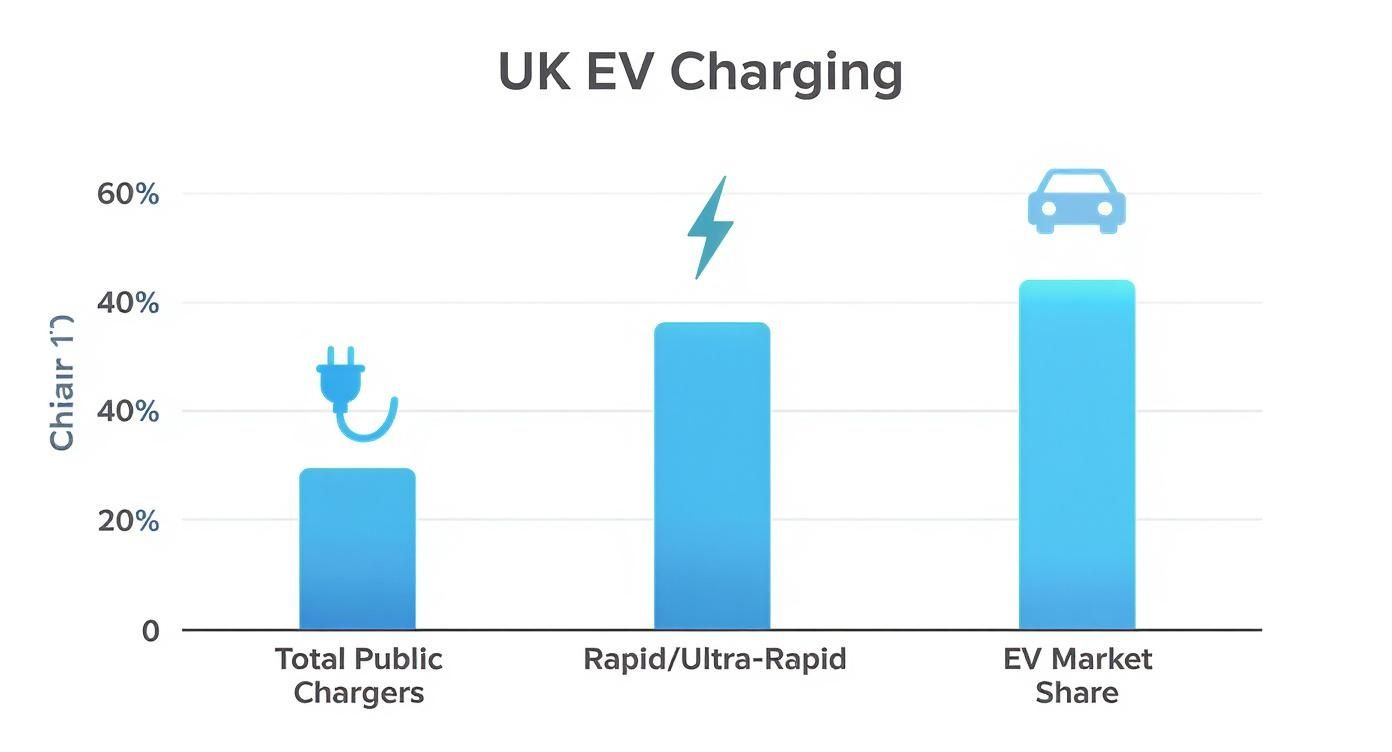
The numbers make it obvious: while the infrastructure is growing the boom in EV ownership is creating big gaps that mobile charging services can step in and fill profitably. When you're running the numbers for your own mobile charging business using specialised platforms can offer some valuable insights. You can check out relevant tools and resources by visiting the microestimates homepage to help sharpen up your financial forecasts.
For a deeper dive into how to profit with a portable charging station for electric cars our dedicated guide offers more detailed analysis and strategic tips. With a solid plan a mobile charging operation can deliver a fast and impressive return.
Choosing Your Commercial Portable Car Charger
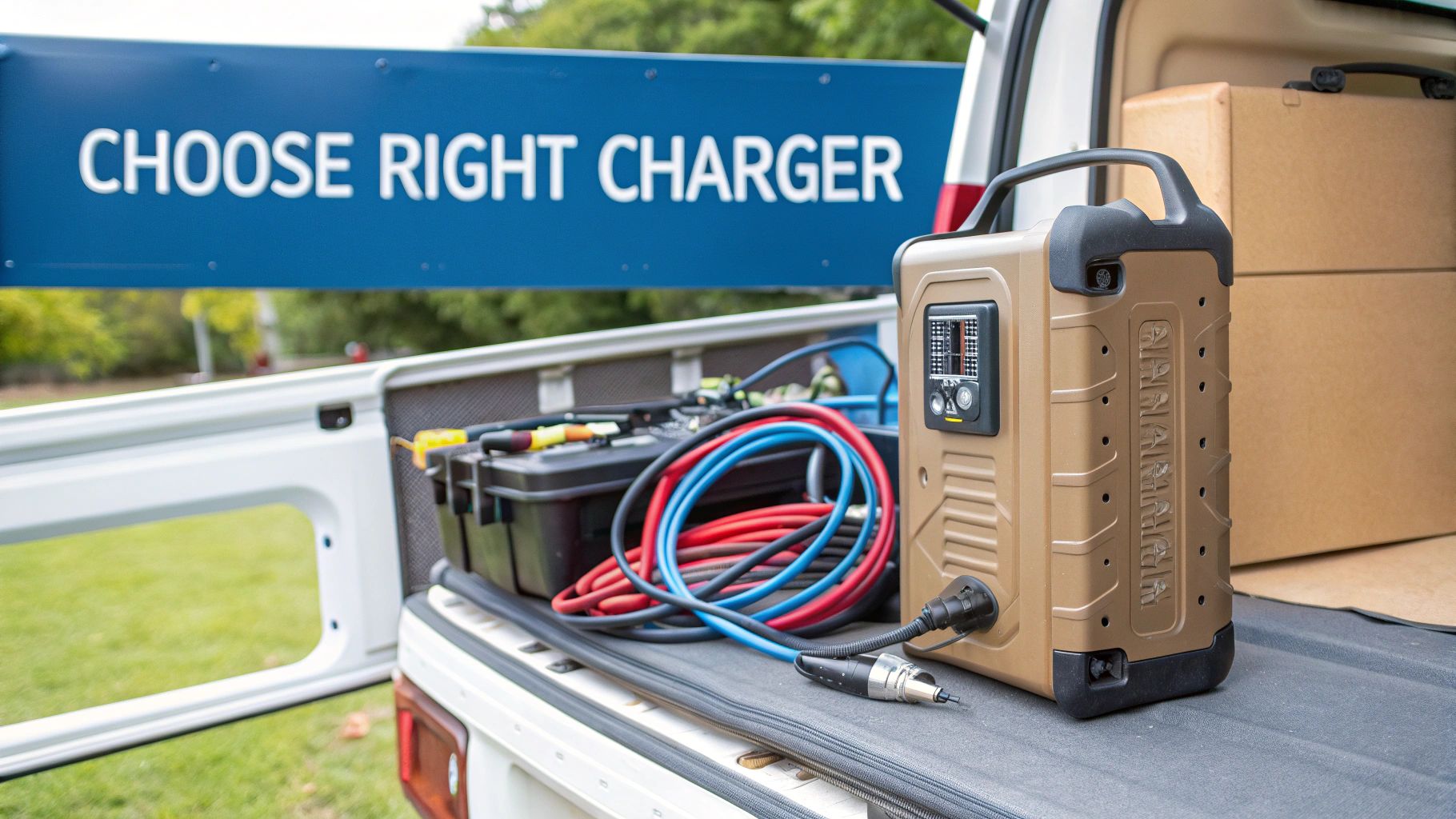
When you're launching a mobile EV charging business the single most important decision you'll make is choosing your equipment. The market is flooded with options but a standard consumer-grade portable charger just won't cut it. It simply isn’t built to handle the demands of commercial day-in-day-out operation.
Your success hinges on investing in a professional tool designed from the ground up for reliability, safety and efficiency. To do that you need to understand a few key technical specs—not as jargon but as practical measures of your business's capability. These numbers directly impact how quickly you can serve customers and which vehicles you can help, so getting them right from the start is absolutely essential.
Understanding Core Charger Specifications
Let’s cut through the noise and focus on what really matters for a mobile operator. Three core elements define a charger's real-world performance: its charging level, power output and the type of connector it uses. Nail these three and you'll be equipped to serve the vast majority of EV drivers across the UK.
-
Charging Levels: For any serious commercial service you should only be looking at Level 2 or Level 3 (DC Fast Charging) units. Level 1 chargers, the kind that plug into a standard wall socket, are far too slow for business use—we’re talking over 40 hours for a full charge. A Level 2 portable car charger on the other hand strikes the perfect balance between speed and mobility, delivering a charge similar to a home wallbox.
-
Power Output (kW): This is the true measure of charging speed, measured in kilowatts (kW). A typical Level 2 charger might offer 7kW which is enough to add about 30 miles of range in an hour. That makes it a versatile workhorse, perfect for scheduled top-ups or providing meaningful help in an emergency.
-
Connector Type: Here in the UK and across Europe the Type 2 connector is the universal standard for AC charging. Your commercial charger must have this. It’s the key that unlocks access to nearly every electric vehicle on the road, from a Nissan Leaf to a Tesla.
Must-Have Features for Commercial Use
Beyond the basic specs a commercial-grade portable charger needs features built for the realities of daily fieldwork. These aren't luxuries; they're necessities for running a professional trustworthy service.
Durability is non-negotiable. Your equipment has to be weatherproof with a high IP rating (like IP55 ) to operate safely and reliably in the unpredictable British weather.
Smart capabilities are just as crucial. Look for a unit that connects to a management platform allowing you to track energy usage, manage customer bookings and process payments automatically. This transforms your charger from a simple power source into a fully-fledged business tool.
A professional mobile charging unit is an investment in your business's reputation. It should be rugged, user-friendly and equipped with smart technology to make every transaction smooth and efficient for both you and your customer.
Comparing Portable Charger Features for Personal vs Commercial Use
Choosing the right device often comes down to understanding your specific needs. What's essential for a business operator might be overkill for a personal user. This table breaks down the key features to consider.
| Feature | Importance for Personal Use | Importance for Commercial Operators |
|---|---|---|
| Power Output (kW) | Lower output (3-7kW) is usually fine for overnight top-ups or emergency use. | Higher output (7kW+) is critical to provide meaningful charge quickly and serve more customers per day. |
| Durability (IP Rating) | Important for longevity but less critical if used mainly in a garage or sheltered area. | Essential. A high IP rating (e.g. IP55) is a must for reliable operation in all weather conditions. |
| Smart Connectivity | A "nice-to-have" for monitoring usage but not essential for basic charging. | Non-negotiable. Needed for payment processing, booking management and tracking energy dispensed for billing. |
| Connector Type | Must match the user's specific vehicle. | Must be the universal Type 2 standard to serve the widest possible range of EVs in the UK market. |
| Portability/Weight | Lighter is better for easy handling and storage in the car boot. | Must be robust and manageable for daily deployment but ruggedness often takes priority over being ultra-light. |
Ultimately a commercial unit is a robust business asset while a personal charger is a convenience tool.
Choosing the right device can feel daunting but focusing on these commercial requirements will point you toward a smart investment. To help you explore the options further our comprehensive UK guide to portable car chargers offers a deeper comparison of different models and features. With the right knowledge you can confidently pick the perfect tool to power your new venture.
Tapping into the UK Mobile Charging Market
It’s one thing to have the right hardware but the real story here is the economic shift that’s making mobile charging such a smart business move in the UK. This isn’t just a flash in the pan. We're seeing a fundamental change in what customers expect driven by the on-demand world we now live in. Think about it – services like Deliveroo and Uber have completely rewired our brains to expect convenience right here right now. Mobile power is the next logical step.
This hunger for flexibility is fuelling a seriously big market. In 2023 alone the UK's mobile chargers market which includes portable car chargers pulled in around £1.13 billion in revenue. And it's not slowing down. Forecasts predict that figure will climb to £1.6 billion by 2030 showing solid reliable growth. You can see the full UK mobile charger market forecasts to get a clearer picture of the opportunity.
New Ways of Doing Business in a Green Economy
This expanding market is opening the door for fresh business models that speak directly to our on-demand culture. As a portable car charger operator you can offer services that fixed bolted-down infrastructure just can't compete with. That’s a powerful recipe for long-term success and significant profit.
- Hyper-Local Convenience: You could become the go-to power provider for specific neighbourhoods, business parks or blocks of flats with few charging options.
- Event Services: Think about partnering with festivals, outdoor markets and corporate events to offer temporary EV charging. It's an amenity that attendees will genuinely appreciate and pay a premium for.
- Fleet Management Support: Many local businesses are switching their fleets to electric. You could offer contract-based overnight charging to make sure their vehicles are always ready to go.
A mobile charging business does more than just make money; it’s a direct contribution to the UK's green economy. By making EV ownership more practical—especially for people who can't just install a charger at home—operators are helping speed up the move away from fossil fuels.
This service-first approach transforms a portable charger from a simple piece of kit into the cornerstone of a profitable future-proof business. It meets a real consumer need for convenience, plugs critical gaps in our national infrastructure and supports the country's wider environmental ambitions. The opportunity isn't just about selling electricity; it's about delivering a premium on-demand power service that the modern world is more than ready for.
Powering Your Business with the Right Platform
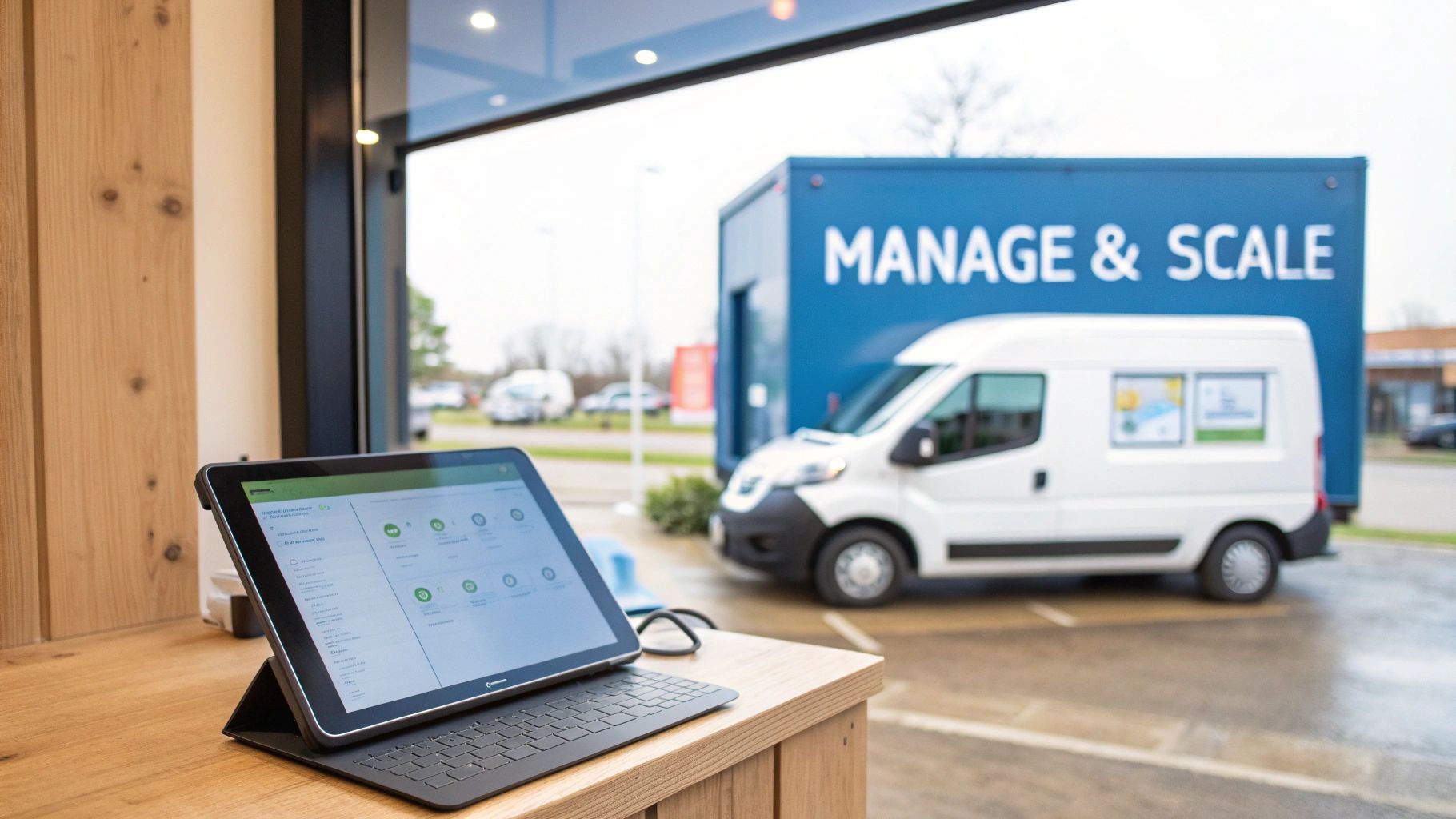
This is where a complete platform becomes your most valuable asset. An integrated ecosystem simplifies everything from customer bookings and route planning to payment handling and financial tracking. It allows you to focus on delivering a great service rather than getting bogged down in administrative tasks.
Streamlining Your Mobile Charging Operations
For a mobile charging business to scale every process must be smooth and reliable. A dedicated platform provides the essential infrastructure to manage your growing venture with confidence and clarity.
This kind of system offers a centralised hub for all your business activities. Imagine managing your entire day from a single dashboard—scheduling appointments, dispatching your units and seeing your earnings update in real-time. This level of organisation is critical for building a professional and profitable service. To efficiently manage transactions and secure your revenue it's crucial to start by understanding payment processors and how they integrate into your workflow.
A robust management platform transforms a portable car charger from a standalone tool into the core of a scalable business. It provides the reliability and ease of use needed to capitalise on the mobile charging revolution.
By using a proven system entrepreneurs can launch and grow their operations with a strategic partner managing the complexities behind the scenes. You gain access to real-time data on charger usage, peak demand times and revenue per job allowing you to make smarter business decisions. When looking for a solution it's important to explore the full range of ZAPME features to see how a professional ecosystem supports your growth from day one.
Your Questions, Answered
Before diving into a new venture it's natural to have questions. Getting to grips with the specifics of portable car chargers is the first step for any aspiring mobile charging operator here in the UK.
Let’s tackle some of the most common queries, looking at everything from the tech's performance to the real-world profitability of running a mobile charging service.
How Fast Is a Portable Car Charger?
The speed of a portable unit really comes down to its power output which we measure in kilowatts (kW). The commercial-grade units you'll be looking at are typically Level 2 chargers, delivering 7kW or more – putting them on the same level as a standard home wallbox.
What does that mean in practice? A 7kW charger can add about 30 miles of range for every hour it’s plugged in. While it’s not going to compete with a 50kW+ public rapid charger it's more than enough for overnight charging, workplace top-ups or providing a critical boost in an emergency. That versatility is exactly what makes it such a powerful tool for a mobile business.
A professional portable car charger strikes the perfect balance between speed and mobility. It delivers a meaningful charge in a decent amount of time, making it a reliable solution for both scheduled appointments and urgent roadside call-outs.
Is a Portable Charger Compatible with All UK Cars?
Pretty much, yes. Almost every modern electric car sold in the UK and across Europe uses a Type 2 connector for its standard AC charging. Any professional commercial-grade portable charger built for this market will come equipped with this connector as standard.
This standardisation is a massive plus for an operator. It means you can confidently service the vast majority of electric vehicles you'll encounter on the road without worrying about a boot full of different cables or fiddly adaptors.
Is a Mobile Charging Business Really Profitable?
With the right strategy it absolutely can be. The trick is to focus on markets that are currently being missed by the fixed charging infrastructure. Think residential streets with no off-street parking, local business parks or even community events.
Your profitability hinges on your pricing model which could be built around a few different approaches:
- Per-kWh rates with a small convenience fee on top.
- Premium call-out fees for emergency roadside assistance.
- Monthly service contracts for local businesses or entire blocks of flats.
The initial investment for a quality portable charger is significantly lower than installing fixed points. When you combine that with the flexibility to go exactly where the demand is you've got a strong formula for a fast and healthy return on your investment. A single operator can realistically expect to earn between £30,000 and £65,000 per year by targeting these gaps in the market.
Are Portable Chargers Safe in British Weather?
Definitely. Reputable commercial chargers sold in the UK are built to meet strict safety standards and carry a high IP (Ingress Protection) rating like IP55 or even higher.
This rating is your guarantee that the unit is weatherproof and perfectly safe to operate even in a downpour. The whole charging process from the unit to the vehicle is protected by multiple safety cut-outs and the connection itself locks securely to shield it from the elements. As with any professional kit you should always follow the manufacturer’s guidelines for safe operation.
Ready to power the future of driving and launch your own mobile charging business? Explore the industry-leading portable EV charging solutions from ZAPME and see how our platform can help you build a profitable venture from day one. Visit us at https://www.zapme.biz to learn more.