

Where do you charge electric cars: a UK charging guide
For EV owners in the UK, the question is not if you can find a charger but which one is right for you at that moment. You can charge your car at home , at a growing number of public charging stations or even use an innovative mobile charging service that brings the power directly to your vehicle.
This flexibility is turning the old fear of "range anxiety" into a thing of the past.
The Expanding World of UK EV Charging
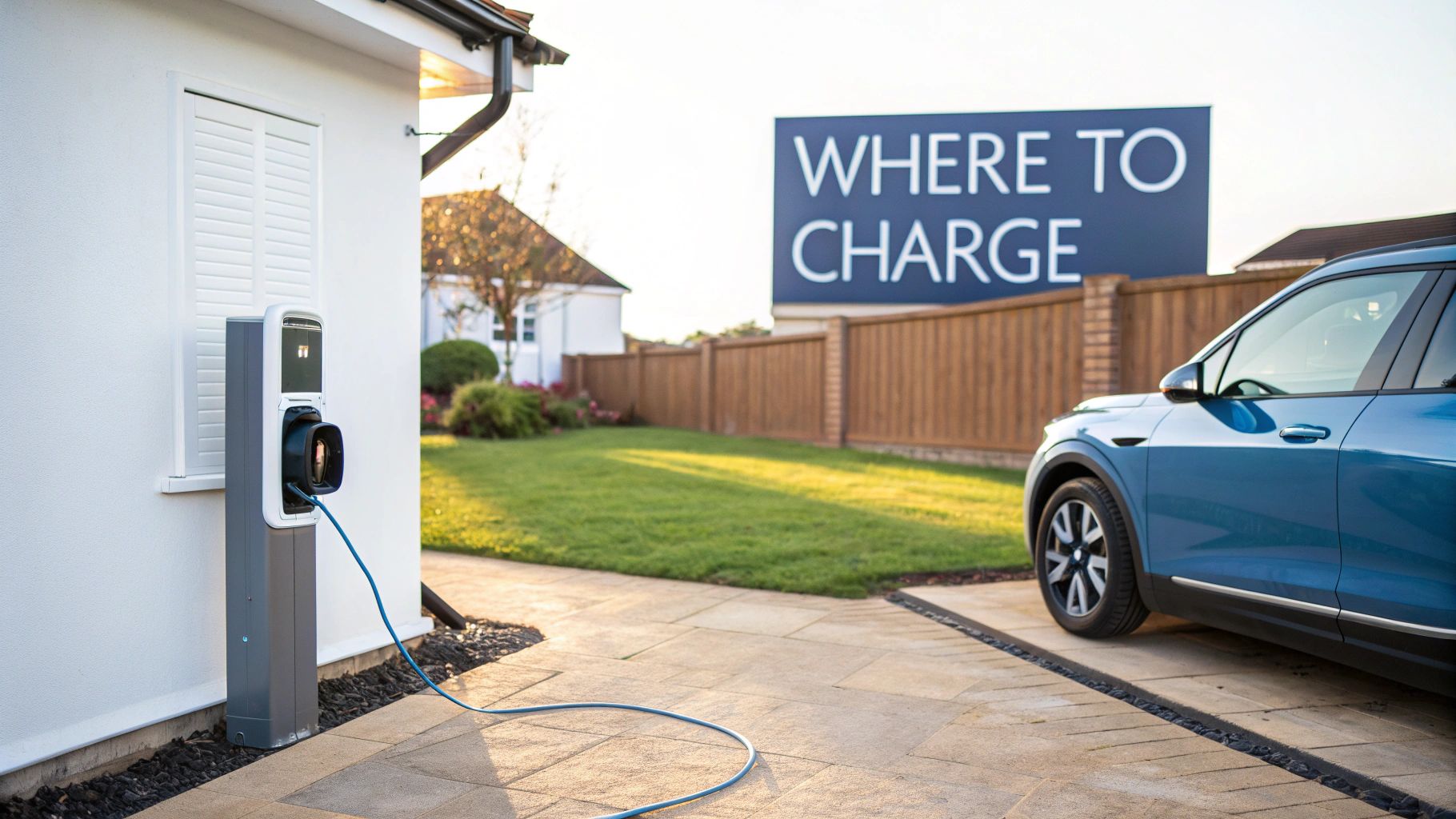
Knowing where to charge your electric car has become refreshingly simple. The UK's charging infrastructure is growing at an incredible pace, making charging points a common sight on our streets, at supermarkets and along motorways. This guide will walk you through all the options, from the convenience of your own driveway to the ever-expanding public network.
Charging locations generally fall into three main categories. Getting to grips with how they differ is the key to a hassle-free EV experience.
- Home Charging: This is the bedrock for most EV drivers. It's the cheapest and most convenient way to handle your day-to-day charging needs.
- Public Charging: An essential part of the ecosystem, especially for long journeys or for those who cannot charge at home. This network includes everything from slow chargers at your local gym to ultra-rapid chargers at service stations.
- Mobile Charging: A smart, flexible solution that brings a charger to you. It is perfect if you are ever caught short or need a top-up in a place without fixed charge points.
EV Charging Locations At A Glance
To make it even clearer, here’s a quick comparison of the most common places you'll be plugging in your electric vehicle across the UK.
| Location Type | Typical Cost | Best For | Charging Speed |
|---|---|---|---|
| Home | Lowest (overnight tariffs) | Daily top-ups, overnight charging | Slow to Fast (3-22kW) |
| Workplace | Often free or subsidised | Charging during the workday | Slow to Fast (3-22kW) |
| Public (AC) | Moderate | Topping up at destinations (shops, gyms) | Slow to Fast (7-22kW) |
| Public (DC) | Higher | Long journeys, rapid top-ups | Rapid to Ultra-Rapid (50-350kW+) |
| Mobile Service | Premium | Emergencies, locations without chargers | Varies (up to 160kW) |
This table gives you a snapshot but the real story is just how quickly the public network is catching up to demand.
A Rapidly Growing Network
The UK's charging network is not just growing—it's accelerating. As of June 2025, the country had over 82,000 public charging devices spread across more than 40,000 locations.
Think about that for a second. In the first half of 2025 alone, an average of 48 new chargers were installed every single day. This reflects a massive commitment to building an infrastructure that can easily keep up with the number of EVs on our roads. You can learn more about the remarkable growth of the UK EV charging network if you're curious about the numbers.
This rapid expansion means that wherever you are in the UK, a charging point is likely not far away. It transforms the question from "where can I charge?" to "which charging option is best for me right now?"
Ultimately, choosing the right option comes down to your lifestyle, driving habits and where you park. This guide will help you understand each scenario, giving you the confidence to power your electric journey.
Charging At Home: Your Personal Fuelling Station
For the vast majority of electric vehicle owners, the answer to "where do you charge electric cars?" is simple: right at home. This is not just about convenience—it fundamentally changes how you think about refuelling. Imagine waking up every morning to a fully charged car, ready for the day's journey, without ever needing to visit a petrol station again.
This is the reality of home charging. It turns your driveway or garage into a personal, cost-effective fuelling station. Over 80% of EV charging happens at home, making it the most popular and practical choice for daily driving.
Getting Started with Home Charging
Setting up a home charging point is more straightforward than many people think. You generally have two main options, each suited to different needs and budgets. The simplest method is using a standard 3-pin wall socket, which can be a good starting point but offers very slow charging speeds.
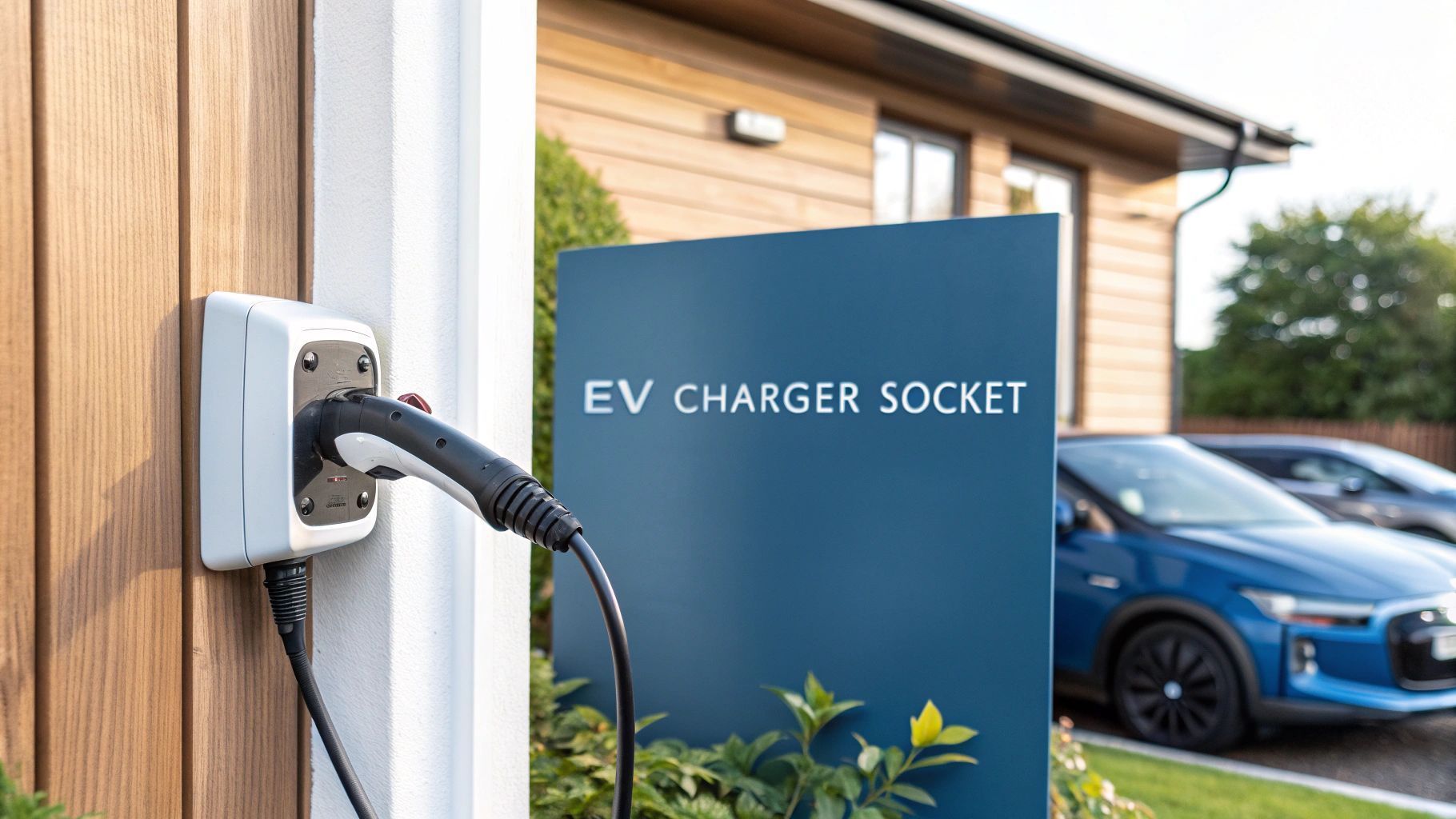
A far more effective solution is a dedicated wall box charger. These units are specifically designed for EVs, providing a much faster and safer charge.
- 3-Pin Plug Charger: This uses a standard UK household socket. It’s the slowest option, adding only a few miles of range per hour. It’s best for occasional top-ups or for plug-in hybrids with smaller batteries.
- Dedicated Wall Box (7kW): This is the most common home installation. A 7kW charger can fully charge most EVs overnight, typically in 6-12 hours and is significantly faster and safer than a 3-pin plug.
Costs and Savings
The initial outlay for a dedicated wall box might seem significant but the long-term savings are substantial. Installation costs vary but government grants are often available to help offset the expense. For a detailed breakdown, you can learn more about how to install an EV charger in the UK and explore the financial support available.
The real game-changer is leveraging off-peak electricity tariffs. Many energy suppliers offer special rates for overnight usage, meaning you could charge your car for as little as 7-10p per kilowatt-hour.
This is a fraction of the cost of petrol and considerably cheaper than public rapid charging. By scheduling your car to charge during these low-cost hours, you can dramatically slash your running costs. This smart approach ensures your EV is not only environmentally friendly but also incredibly light on your wallet.
Navigating The UK Public Charging Network
When you’re out on the road, the public charging network becomes your best friend. While charging at home will cover most of your day-to-day driving, the thousands of public charge points scattered across the UK are what give you the confidence to tackle those longer journeys.
You’ll find them strategically placed right where you need them most, from motorway services and petrol stations to supermarkets, public car parks and even your local gym.
Planning your stops effectively really comes down to understanding the different charger speeds. The UK network is built around a system designed to meet different needs, whether you need a rapid boost on the M1 or a slow top-up while you do your weekly shop. The speed directly affects how long you'll be plugged in.
This infographic gives a simple visual of how home charging, the foundation for most drivers, develops from a basic plug into a smart, cost-saving system.
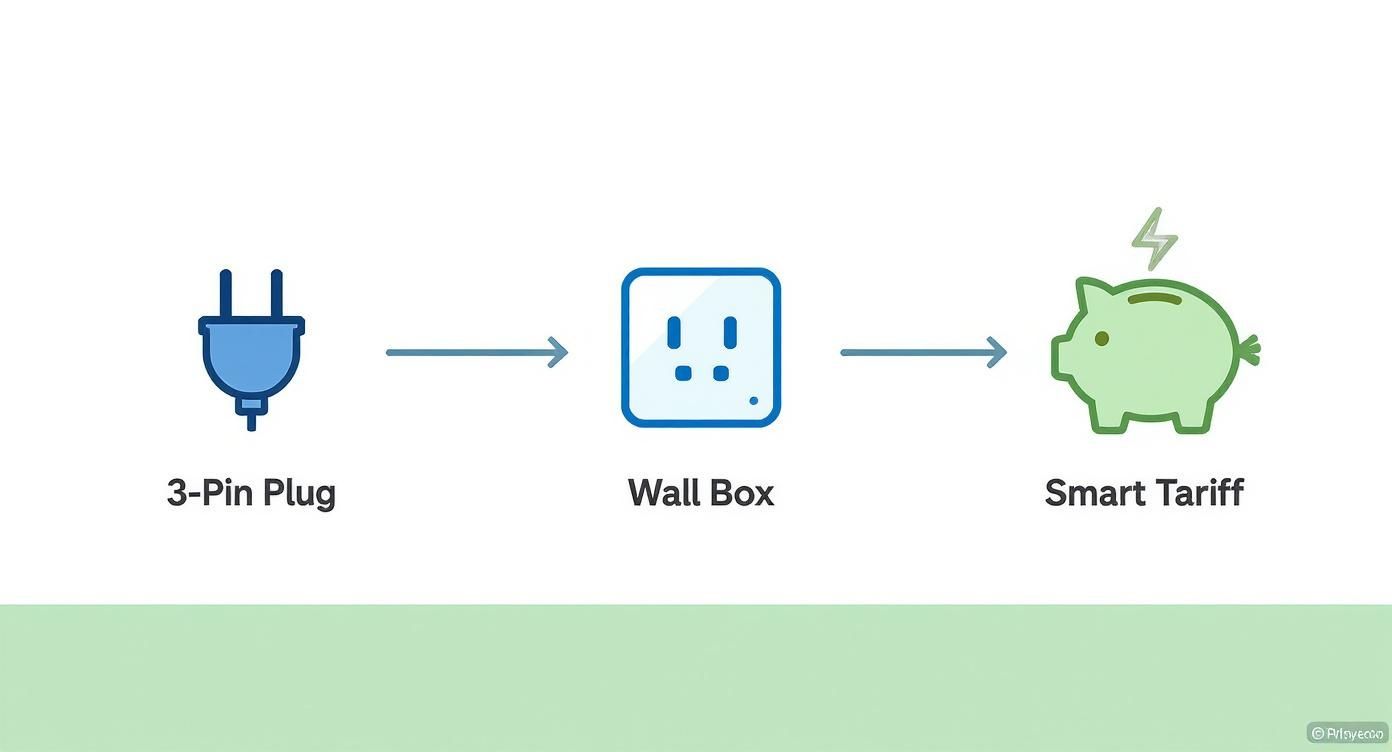
It shows the journey from a standard 3-pin plug to a dedicated wall box and, finally, to getting the best value with a smart tariff. Getting this right is what makes home charging as cheap as chips.
Charger Types You Will Encounter
The public network offers a mix of speeds, each serving a different purpose. Learning to spot the difference will help you pick the right charger for any situation. You can dive deeper by reading our complete guide on the different types of UK electric car charging points available.
- Slow Chargers (Up to 3-6kW): Often found in workplaces or public car parks, these are perfect for long stays where you’ll be parked for several hours anyway.
- Fast Chargers (7-22kW): Very common at destinations like supermarkets and leisure centres. They can add a decent chunk of range in an hour or two while you’re busy elsewhere.
- Rapid & Ultra-Rapid Chargers (50kW+): These are the workhorses for long-distance travel, located at motorway services and dedicated charging hubs. They can add over 100 miles of range in as little as 20-30 minutes , making them ideal for a quick pit stop.
Paying for Your Charge
At first glance, the number of network operators can feel a bit complex but things are getting much simpler. Major players like Pod Point, BP Pulse and InstaVolt run large parts of the network.
Payment methods have improved dramatically. While some networks still use RFID cards or require an app, the trend is firmly moving towards simple, universal contactless card payments.
This shift is a game-changer, allowing any driver to pull up, tap their card and start charging without juggling multiple accounts. Access is also expanding at a blistering pace thanks to serious investment. For instance, charging electric cars in the UK is getting easier as government funding fuels infrastructure growth, with Wales seeing a 27% increase in chargers in 2025 from local projects. You can read more about the EV charging statistics for 2025 and see how this funding is making a real difference.
Mobile Charging: A Flexible And Profitable Business
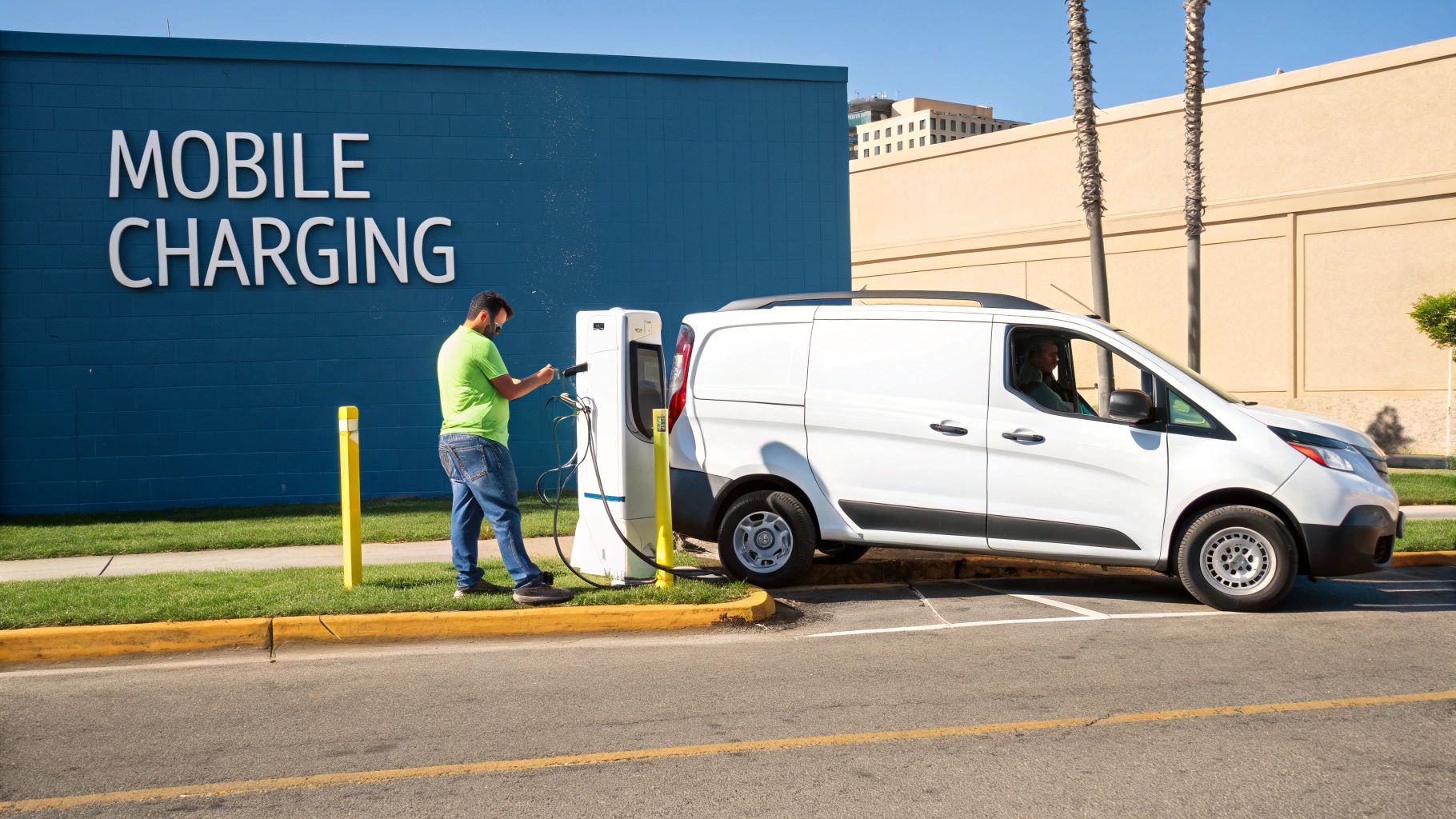
While home and public chargers are the cornerstones of EV infrastructure, a third, incredibly flexible option is making waves. Imagine if the answer to "where do you charge electric cars?" was simply: wherever you happen to be. That’s the entire premise behind mobile EV charging, a service that brings the power directly to the driver.
These services use specially kitted-out vans carrying powerful, portable battery systems. They can bring a stranded EV back to life, top up a fleet of company cars in a car park or serve residents in a block of flats with no dedicated charge points. It’s a game-changing solution that adds a layer of convenience drivers have been waiting for, while also opening up a brilliant business opportunity.
This approach hits some of the biggest pain points holding back EV adoption. For drivers who cannot install a charger at home, it is a reliable alternative to playing the public charging lottery. For businesses running electric fleets, it is a smart way to keep vehicles powered up without the hefty cost and disruption of installing fixed infrastructure.
The Business Of Charging On The Go
Mobile EV charging is more than just a handy service; it's a fast-growing industry with a solid business case. An operator can build a profitable model around several income streams, serving everyone from individual drivers to large commercial clients. The very nature of the service allows for dynamic pricing that really makes the most of its on-demand value.
At its core, the business is about providing power where it’s needed most. This might be an emergency call-out for a driver who has run flat or it could be a scheduled weekly top-up at a customer’s workplace. By solving a critical and often stressful problem, operators can rightly charge a premium for the convenience they offer.
How A Mobile Operator Makes Money
A smart mobile charging business does not just sell electricity. A well-planned operation generates revenue from a few different angles, all of which contribute to a healthy bottom line.
- Service Fees: This is the base charge for the energy delivered, priced per kilowatt-hour ( kWh ). Operators can set competitive rates that appeal to customers while ensuring a decent profit margin.
- Call-Out Charges: For emergency or on-demand jobs, a fixed call-out fee makes perfect sense. It covers the travel and immediate availability of the service, much like a traditional roadside assistance model.
- Fleet Contracts: Landing contracts with businesses running electric vans or company cars is a fantastic source of stable, recurring income. You can offer scheduled charging at their premises, guaranteeing their fleet is always ready for the day ahead.
- Event Services: Mobile units are perfect for providing temporary power at events like music festivals, trade shows or outdoor markets where EV drivers will need a top-up.
By blending these revenue streams, a single mobile charging van can become a seriously profitable asset. The demand for flexible, on-the-spot charging is only going to grow, creating a huge opportunity for anyone looking to get into the EV support market.
For anyone thinking about this kind of venture, it's crucial to understand the potential return on investment. The initial outlay for a van and a high-quality charging unit is not small but the potential for high-margin service delivery is substantial. If you are curious about the financials, you can dive into a detailed breakdown of how to build a profitable business with a portable charging station for electric cars and see exactly how the numbers stack up. This business model does not just provide a vital service; it’s a smart entry into the future of transport.
Finding and Paying for Charging: Your Essential Toolkit
Knowing where the chargers are is only half the battle; being able to actually use them without any drama is what really matters. Thankfully, your smartphone is the key to unlocking a stress-free EV life, helping you plan journeys, find working charge points and handle payments in just a few taps.
It was not long ago that navigating the public charging network felt like guesswork. Now, brilliant apps like Zapmap and PlugShare have organised the entire landscape onto a single, easy-to-use map. These tools are indispensable, letting you filter chargers by speed, network or connector type to find the perfect match for your car.
With a quick look, you can see if a charger is currently in use, check its recent history and even read comments from other drivers. This real-time feedback is a game-changer for avoiding a wasted trip to an occupied or out-of-service charge point.
Mastering the Best Charging Apps
To get the most out of these apps, spend a moment with their filter options. Doing this transforms a cluttered map into a personalised guide showing you only the chargers you can actually use.
- Filter by Connector: Select your car’s specific connector—like CCS or Type 2 —to immediately hide all the incompatible charge points.
- Filter by Speed: If you’re on a long journey and need a quick top-up, filter for rapid chargers ( 50kW+ ) to see only the fastest options.
- Filter by Network: Got a subscription with a provider like Gridserve or Osprey? You can choose to see only their locations on the map.
This level of control is vital because public charger distribution can be a bit of a postcode lottery. For instance, by April 2025, London had an impressive 263 chargers per 100,000 residents while Northern Ireland had just 35 . Using app filters helps you pinpoint the best options, no matter where you find yourself.
Simplifying Payments on the Go
Paying for a charge has become much simpler too. The old days of needing a wallet full of different RFID cards for every network are, thankfully, coming to an end.
The most welcome change has been the widespread adoption of contactless payment. Nearly all new rapid chargers now let you simply tap your bank card to start and stop a session, making public charging as easy as buying a coffee.
For drivers who frequently use public chargers, a network subscription can be great value. You pay a small monthly fee in exchange for lower per-kWh rates, which can add up to serious savings over time. For most people, though, the pure convenience of pay-as-you-go with a contactless card is more than enough.
And when you're thinking about where to stop and charge, general parking resources can be a great addition to your toolkit. Platforms like Parking Cupid's platform can help you find spots to park up while you power up.
Your Top EV Charging Questions Answered
Once you get the hang of charging your electric car, you’ll find a few common questions pop up. It does not matter if you are a brand-new EV owner or you've been driving electric for years—getting clear answers helps make the whole experience smoother.
Let's start with the big one: how long does it actually take to charge? There’s no single answer, as it all comes down to the size of your car’s battery and the power of the charger you’re plugged into.
- At Home (7kW): Think of this as your nightly routine. A full charge usually takes 8-12 hours , perfect for plugging in before bed and waking up to a full battery.
- Rapid Charger (50kW): You'll find these at motorway service stations. They're great for a quick boost on a long trip, adding about 100 miles of range in just 30-40 minutes .
- Ultra-Rapid Charger (150kW+): These are the real game-changers. If your car can handle the speed, you can add that same 100 miles in as little as 10-15 minutes .
Other Practical Bits and Bobs
Another question we hear all the time is about cables. Do you need a boot full of different wires? Thankfully, the answer is no. Most modern EVs in the UK use a Type 2 connector for home and destination charging and a CCS connector for the fast stuff. Since most rapid chargers have their own cables tethered to the unit, you will generally only need the one that came with your car.
And what about the cost? Is charging at home really that much cheaper? Absolutely. If you charge at home, especially on a smart off-peak tariff, you could be paying as little as 7-10p per kilowatt-hour (kWh) . Compare that to public rapid chargers, where prices can range from 45p to over 80p per kWh, and the savings become obvious.
While public charging offers incredible speed when you are on the move, making a habit of charging at home is where you will see the biggest savings. It is the simplest way to get the most out of owning an EV.
Of course, owning an EV involves more than just charging. You might have other practical questions about things like finding a reliable guide for electric car key replacement. Getting to grips with these smaller details is all part of feeling confident on your electric journey.
For a flexible and reliable charging solution that comes right to you, ZAPME offers pioneering mobile charging units. Discover how our on-demand services can support your EV needs at https://www.zapme.biz.