

Where can you charge an electric car in the UK?
Figuring out where to charge your electric car in the UK is a lot simpler than most people think. Really, it boils down to four main options: at home , at your workplace , at public charging stations and now, through innovative mobile charging services . The best one for you will depend on your daily routine, how far you are driving and your budget.
A Guide to UK EV Charging Locations
Thinking about where to top up your EV is a bit like planning how you charge your phone. The most convenient and cheapest option is almost always overnight at home but when you are out and about, there is a fast-growing network of top-up points ready and waiting.
Getting your head around these different charging locations is the first step to feeling confident about making the switch to electric. Each one strikes a different balance between cost, speed and convenience, designed to fit different parts of your life. For the daily commute, home and workplace chargers are your best friends. For those longer road trips or unexpected low-battery moments, public and mobile networks are there to back you up.
This guide will walk you through each of these four key areas, giving you a clear map of the EV charging landscape as it stands today. We will look at:
- Home Charging: The bedrock for most EV drivers, offering cheap, convenient overnight power.
- Workplace Charging: A great way to top up your battery while you are at your desk.
- Public Networks: The ever-growing system of chargers you see at supermarkets, motorway services and local car parks.
- Mobile Services: A flexible new solution that brings the charge directly to you, wherever you are.
By the end, you will see just how easy it has become to keep your electric car powered up and ready to hit the road.
EV Charging Options at a Glance
To make things even clearer, here is a quick comparison of the main places you can charge your electric car. This table breaks down the pros and cons of each, helping you see which option fits best for different situations.
| Charging Location | Typical Cost | Convenience Level | Best For |
|---|---|---|---|
| Home | Lowest (overnight tariffs) | Very High | Daily charging, overnight top-ups |
| Workplace | Low or often free | High | Commuters, topping up during the day |
| Public | Variable (pay-as-you-go) | Medium to High | Long journeys, quick top-ups while shopping |
| Mobile | Premium service | High (on-demand) | Emergencies, locations without fixed chargers |
As you can see, each location plays a specific role. Your daily charging will likely be a mix of these, with home and work covering the day-to-day and public or mobile services stepping in when you are further afield.
The Unbeatable Convenience of Home Charging
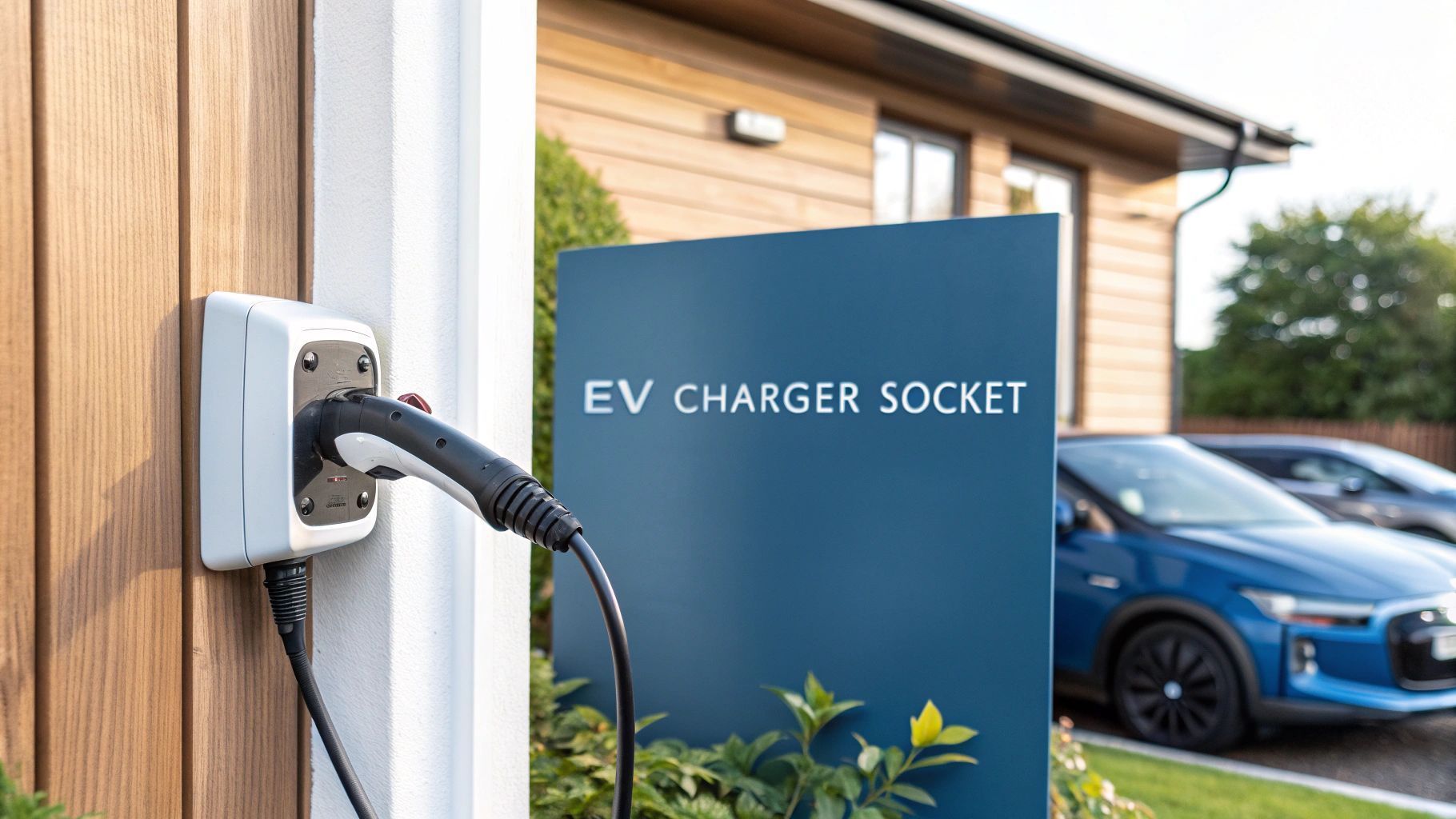
For the vast majority of electric car drivers, the answer to "where can you charge an electric car?" is refreshingly simple: at home. This really is the backbone of EV ownership, offering a level of convenience and cost-effectiveness that petrol stations just cannot match. The daily routine is transformed; you just plug in when you arrive home and wake up every morning to a fully charged car, ready for the day ahead.
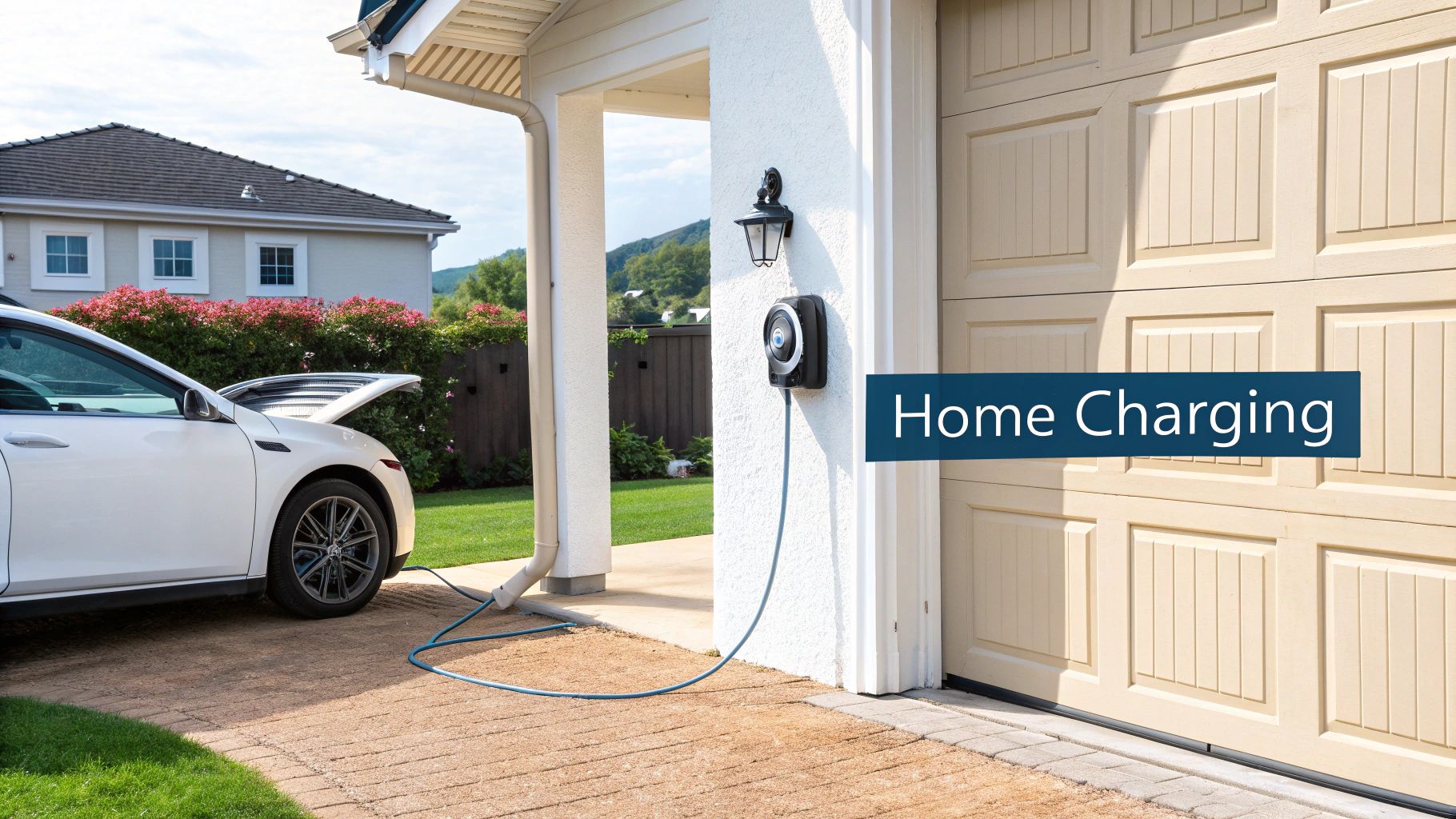
This simple habit completely eliminates those weekly trips to the petrol station. Instead, your 'refuelling' happens while you sleep, using electricity that is significantly cheaper than petrol or diesel. The savings get even better when you pair a smart charger with an off-peak electricity tariff. These tariffs offer rock-bottom electricity rates overnight when energy demand is low, dramatically cutting your running costs.
Getting a Home Charger Installed
While you can technically use a standard 3-pin wall socket, it is painfully slow and really should only be for emergencies. A dedicated home charge point is by far the better solution, being much faster and safer for regular use.
- Standard 3-pin Plug: This trickles power at around 2.3kW , adding only about 8-10 miles of range per hour. A full charge could easily take over 24 hours.
- Dedicated 7kW Charger: This is the most common home unit and a real game-changer. It adds roughly 30 miles of range per hour and can comfortably charge most EVs from empty to full overnight.
For anyone looking to embrace the convenience of charging at home, getting familiar with the process of EV charger installations is the first step. The government also offers support to make it more affordable. For instance, the EV chargepoint grant provides funding for people in flats and rented properties, helping to offset the initial cost.
To get a full picture of what is involved, you can explore our detailed guide on how to install an EV charger in the UK. It makes the dream of waking up to a full 'tank' more accessible than ever.
Powering Your Workday with Workplace Charging
Imagine leaving the office with a fully charged car every single day. For thousands of employees across the UK, workplace charging is turning this into a reality, making it one of the most convenient answers to the question of where to charge an electric car.
This setup is not just a great perk for staff; it is a smart move for businesses, too.
For employees, the benefit is crystal clear. You arrive at work, plug in your car and let it refuel while you earn. It completely removes the worry of hunting for a public charger after a long day and often works out cheaper than public networks. Some employers even offer it for free as a staff incentive.
For employers, installing charge points is a powerful tool for attracting and retaining top talent. It also helps businesses meet their sustainability goals and project a modern, environmentally-conscious image.
This growing trend transforms otherwise unproductive parking time into valuable refuelling time.
How Workplace Charging Schemes Work
Typically, businesses install a number of charge points in their car parks. These are often 7kW chargers , similar to what you would find at home, which are perfect for topping up a car's battery over a standard eight-hour workday.
Access is usually managed through a simple RFID card or a smartphone app. Some companies may charge a small fee per kWh to cover electricity costs, while others absorb it as a forward-thinking employee benefit. To learn more about setting these systems up, our complete UK workplace EV charging guide provides a detailed overview.
To give businesses a helping hand, the government offers the Workplace Charging Scheme (WCS) . This grant provides financial support to businesses, charities and public sector organisations, helping with the upfront costs of buying and installing EV charge points.
Hitting the Road: Understanding the UK's Public Charging Networks
When you are out and about, especially on longer trips, knowing where to top up your electric car is everything. Thankfully, the UK’s public charging network is your best friend here, offering a massive range of options whether you need a quick boost while you shop or a full refuel on a cross-country drive.
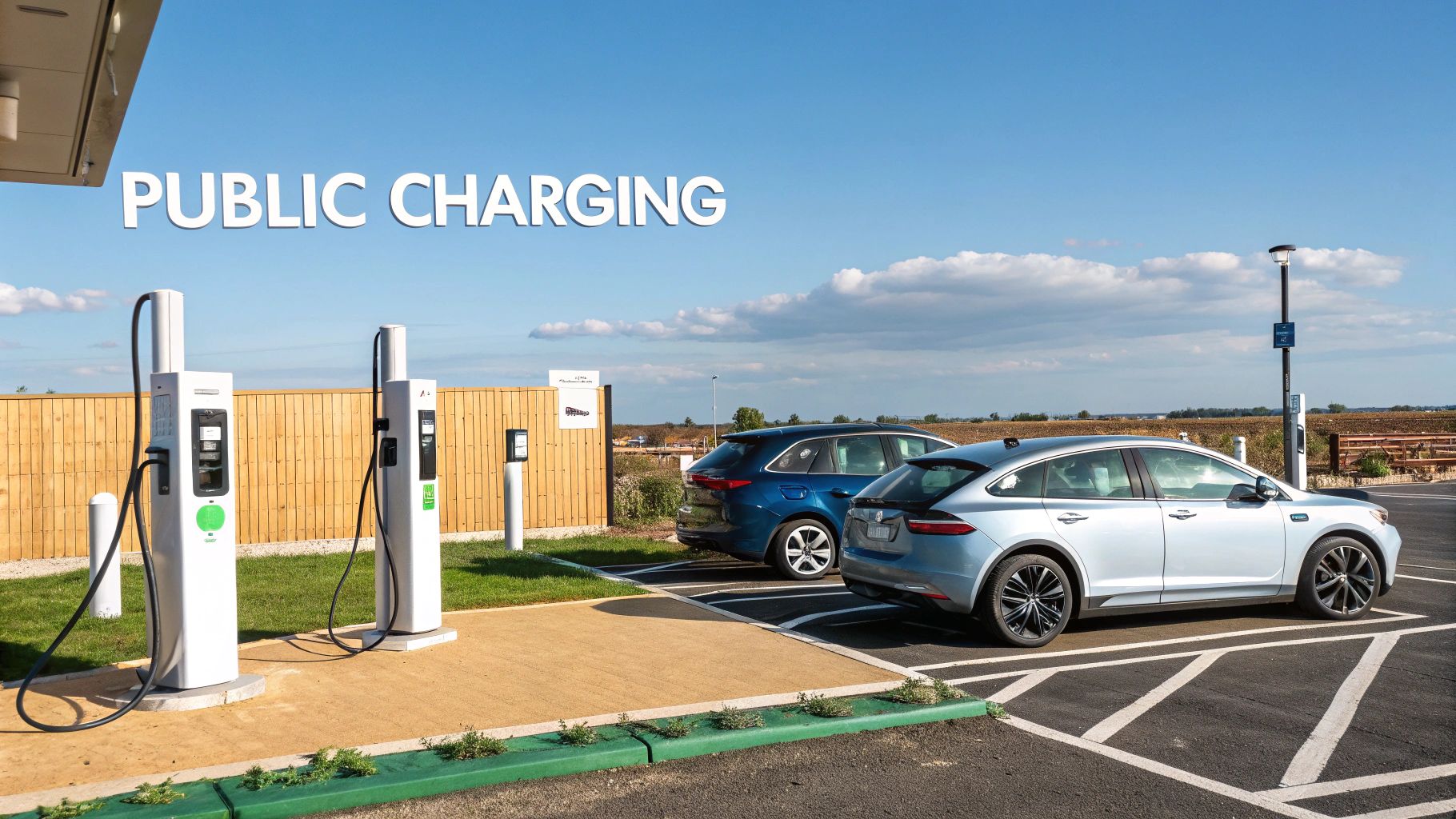
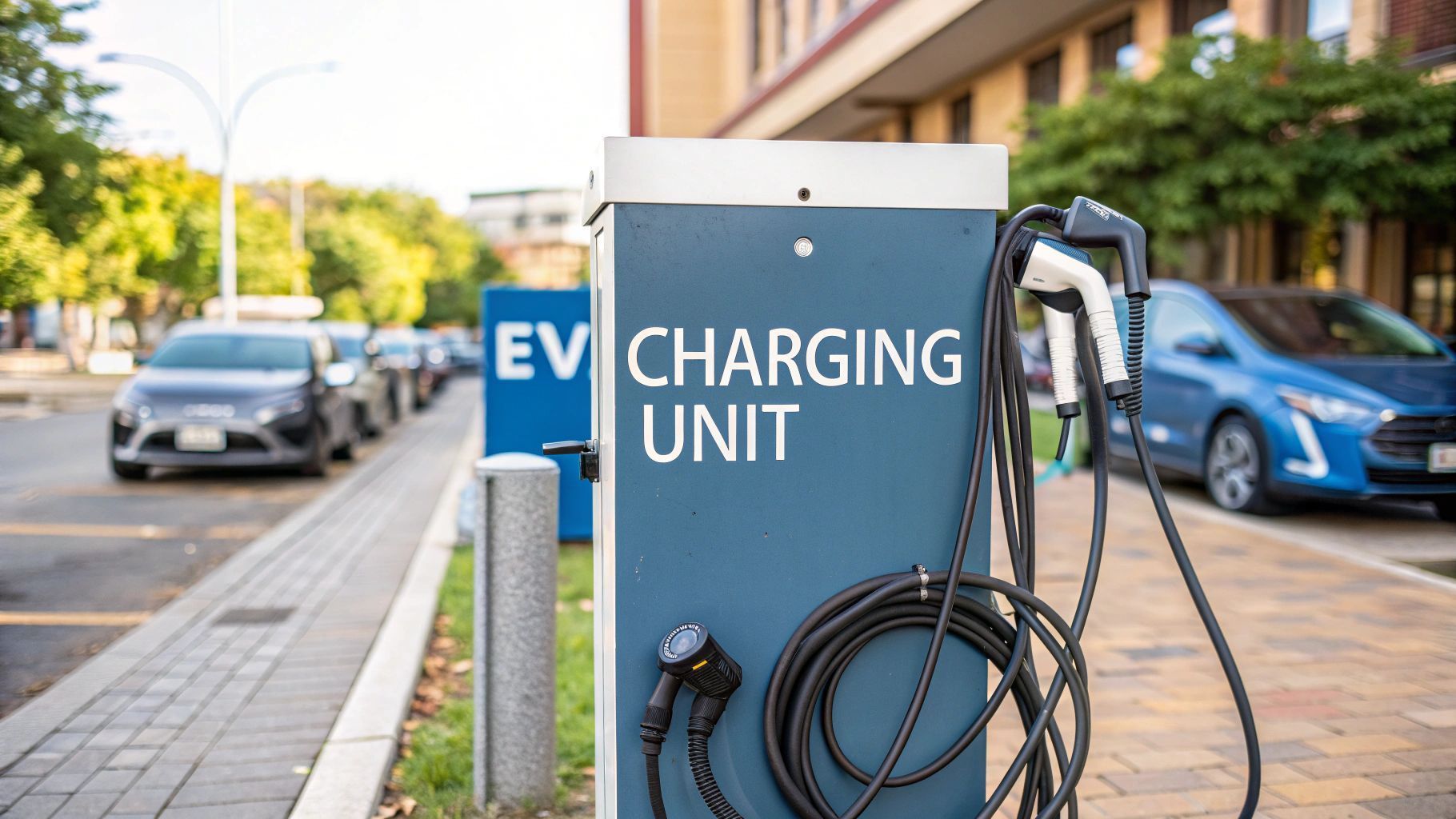
Think of the network as a diverse ecosystem. You will find slower 7kW chargers at places like supermarkets and cinemas, which are perfect for adding a decent amount of range over an hour or two. At the other end of the scale, motorway service stations are home to ultra-rapid chargers (150kW and up) that can pump in hundreds of miles of range in the time it takes you to grab a coffee.
Who’s Who and What to Use
The UK’s charging scene is not just getting bigger; it is getting more varied, with all sorts of operators providing services. Big names like Tesla, InstaVolt and Osprey are leading the charge with thousands of rapid and ultra-rapid points, while brands like BP Pulse also have a huge presence. The network is growing at an incredible pace, with an average of 1,865 new chargers being installed every month—that is a 34% increase from just a couple of years ago. You can get a full picture of the UK charging market and its rapid growth on anariev.com.
To make sense of it all, journey planning apps are an absolute must.
An app like Zapmap is indispensable for any EV driver. It is like a live map, showing you not just where chargers are but also their speed, cost and—most importantly—whether they are actually working and available right now.
Using these tools helps you plan your route with confidence and avoids the sheer frustration of turning up to find a charger that is broken or already in use.
Payments and Good Manners on the Network
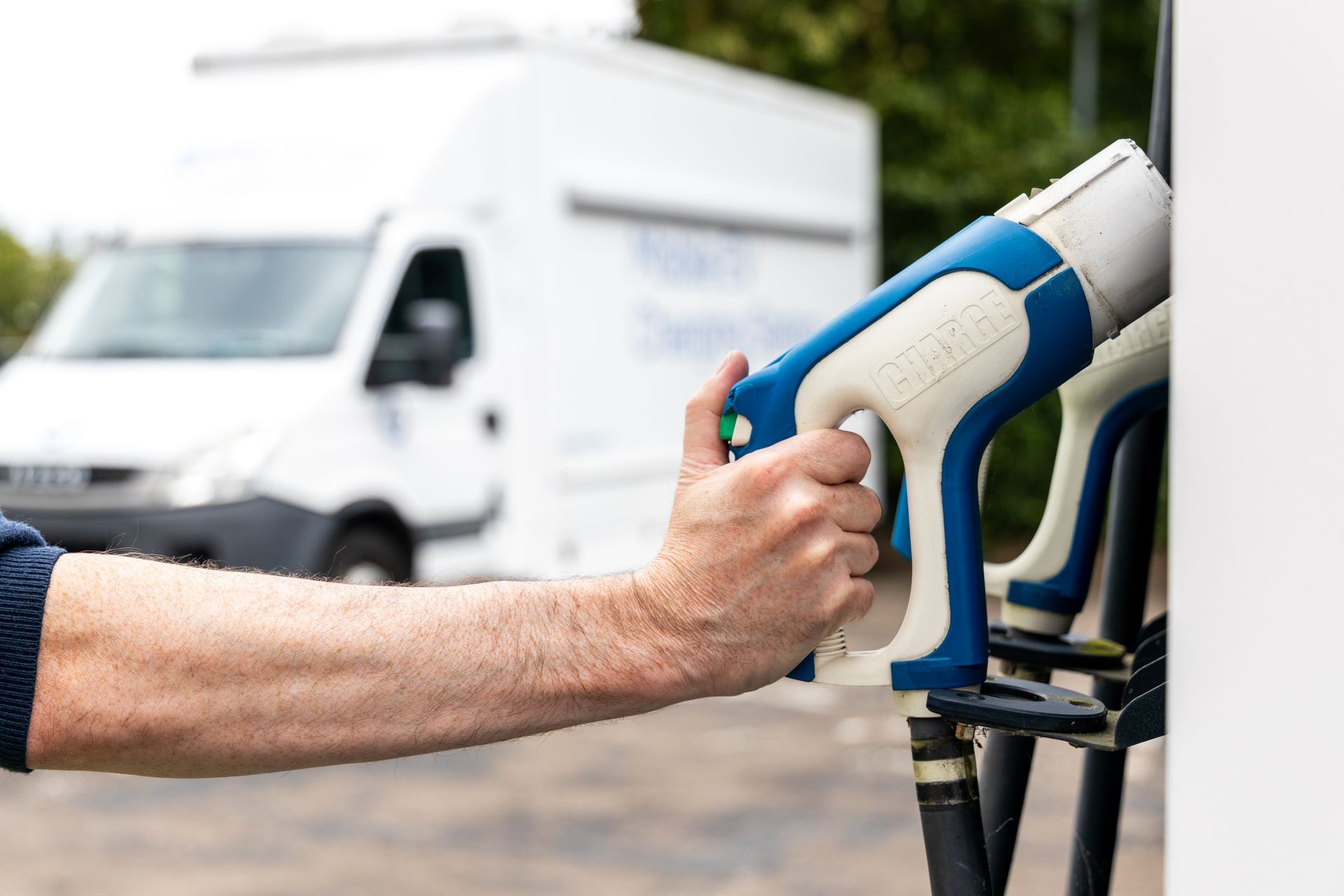
Paying for a public charge has become so much simpler. While some older units might still need a network-specific RFID card or app, the vast majority of new rapid chargers now have straightforward contactless payment. You just tap your bank card to start and stop the charge, pretty much like paying for petrol.
To make sure everyone has a decent experience, a little bit of charging etiquette goes a long way.
- Do not hog the charger: As soon as your car has enough juice to get you where you are going, unplug and move on. This is especially true at busy rapid charging hubs where others will be waiting.
- Stick to 80%: On rapid chargers, the charging speed drops off a cliff after your battery hits 80%. It is often much quicker (and more considerate) to stop there and let someone else have a go.
- Park properly: Make sure you park close enough for the cable to reach without being stretched taut or blocking other bays. A little care makes a big difference.
The Future of Charging Is Mobile and Profitable
Imagine a power bank on wheels that comes directly to you, wherever and whenever you need it. This is not some far-off concept; it is the reality of mobile EV charging, a service that directly answers the question of where to top up when fixed charge points are not an option. It is a powerful antidote to 'range anxiety' for drivers and a surprisingly lucrative opportunity for entrepreneurs.
This on-demand model essentially turns any location into a charging station, whether it is a city centre office block or a remote event venue. For drivers, this means ultimate convenience. You could be stranded with a flat battery, need a scheduled top-up at your flat that lacks a dedicated charger or simply want to skip the hunt for an available public station.
Building a Business on Wheels
The business model for a mobile charging operator is incredibly compelling. It generates income from multiple streams but comes with much lower overheads than installing and maintaining fixed infrastructure. There are no costly groundworks, grid connections or long-term site leases to worry about.
Instead, profitability is built on a simple, effective structure:
- Call-Out Fees: A standard charge for deploying the mobile unit to a customer's location, giving you an immediate revenue baseline.
- Per-kWh Energy Sales: The core of the service, where you sell electricity at a competitive but profitable rate, just like a public charging network.
This combination allows for high-margin returns. An operator can serve individual motorists in emergencies, provide scheduled charging for commercial fleets that lack on-site facilities or even offer power solutions at large-scale public events.
A High-Return Investment
The flexibility of this model is its greatest strength. An operator can position their mobile units in areas with high demand or where fixed infrastructure is sparse, maximising their potential customer base. With lower initial investment and operational costs, the path to profitability is often much faster and more direct than with traditional charging stations.
A mobile charging business thrives by converting inconvenience into opportunity. For every driver worried about finding their next charge, an operator can provide a simple, on-demand solution and generate significant income in the process.
This approach is not just a stopgap; it is a key part of the evolving charging landscape. As you weigh your options, understanding the differences between fixed and mobile power is essential. You can explore a detailed comparison in our article on the future of EV charging stationary vs mobile solutions . This service represents a shift towards a more adaptable and customer-focused charging experience.
Where Can You Find EV Chargers in the UK?
While the UK’s charging network is growing at a fantastic pace, finding a charger often comes down to one simple thing: your postcode. The availability of charge points still varies wildly from one region to another and getting to grips with this geographical lottery is key to planning stress-free journeys.
The distribution of chargers is usually driven by things like population density and how much a local council has invested in the technology. Some areas are brilliantly kitted out but others are definitely playing catch-up. This can be a real headache for local EV drivers and anyone passing through a charging "cold spot."
The UK's Charging Hotspot
Right now, Greater London is the undisputed king of EV charging. The capital is packed with over 25,502 public charging devices , which accounts for roughly 30% of all public chargers in the entire UK. That density means Londoners have far more choice, with an impressive 263 devices per 100,000 people —more than double the national average. The South East comes in at a distant second with 10,852 devices.
At the other end of the scale, Northern Ireland has the fewest chargers, with just 707 devices in total. This works out to a mere 35 chargers per 100,000 people , throwing the massive regional gap into sharp relief. You can dig deeper into these figures over at Uswitch.com's regional EV charging statistics page.
This imbalance really brings home the importance of planning ahead. A driver in London might stumble upon a charger on almost any street corner but someone travelling through less-equipped regions needs to map out their stops with military precision.
This is where mobile charging operators can really shine, stepping in to fill the gaps in areas with high demand but not enough fixed charge points. The chart below breaks down how a mobile charging business makes its money.
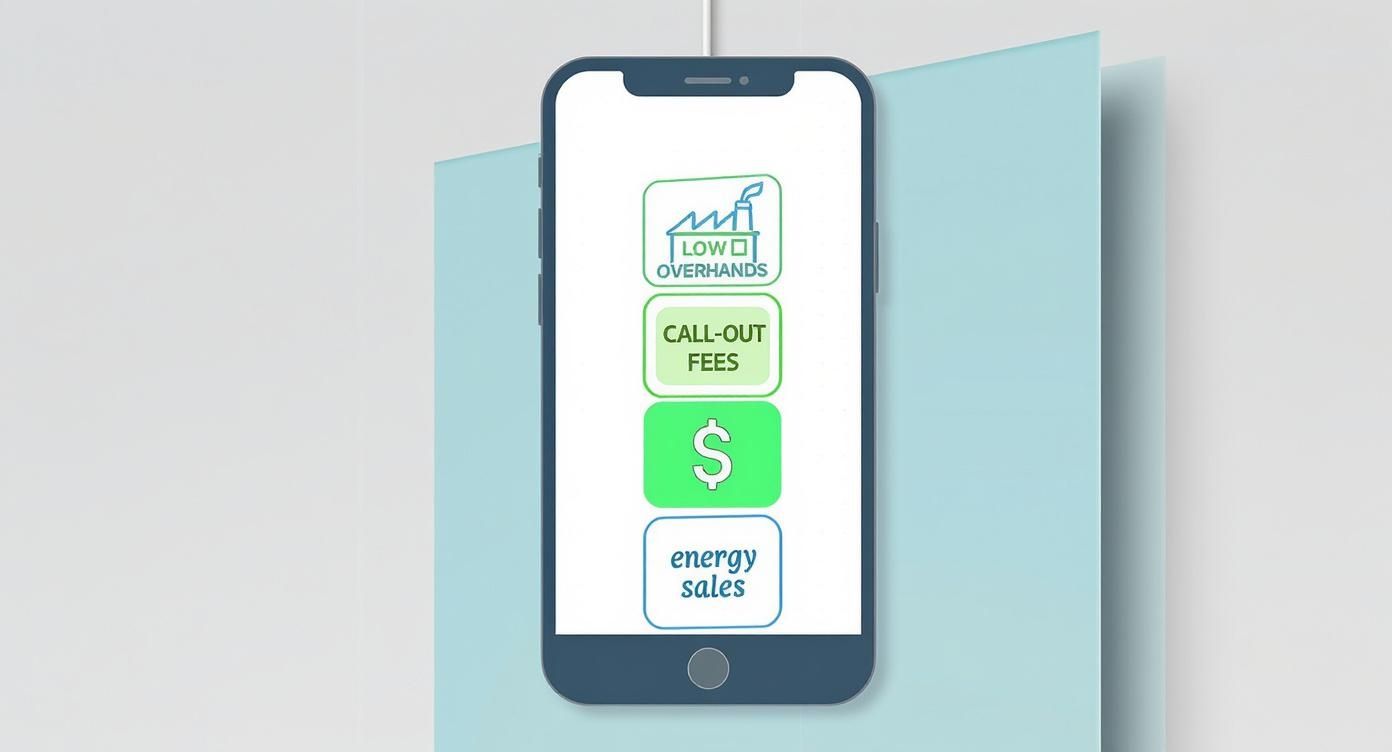
As you can see, the business model is pretty straightforward, built on direct income from call-out fees and selling energy. But the real advantage comes from having much lower overheads compared to the cost of digging up pavements to install fixed charging stations.
Got Questions About Charging Your Electric Car?
Making the switch to an electric car is a big step and it is natural to have a few questions. Getting your head around charging is usually top of the list. Here, we will tackle some of the most common queries we hear from new and soon-to-be EV drivers, building on what we have already covered.
We have kept the answers straightforward and practical, giving you the real-world knowledge you need to start driving electric with confidence.
How Long Does It Really Take to Charge an Electric Car?
This is the big one and the honest answer is: it depends. The charging time comes down to two main things – the size of your car’s battery and the speed of the charger you are plugged into.
Think of it this way: a typical 7kW home charger will easily top up most EVs from empty to full overnight, usually taking about 8-10 hours. But if you are on a long motorway trip, a 150kW ultra-rapid public charger can add 100 miles of range in just 15-20 minutes. It is all about matching the charging session to what you need at that moment.
Do I Need a Different App for Every Charging Network?
Not necessarily and things are getting better all the time. While it is true that many public charging networks have their own apps, more and more new chargers are being fitted with simple contactless card payment terminals. This makes the whole experience as easy as paying for petrol.
Is It Cheaper to Charge an EV at Home or in Public?
Charging at home is almost always the cheapest way to 'fuel' your electric car. This is especially true if you can get onto an off-peak electricity tariff, which offers much lower rates for charging overnight while you sleep. The savings can be massive.
Public rapid chargers are brilliant for their speed and convenience when you are on the move but you pay a bit more for that service. It is a bit like buying a sandwich at a motorway service station versus making one at home – you pay a premium for the convenience of getting what you need, right when you need it.
Ready to bring the future of charging directly to your vehicle? ZAPME offers mobile EV charging solutions that eliminate range anxiety and deliver power wherever you need it. Discover our services at https://www.zapme.biz.