

Using an EV Charger Extension Cord Safely
You wouldn't use a garden hose to put out a house fire, would you? While it's technically possible to connect a standard household extension cord to your EV charger it’s an incredibly dangerous idea that every manufacturer and safety expert strongly advises against. A regular cord is simply not built for the sustained heavy power demand of an EV, creating a serious fire risk.
Why Your Standard Cord Is A Major Hazard
Think of your EV charger as needing a dedicated motorway for its electricity supply. It pulls a huge constant current for hours on end. Plugging it into a typical domestic extension cord is like forcing all that motorway traffic down a narrow country lane. The system just can’t cope with the pressure.
This mismatch is where the real danger lies. The thin wires inside a standard cord create high electrical resistance when that much power is forced through them. This resistance generates intense heat which can easily melt the cable's plastic insulation and ignite a fire. It’s a gamble not worth taking with your car, your home or your family’s safety.
The Right Tool For The Job
A purpose-built EV charger extension cable is a completely different beast. Its wires are significantly thicker, its connectors are far more robust and it includes safety features designed specifically to handle the unique demands of charging a vehicle. The difference isn't trivial; it's the difference between a safe temporary fix and a potential disaster.
To understand just how different these cables are, a direct comparison makes the risks of using the wrong one crystal clear.
Standard Extension Cord vs Purpose-Built EV Cable
| Specification | Standard Household Extension Cord | Heavy-Duty EV Extension Cable |
|---|---|---|
| Wire Gauge | Thinner wires (e.g., 14-16 AWG), not designed for high, sustained loads. | Thicker, lower-gauge wires (e.g., 10 or 12 AWG) to handle high current safely. |
| Current Rating | Typically rated for 10-13 amps, far below most EV charging needs. | Rated for continuous loads of 16, 32 amps or more, matching EV charger outputs. |
| Insulation | Standard insulation that can overheat and melt under sustained EV charging loads. | Heavy-duty, weather-resistant insulation designed to dissipate heat safely. |
| Connectors | Standard plugs and sockets that can degrade or melt from prolonged high current. | Robust, high-quality connectors (e.g., J1772) built for repeated, high-power use. |
| Safety Features | Lacks specific EV safety protocols, like temperature monitoring or communication. | Often includes thermal sensors and other features to prevent overheating and ensure safety. |
The takeaway is simple: a standard cord is designed for intermittent use with low-power appliances, not the marathon effort of charging an electric car. Only a purpose-built EV cable has the muscle to do the job safely.
The first and most important check is right there on the cable itself.
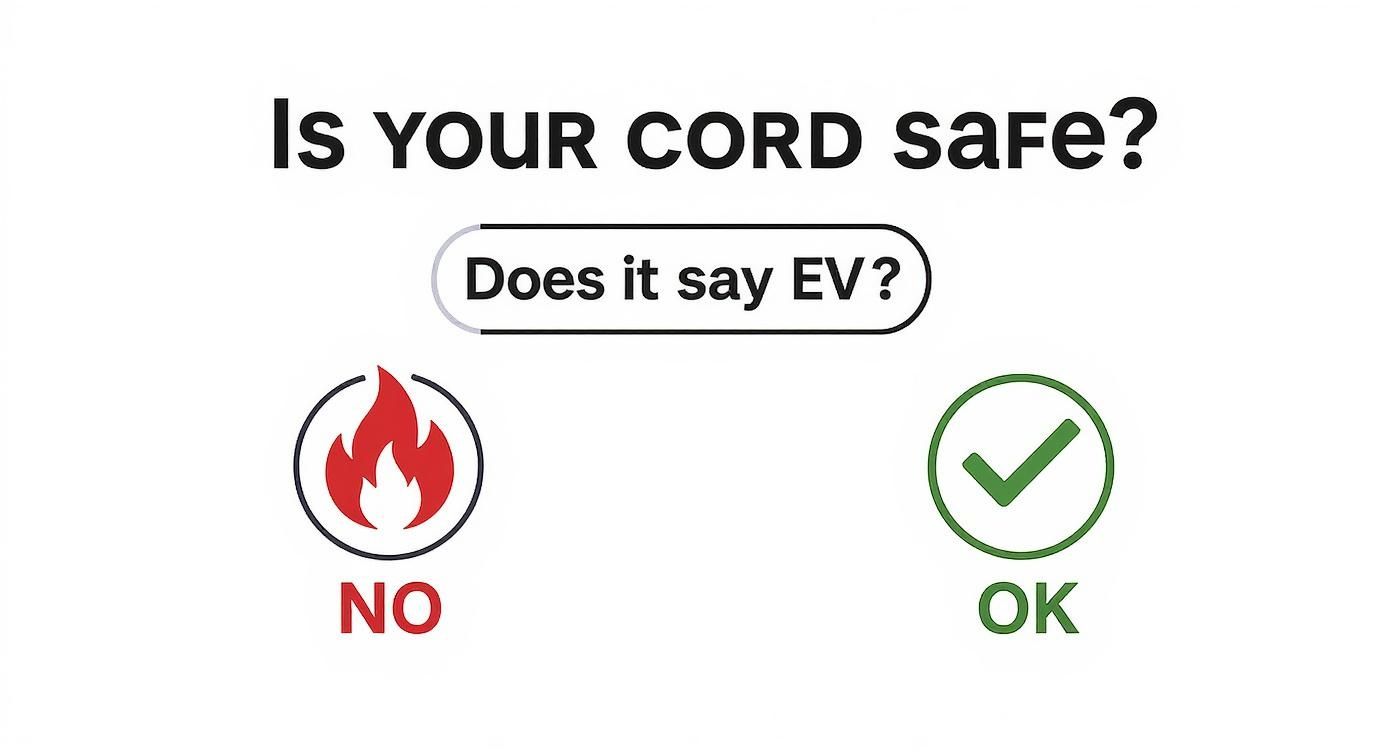
If the cord isn't explicitly marked for EV use it’s not safe for charging your car. End of story.
Exploring Safer, Flexible Charging
The temptation to grab a standard cord often comes from a simple need for flexibility when a fixed charging point is just out of reach. Thankfully there are much safer ways to solve this problem. Mobile charging services for instance bring the power directly to your vehicle, eliminating the need for any risky extension cables. This model not only offers a safer alternative but also opens up a profitable business opportunity for operators.
For drivers who need charging flexibility, mobile EV charging offers a safe, convenient and reliable alternative to risky extension cords. It completely removes the guesswork and danger, providing on-demand power wherever you are parked.
This approach not only guarantees safety but also offers incredible convenience. Instead of trying to patch together a solution with the wrong equipment you can rely on a professional service to handle it properly. For those interested in this flexible approach you can find more information in our guide to portable electric car chargers.
Now, let's dig deeper into the specific risks of using the wrong cable and how to identify a genuinely safe option if a temporary extension is your only choice.
The Real Dangers of Using the Wrong Cable

To really get why using the wrong EV charger extension cord is a bad idea, picture this: you're trying to funnel water from a fire engine through a standard garden hose. The sheer pressure would make the little hose bulge, strain and eventually burst. That’s a pretty good parallel for what happens with electricity when you try to charge your car with an ordinary extension lead.
A normal domestic extension cord is fine for a lamp or a laptop—things that sip a little power now and then. Your EV on the other hand is thirsty. It needs to pull a huge steady stream of electricity for hours at a time and a flimsy cord just isn't built for that kind of punishment. This mismatch is where the real trouble starts.
The Overheating and Fire Risk
The single biggest and most immediate danger is fire. The copper wires inside a household extension lead are far too thin to handle the relentless current from an EV charger. As all that electricity forces its way through the wire’s high resistance acts like a brake, generating a massive amount of heat.
This isn’t a slow gentle warming. The heat builds up fast, causing the cord's plastic insulation to soften, melt and peel away from the live wires. Once that protective layer is gone a short circuit is just a twitch away, creating sparks that can easily set fire to the melted plastic, dry leaves or anything else nearby. In a matter of minutes a simple charging session has become a serious threat to your home.
The core danger lies in electrical resistance. A standard cord's thin wires act like a bottleneck for the high current flow from an EV charger, generating intense heat that standard insulation cannot handle, leading directly to a fire risk.
This isn't just a theoretical problem; it's a known consequence of using the wrong tool for a very demanding job. The sustained load is the key difference between charging your car and boiling the kettle.
The Threat of Voltage Drop
Beyond the immediate fire risk there’s another, more subtle danger: voltage drop . Think of voltage as being like water pressure in a pipe. Ideally you want strong consistent pressure all the way from the wall socket to your car's battery for a healthy efficient charge.
But when you add a long skinny extension cord you’re essentially adding a long narrow section to that pipe. The resistance in the wire makes the electrical 'pressure' fall off by the time it reaches your car. This means your vehicle’s sensitive charging system gets a lower voltage than it expects and needs.
This seemingly small drop in voltage can have some nasty consequences for your expensive EV.
- Inefficient Charging: Your car's onboard charger has to work overtime to make up for the weak voltage which means longer charging times and wasted electricity. An overnight charge can easily stretch into the next day.
- Component Strain: The delicate electronics in the charging system and battery management unit are put under serious strain. Constantly feeding them low voltage can shorten their lifespan and lead to costly premature failures.
- Potential Battery Damage: In a worst-case scenario a severe and prolonged voltage drop can cause charging errors or even damage the battery cells themselves—often the single most expensive component in an EV. You could be looking at a repair bill worth thousands of pounds.
At the end of the day using the wrong EV charger extension cord isn’t a clever workaround; it’s a gamble. It puts your home’s wiring, your charger and the complex valuable tech inside your car at risk.
Choosing a Safe EV Extension Cable
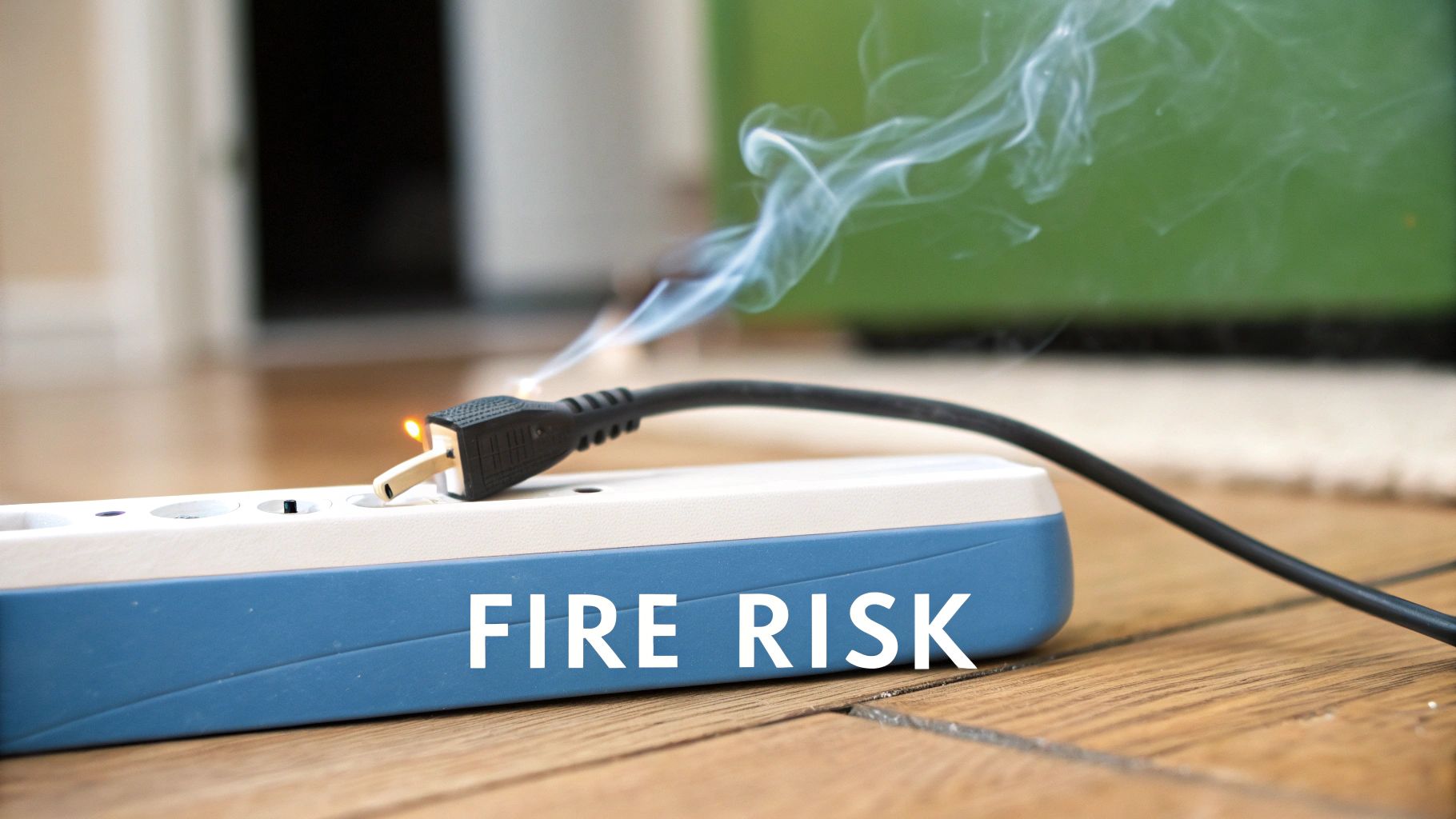
Let's be clear: if you find yourself in a genuine pinch where a temporary extension is the only option it absolutely must be a cable designed and certified for EV charging. A standard heavy-duty cord from the local DIY shop just won't cut it and comes with all the fire risks we’ve already covered.
Identifying a truly safe EV charger extension cord means looking past slick marketing and digging into the technical specifications that actually keep you safe. This knowledge is your first line of defence against the dangerously shoddy—and often counterfeit—products flooding online marketplaces. A few key details will help you tell a properly engineered safety tool from a fire waiting to happen.
Decoding Wire Gauge
The single most critical factor for a cable's safety is its wire gauge . This is simply a measure of how thick the copper wires are inside the cord. It works on a slightly counter-intuitive scale: a smaller number means a thicker, safer wire .
Why does this matter so much? A thicker wire has less electrical resistance which means less heat builds up during the long continuous hours of charging. For EV charging you should never even consider a cable with a gauge higher than 12 AWG . A 10 AWG cable is an even better choice, especially if you need a longer run or are using a higher-powered charger.
A cable's ability to handle heat and current safely comes directly from its wire thickness. Choosing a low-gauge number (like 10 AWG) is the single most important decision you can make when selecting a temporary EV extension cord.
Matching Amperage Ratings
Next up is the amperage (A) rating. This number tells you the maximum continuous current the cable can handle without melting down. Your EV charger also has an amperage rating which is the amount of power it's trying to push through to your car.
The rule here is simple and completely non-negotiable: the extension cable's amperage rating must be equal to or greater than your charger's output. Trying to use a 16A cable with a 32A charger is a guaranteed recipe for disaster. The cable will be completely overloaded and will overheat, creating an immediate fire hazard. Always check the ratings on both your charger and the cable to make sure the cable is up to the job.
Connectors and Weatherproofing
Here in the UK the standard connector for almost all modern EVs is the Type 2 plug. Your extension must have high-quality correctly fitted Type 2 connectors to ensure a secure safe connection to both your charger and your car. Cheaply made connectors can arc or melt under load, introducing yet another serious risk. It's vital to know your vehicle's requirements and you can learn more by checking out our guide on EV charging compatibility to get your setup right.
On top of that if there's any chance the cable will be used outdoors it must have a high Ingress Protection (IP) rating . This two-digit number shows how well it resists solids (like dust) and liquids. Look for a rating of at least IP55 which confirms it's protected from dust and can handle jets of water—making it safe to use in typical British rain.
Insist on Official Safety Marks
Finally and this is crucial, any safe EV charger extension cord must carry official safety certifications. In the UK you need to look for two specific marks:
- UKCA Mark: This shows the product conforms to all relevant health, safety and environmental protection standards for anything sold in Great Britain.
- CE Mark: This indicates it meets the health, safety and environmental protection standards for products sold within the European Economic Area.
These marks aren't just logos. They are your proof that the product has undergone rigorous independent testing and meets strict legal safety standards. A cable without these official marks has not been verified as safe and has no business being connected to your car.
Before you even think about plugging in it's worth taking a moment to check that any temporary cable you're considering meets all these non-negotiable safety criteria.
| Essential Specifications for a Safe EV Extension Cable |
| :--- | :--- | :--- |
| Technical Specification
| Minimum Requirement
| Why It Matters for Your Safety
|
| Wire Gauge
| 10 AWG
(American Wire Gauge) | A lower gauge number means a thicker wire. This reduces heat build-up during long charging sessions, significantly lowering fire risk. |
| Amperage Rating
| Must be equal to or higher than
your charger's output (e.g., 32A cable for a 32A charger). | Prevents the cable from being overloaded, which causes dangerous overheating and can lead to melting or fire. |
| Connectors
| Type 2
(UK standard), high-quality construction. | Ensures a secure, stable electrical connection. Poorly made plugs can arc, melt and damage your vehicle's charging port. |
| IP Rating (for outdoor use)
| IP55
or higher. | Guarantees the cable is protected against dust and can withstand rain, preventing short circuits and electrical shocks. |
| Safety Certifications
| Must display both UKCA
and CE
marks. | These marks are your only proof that the product has been independently tested and meets mandatory UK and EU safety standards. |
Remember, these aren't suggestions—they are the absolute minimum requirements for using an extension cord as a temporary, last-resort measure. Anything less is a gamble you don't want to take.
Warranty and Insurance Risks in the UK
The dangers of using the wrong extension cord for your EV charger go well beyond the immediate risk of a tripped fuse or a melted plug. The real pain often comes much later, hitting you with serious and completely unexpected financial consequences. When you use unapproved charging gear you’re often directly violating the terms set out by both your car manufacturer and your insurer.
This one decision can instantly void the warranty on both your electric vehicle and your expensive home charging unit. Imagine this: a fault develops in your car’s sensitive battery management system. If the manufacturer discovers a non-compliant extension cord was involved you could be left footing the entire bill for repairs, which can easily run into thousands of pounds.
Violating UK Safety Regulations
On top of the warranty issues makeshift charging setups frequently fall foul of established UK electrical safety regulations. The gold standard for electrical installations here is BS 7671 , often just called the IET Wiring Regulations. These rules exist for one reason: to make sure electrical systems are safe and fit for purpose.
Using an underrated or uncertified extension cord for a high-demand job like EV charging is a clear departure from these professional standards. It introduces risks that a properly installed hardwired charging point is specifically designed to prevent. In the eyes of an insurer this isn’t just a minor slip-up; it's a significant breach of expected safety practices.
In the awful event of a fire, your home insurance provider will investigate the cause. If they find that a non-compliant extension cord was the culprit, they could legally refuse to pay out your claim, turning a preventable accident into a financial catastrophe.
The Insurance Gamble
This is where the financial gamble really hits home. When you make an insurance claim for fire damage investigators will meticulously work out the origin and cause. If their report points to an overloaded uncertified extension cord your insurer may have solid grounds to argue that you failed to take reasonable care to prevent the loss.
This could lead to a denied claim, leaving you to cover the cost of rebuilding part of your home, replacing your car and any other damages entirely out of your own pocket. What might have seemed like a convenient shortcut suddenly becomes a decision with devastating financial repercussions.
Recognising these challenges the UK government is actively looking for ways to improve charging accessibility. The government has announced significant plans to shape the future of EV charging, launching a consultation on development rights for cross-pavement EV charging solutions. The aim is to make installing proper infrastructure easier and more accessible across England. You can discover more insights about the UK's EV infrastructure plans on electrive.com. These initiatives highlight just how important compliant safe solutions are over risky temporary fixes.
Smarter and Safer Charging Alternatives
Instead of hunting for a risky workaround with an EV charger extension cord , it’s far better to explore the reliable and genuinely safe solutions out there. The best long-term option is a professionally installed dedicated hardwired charging point right where you need it.
This approach completely removes any safety concerns, delivers faster and more efficient charging and often unlocks smart features like scheduling charges during off-peak hours to save you money. For anyone looking into dedicated home charging exploring programmes like the Xcel Energy Level 2 Charger Rebate can bring down the cost and encourage safer setups.
The Rise of Mobile Charging Services
For drivers who need flexibility or simply can't install a fixed point mobile EV charging services are a game-changing alternative. These services elegantly solve the core problem that leads people to consider a hazardous extension cord in the first place: they bring the charger directly to your vehicle. This convenience creates a substantial business opportunity for operators who can monetise on-demand power.
Whether you're parked at home, at the office or even in a public car park without any facilities a mobile unit can provide a rapid top-up. This service completely removes the need for any trailing cables, offering ultimate convenience and ensuring your vehicle is always ready to go.
Mobile EV charging flips the conventional model on its head. Instead of the driver seeking out a charger, the charger comes to the driver, offering a safe, on-demand solution that eliminates range anxiety and the temptation to use dangerous workarounds.
This flexibility isn’t just for individual drivers. Mobile charging is becoming an essential tool for businesses operating electric fleets. A mobile service can charge multiple vehicles at a depot overnight or provide emergency roadside power, keeping vehicles operational and productive without relying on fixed infrastructure.
A Growing Network of Options
The good news for UK drivers is that the charging landscape is constantly improving, making temporary fixes less necessary. The UK's electric vehicle charging infrastructure saw remarkable expansion, with the first half of one recent year alone seeing 8,670 new charge points added to the public network. This marked a substantial 27% year-on-year increase in public installations, bringing the total to 82,369 public devices across 40,479 locations. You can find more insights on the UK’s expanding network over at driving.org.
Monetising Mobile Power
The advantages of mobile charging extend beyond mere convenience; they also present a significant business opportunity. Operators of mobile charging units can build a profitable enterprise by addressing the gaps in the fixed charging network. This model opens up multiple revenue streams, making it an attractive venture in the growing EV market.
An operator can generate income in several ways:
- On-Demand Service Fees: Charging a premium for the convenience of bringing power directly to a customer's location.
- Fleet Service Contracts: Securing lucrative, long-term agreements with businesses to manage the charging needs of their entire electric fleet.
- Event Charging Services: Providing temporary charging facilities for festivals, exhibitions and corporate events.
- Partnership Revenue: Collaborating with hotels, retail parks and attractions to offer charging as a paid amenity for their customers.
With lower overheads compared to installing and maintaining fixed stations, a mobile charging business can flexibly target high-demand areas or so-called 'charging deserts'. This business model directly monetises the convenience and safety that customers need, transforming a common charging problem into a powerful revenue stream.
The Business Opportunity of Mobile Charging
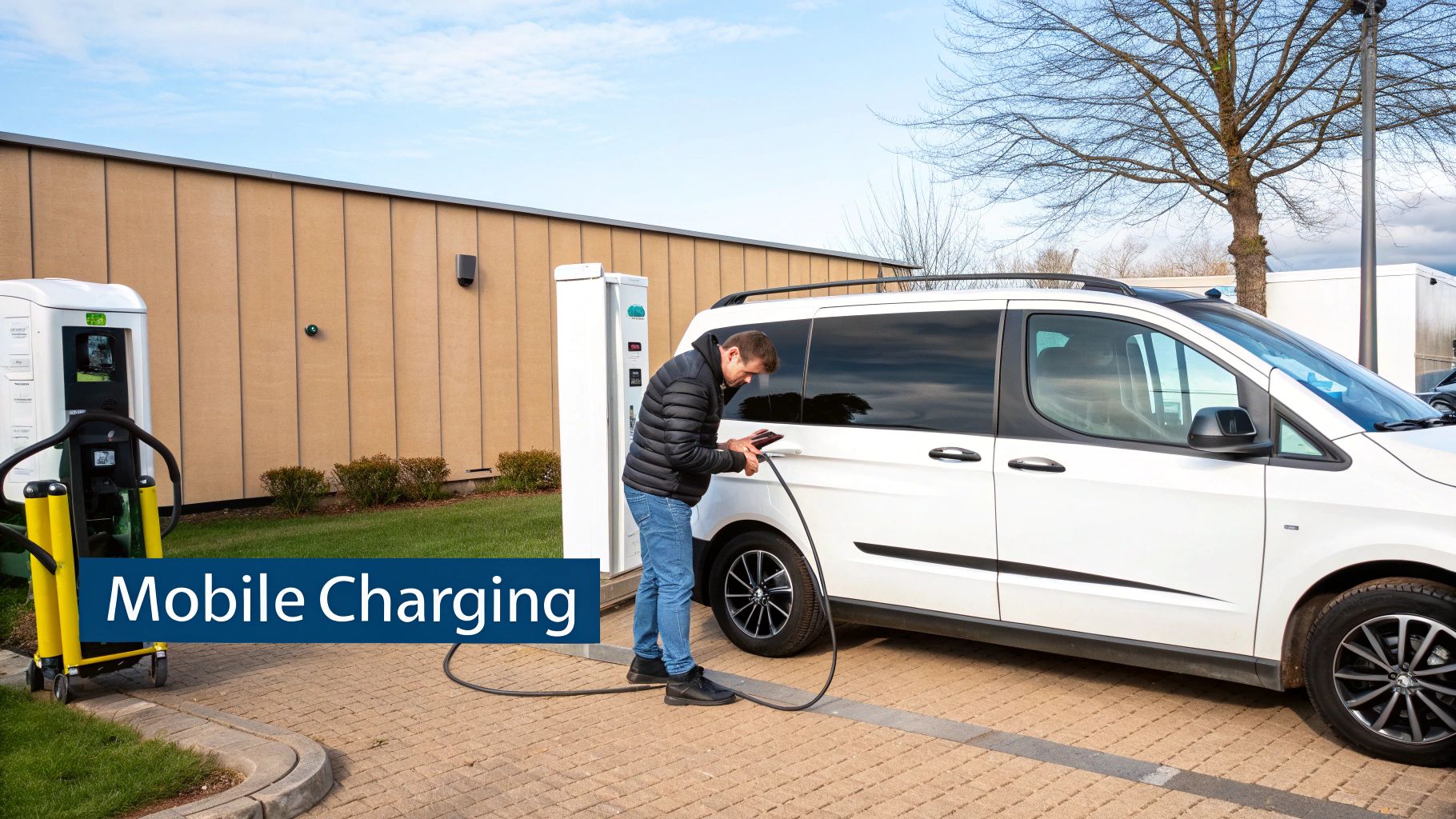
While providing safer alternatives to a dodgy ev charger extension cord is a win for drivers, it also opens up a massive business opportunity. Mobile EV charging isn't just a handy service; it's a solid business model that taps directly into the skyrocketing demand for flexible power in the UK's electric vehicle market. It turns a common driver headache into a serious revenue stream.
The financial upside for a mobile charging operator goes way beyond just reselling electricity. Unlike a fixed charging point a mobile service delivers power as a premium on-demand commodity. This means operators can charge more for the sheer convenience of bringing a rapid charge straight to a customer's stranded vehicle, their workplace or even their home.
Building Diverse Revenue Streams
A smart mobile charging business isn't a one-trick pony. It can pull in income from several different channels, creating a resilient operation that isn't dependent on a single type of customer. This approach lets an operator go where the demand is, whether that's helping individual drivers or servicing large commercial clients.
Here are some of the key income streams:
- On-Demand Convenience Fees: Charging a premium for emergency call-outs or scheduled top-ups at a customer's location.
- Corporate Fleet Contracts: Locking in profitable, long-term agreements with businesses running electric vans and cars, providing the juice they need to keep their fleets on the road.
- Business Partnerships: Teaming up with venues like hotels, retail parks and event organisers to offer charging as a paid-for amenity for their visitors.
This multi-faceted model turns a van kitted out with a mobile charger into a versatile high-earning asset.
Capitalising on Lower Overheads
One of the biggest financial perks of running a mobile charging operation is just how much lower the overheads are compared to installing and maintaining fixed charging stations. You can forget costly groundworks, complex planning permissions and long-term site rental agreements. A van-mounted unit is ready to go from day one.
This lean operational setup gives you incredible flexibility. An operator can pivot in real-time to target high-demand areas like busy city centres during the day or residential ‘charging deserts’ in the evenings. They can also provide critical support during power cuts or at big public events where temporary infrastructure is a must.
The core business proposition of mobile charging is monetising convenience. It solves the direct problem that leads drivers to consider unsafe solutions like a domestic extension cord and it does so profitably by delivering a safe professional service exactly when and where it's needed.
This business model is perfectly timed to grow right alongside the UK's expanding EV fleet. To get into the nitty-gritty of the operations our comprehensive UK mobile EV charging service guide offers a deeper dive into launching and running a successful service. The real opportunity is in providing a professional solution to a widespread and growing problem.
Common Questions About EV Extension Cords
It's natural for drivers to wonder about using an ev charger extension cord , especially when trying to find a practical fix for a tricky parking spot. Let's tackle some of the most common questions, with a sharp focus on UK safety rules and real-world best practices.
Can I Use Any Heavy-Duty Cord for My EV?
Absolutely not. A standard 'heavy-duty' extension cord you'd pick up from a DIY shop is completely unsuitable and frankly dangerous for the sustained high-power draw of EV charging.
You must use a cord that is specifically designed and certified for electric vehicles. This means it has the right wire thickness (gauge), the correct amperage rating and the proper Type 2 connector for your car. Before you even think about plugging it in look for an official UKCA or CE safety mark. No mark, no use.
Will an EV Extension Cord Reduce My Charging Speed?
Yes it almost certainly will. Even a correctly rated EV extension introduces extra resistance which causes a voltage drop and slows down your charging session.
The longer the cable the more significant that drop becomes and the less efficient your charge. It's another major reason why a professionally installed hardwired charge point is always the best option for both speed and safety.
Is It Legal to Run a Cable Across a Public Pavement in the UK?
Trailing a cable across a public pavement is a legal minefield and is generally not allowed. Under the Highways Act it can be classed as a public nuisance or a hazard, leaving you liable if someone trips over it and gets hurt.
While using a proper high-visibility cable protector can reduce the immediate risk it doesn't remove your legal responsibility. It's always wise to check your local council’s specific bylaws before you even consider it.
When fixed charging points are out of reach and extension cords just aren't a safe bet, ZAPME offers a smart, convenient alternative. Our mobile charging units bring rapid, reliable power directly to your vehicle, eliminating hazards and delivering on-demand energy wherever you are.
Discover our mobile solutions at https://www.zapme.biz.