

Portable Charger for Car: UK Guide to Power On the Go
When you hear the phrase ‘portable charger for car’, what comes to mind? For many it’s the small, slow ‘granny charger’ you keep in the boot for an overnight top-up but there’s another, far more powerful type: the commercial-grade mobile unit and this is where the real business opportunity lies. This guide is all about the latter, exploring how operators can turn this growing demand into a profitable venture.
The Business of Mobile Car Charging in the UK
In the UK the meaning of 'portable charger for car' is changing. It's no longer just a simple cable. Instead it increasingly describes a powerful, van-mounted battery system capable of delivering a rapid charge to a stranded electric vehicle. Think of it as the EV equivalent of a jerry can for petrol cars, only far more advanced—and profitable.
These commercial units aren't for personal use. They are business tools, designed to solve a critical problem in the UK’s expanding EV market: charging anxiety. For a savvy operator this anxiety represents a clear opportunity to generate significant income by providing a vital, on-demand service.
A Market Ready for Growth
The demand for flexible charging solutions is accelerating. As more drivers make the switch to electric the gaps in the fixed charging network become glaringly obvious, especially in dense urban areas or rural 'charge deserts'. This creates a perfect opening for mobile charging services.
The UK market for portable EV chargers was valued at roughly USD 58.22 million and is projected to grow at a compound annual growth rate of 21.8% from 2025 to 2033. This expansion is fuelled by the simple need for charging where fixed infrastructure is unavailable or just isn't practical. You can discover more about this market growth on Straits Research.
This surge points to a significant financial opportunity for entrepreneurs. Operators can build a business through several key avenues:
- Emergency Call-Out Fees: A premium charge for rescuing stranded drivers who’ve run out of battery.
- Per-kWh Energy Sales: Selling electricity at a profitable rate, just like a public charging station.
- Fleet Service Contracts: Securing recurring revenue by providing scheduled top-ups for commercial fleets.
By offering a mobile charging service you’re not just selling electricity. You’re selling convenience, peace of mind and a solution to one of the biggest hurdles in EV adoption. This positions an operator to build a sustainable and highly profitable business from the ground up.
Understanding Mobile Charger Performance
What really sets a commercial portable charger apart from a simple gadget you'd keep in your boot? It's all about the technical muscle. To see why they work as a business tool you need to look past the marketing fluff and get into the specs that drive real-world performance. These numbers aren’t just jargon; they directly translate into how fast you can help a customer and how many drivers you can get back on the road before your unit needs a recharge.
Putting these details into context is key. Picture a stranded driver on the side of a busy A-road. All they care about is getting moving again, quickly. A powerful mobile unit can be the difference between a minor hiccup and a totally ruined day—and it's that speed customers will happily pay for. This is where a professional-grade portable charger really earns its keep.
The infographic below paints a clear picture of the huge gap between personal chargers and the commercial units we're focused on.
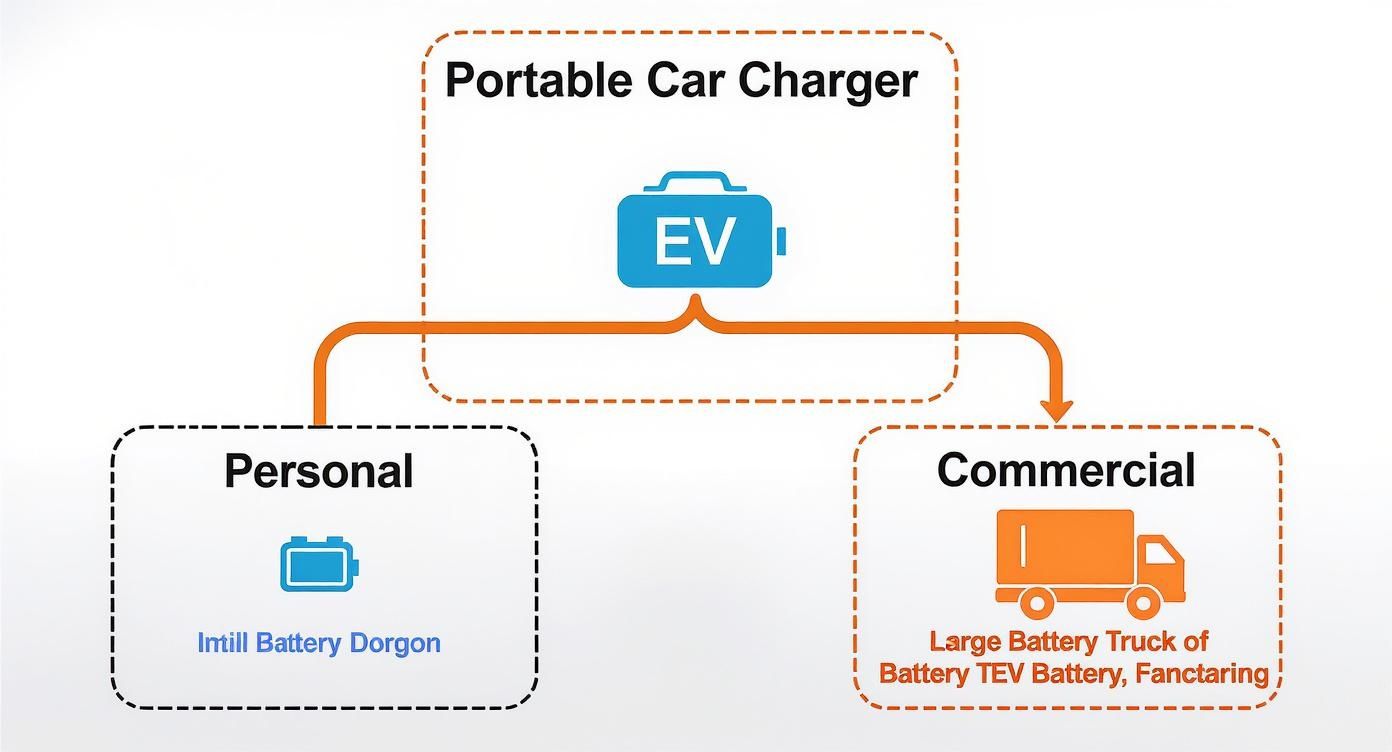
As you can see the difference in capability is massive. They’re built for completely different jobs.
Power Output: The Speed of the Rescue
A charger's power output, measured in kilowatts ( kW ), is the single biggest factor in how fast it can charge a vehicle. Your personal 'granny charger' might trickle power at a slow 3kW from a home socket but commercial mobile units are in a different league entirely.
These business-grade chargers usually start at 7kW and can push well beyond 50kW , firmly placing them in the rapid charging category. To give you an idea a 50kW unit can add about 100 miles of range to a typical family EV in just 30 minutes . That kind of performance is vital for services like roadside assistance or fleet top-ups where time is literally money.
Battery Capacity: The Unit’s Fuel Tank
If power output is the speed then battery capacity is the endurance. Measured in kilowatt-hours ( kWh ), this number tells you how much energy the mobile unit can store—think of it as the size of the fuel tank. A higher kWh rating means you can help more vehicles before the unit itself needs plugging in.
This is a critical metric for planning your day. A unit with a large capacity, say 60kWh or more, could rescue several stranded EVs or give significant top-ups to a small fleet before it needs to head back to base. If you want to dive deeper you can check out our guide on battery packs for car charging in the UK.
Connectors: Ensuring Universal Service
Finally a mobile charger is useless if it can't connect to the cars you need to serve. In the UK and Europe two main connector types dominate the EV market for anything faster than a trickle charge.
- Type 2 (AC): This is the standard for slower AC charging at home and public destinations. Most commercial mobile units include this for maximum compatibility.
- CCS (Combined Charging System): This is the go-to standard for DC rapid charging for almost all modern European EVs, including brands like Volkswagen, BMW, Audi and Ford. Any commercial unit serious about offering a rapid service must have a CCS connector.
By having both Type 2 and CCS connectors a mobile charging business can confidently serve nearly every electric vehicle on UK roads. For any operator looking to maximise their customer base this versatility isn't just nice to have—it's essential.
The Real Earnings of a Mobile Charging Business

Starting a mobile EV charging business is a real-world opportunity but the big question is always the same: how much can you actually make? To get a clear picture of the financial potential you need to look beyond a single transaction and see the multiple ways a savvy operator can build an income. Profitability isn't just about selling electricity; it's about a flexible, layered pricing model that works.
Think of it as a blend between a traditional breakdown service and a modern energy supplier. That hybrid approach is where the real money is. You’re not just providing power—you’re selling a fast, on-demand solution to a major headache and customers will happily pay a premium for that convenience.
Building Your Pricing Model
At its heart the revenue from a mobile charging business comes from two main charges. This structure keeps things simple for the customer but gives you the flexibility to handle everything from emergency rescues to scheduled top-ups. A well-thought-out model is the bedrock of a profitable operation.
First up you have the call-out fee . This is a fixed charge just for deploying your service to the customer's location, much like what a plumber or electrician charges for showing up. This fee covers your time, vehicle running costs and the initial effort to get to the stranded driver.
Secondly there’s the per-kWh energy charge . This is the cost for the actual electricity you transfer into the vehicle’s battery. You’d set this rate at a competitive but profitable margin over what it costs you to charge your mobile unit. This is where you directly monetise the energy itself.
A typical pricing structure might look something like this:
- Standard Call-Out Fee: £70 - £120 , depending on the location and time of day.
- Per-kWh Rate: £0.75 - £0.95 , which keeps you competitive with public rapid charging networks.
By combining these two charges you create a robust financial model. The call-out fee ensures every job is profitable from the start while the per-kWh rate scales your earnings based on the service delivered.
Calculating Your Daily and Weekly Income
To understand what this means in the real world let's crunch some numbers. Your potential income will vary a lot based on your operational area, marketing and any contracts you secure. Focusing on densely populated cities or busy motorway corridors will naturally bring more opportunities.
Imagine a single operator working in a major UK city like Manchester or Birmingham. A realistic target could be five service calls a day. Using the pricing model above the daily earnings can really stack up.
Example Daily Earnings Calculation
- Jobs Completed: 5
- Average Call-Out Fee: £95
- Average Energy Delivered per Job: 20 kWh
- Per-kWh Rate: £0.85
Let's break down the income from just one of those jobs:
- Call-out income: £95
- Energy income (20 kWh x £0.85): £17
- Total income per job: £112
With five jobs like that in a day your total daily revenue would be £560 . If you operate five days a week that’s a weekly turnover of £2,800 . Of course you have to deduct operational costs like van fuel and the electricity for your unit but the profit margins are clearly very healthy. If you want a deeper dive it's worth exploring the different ways you can profit with a portable charging station for electric cars.
Expanding Beyond Emergency Call-Outs
While emergency roadside assistance is a brilliant starting point the most successful mobile charging businesses diversify. Relying solely on stranded drivers can be unpredictable. The key to long-term stability and growth is building a base of recurring income.
This is where fleet contracts come into play. Many businesses running electric vans, like delivery companies or local councils, don't have the expensive depot infrastructure to charge their whole fleet overnight. A mobile charging service can fill this gap perfectly.
You could offer a subscription-based service, visiting a depot each evening or early morning to top up multiple vehicles. This creates a predictable and steady income stream that smooths out the highs and lows of on-demand emergency work. For instance a single contract to service a fleet of ten vans with scheduled weekly top-ups could generate thousands in reliable monthly revenue, forming the financial bedrock of your business.
Where Mobile Charging Makes the Most Impact
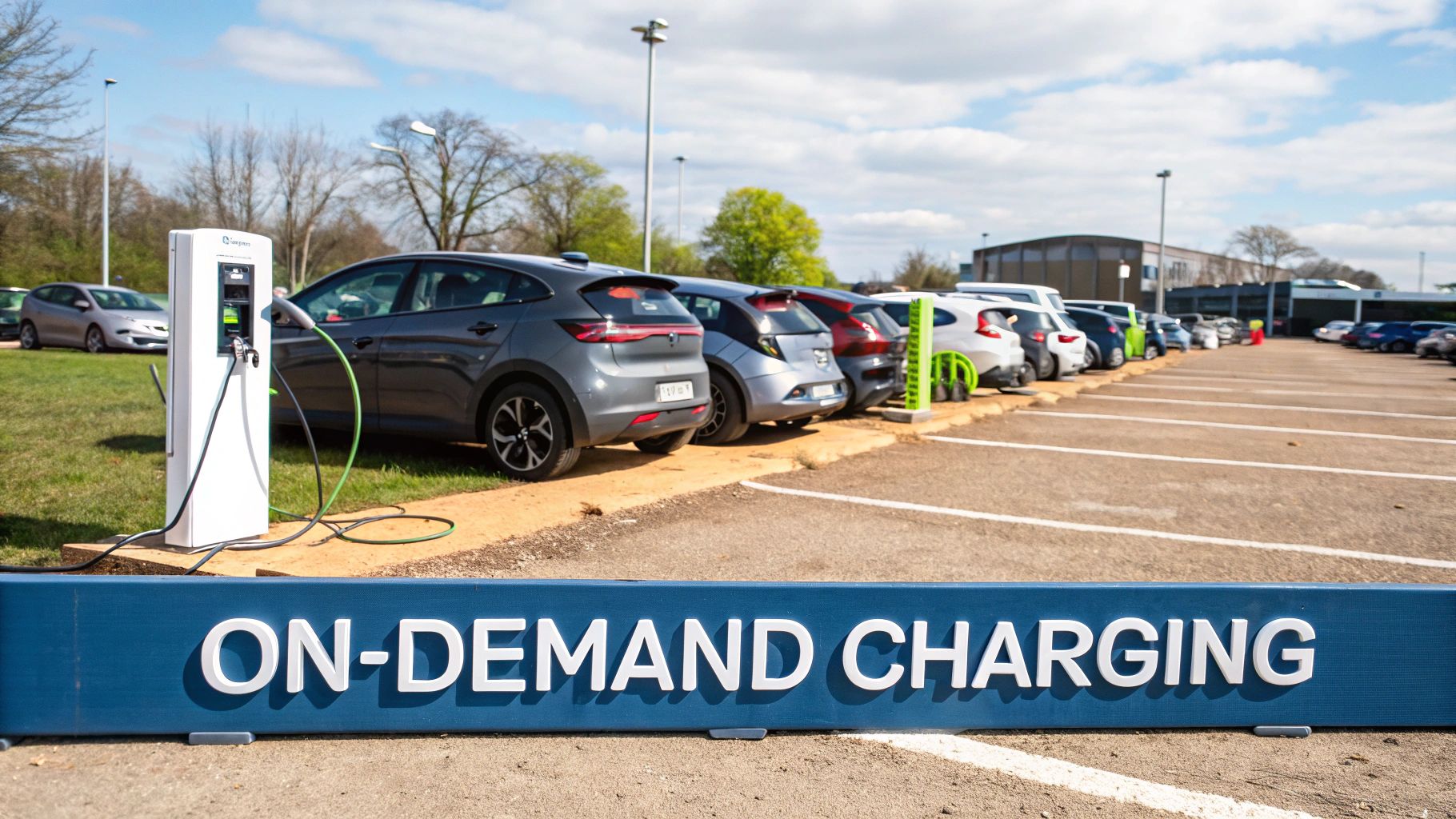
While the business case for mobile charging is strong its real value shines brightest when it solves genuine problems where fixed infrastructure simply can't. A commercial portable charger for car services isn't just a nice-to-have; it’s a critical tool that plugs the gaps in the UK’s expanding electric vehicle network. These units come into their own in situations where installing permanent chargers is impossible, impractical or just far too slow.
By deploying power exactly where it’s needed an operator can target specific, high-value scenarios. This strategic approach transforms a simple service into an indispensable one, unlocking serious earning potential by becoming the only workable solution for a growing number of EV drivers and businesses.
Emergency Roadside Rescue
The most obvious and immediate use is for emergency roadside assistance. Every EV driver has that nagging fear of a ‘bricked’ car—a completely flat battery that leaves them stranded. This is where a mobile charging service becomes the fourth emergency service for the electric age.
Instead of waiting for a flatbed lorry to haul the vehicle to the nearest, often distant, charging station a mobile unit can arrive on-scene and deliver enough power to get the driver moving again in minutes. It's a faster, less stressful and far more efficient solution. For the operator this is a premium service that justifies a premium price, typically combining a call-out fee with the cost of the energy delivered.
Strategic Fleet Management
Looking beyond individual rescues the commercial fleet sector offers a massive opportunity for stable, recurring revenue. Businesses all over the country, from local delivery firms to council service providers, are electrifying their fleets but they often hit a major roadblock: the huge cost and logistical headache of installing dozens of charge points at their depots.
A mobile charging service provides the perfect, scalable fix. An operator can win a contract to visit a depot overnight or during downtime, topping up each vehicle systematically. This 'depot charging as a service' model comes with several powerful benefits:
- No Upfront Infrastructure Cost: The fleet owner sidesteps a huge capital investment in chargers and costly grid upgrades.
- Flexibility: The service can easily scale up or down as the fleet expands, without needing more physical hardware.
- Operational Simplicity: The business can get on with its day job, leaving the complexities of EV charging to a specialist provider.
This creates a reliable income stream for the mobile charging operator, building a solid financial foundation for their business.
Powering Events and Bridging Gaps
Mobile power units are also perfect for temporary demand. Think of a big music festival, a country fair or a major sporting event held somewhere with no permanent EV chargers in sight. A mobile unit can be deployed for the event's duration, providing a vital service to attendees and generating income from a captive audience.
These units also act as crucial gap-fillers in our national infrastructure. They can bring charging to 'charge deserts'—rural areas or new housing developments where permanent installations haven’t yet caught up with demand, turning a common problem into a smart business opportunity.
The UK's charging network is growing but it’s heavily concentrated. By April 2025 the UK averaged 113 EV charging devices per 100,000 people. That figure, however, masks a huge regional imbalance, with London boasting 263 devices per 100,000. This urban focus leaves many areas underserved, creating clear market openings for mobile solutions. Discover more insights about these EV charging statistics on Uswitch.com.
Navigating the Costs of Mobile Charging
Getting a mobile charging business off the ground means getting real about the numbers from day one. To build something that lasts you need to look past the shiny price tag on the hardware and understand the full financial picture.
Without a doubt your biggest single spend will be the mobile charging unit itself. The price tag here can swing wildly depending on its power output (kW) and, more importantly, its battery capacity (kWh). A faster, higher-capacity unit will cost you more upfront but it also opens the door to higher earnings by letting you rescue more drivers or deliver quicker top-ups.
But that initial investment? That’s just the start of the story.
Budgeting for Ongoing Operations
Once you have your portable charger ready for car services the spending doesn't stop. The day-to-day operational costs are what will truly shape your profitability, so it’s vital to budget for them right from the outset.
Think of these recurring costs as the lifeblood of your business. They include essentials like commercial vehicle insurance, routine maintenance for both the van and the charger and the fuel or electricity needed to move your unit around.
Perhaps the most crucial ongoing cost is the electricity you use to keep your mobile unit charged and ready to go. This is your "cost of goods sold." To price your service competitively while still turning a profit you need a firm handle on energy pricing. If you need a refresher you can learn more about how to calculate a kilowatt-hour and get a better grip on your core expense.
Exploring Smarter Ownership Models
That big, upfront cost for a high-performance mobile charging unit can feel like a huge barrier for new entrepreneurs. This is where smarter, more flexible ownership models are changing the game, making it much easier to get started.
One of the most powerful alternatives is Energy-as-a-Service (EaaS) . The easiest way to think about it is like leasing a car instead of buying it. With an EaaS model you pay a regular fee to use the equipment, sidestepping that massive initial cash outlay.
EaaS completely flips the financial script for starting a mobile charging business. It turns a huge one-off purchase into a predictable, ongoing operational cost, tying your expenses directly to the revenue you’re bringing in.
This approach often bundles in maintenance, software updates and technical support, which simplifies your operations and cuts down your financial risk. It lets you focus on what really matters: finding customers and growing your business.
When you're weighing up the financials it’s also worth noting the UK government's 0% VAT on batteries , which can influence the total cost whether you decide to buy or lease.
Buying vs Leasing Your Mobile Charger
Here’s a straightforward comparison between purchasing a unit outright and using an Energy-as-a-Service (EaaS) model to help you decide which path is right for your business.
| Consideration | Direct Purchase | Energy-as-a-Service (EaaS) |
|---|---|---|
| Upfront Cost | High initial capital investment. | Low or no upfront cost. |
| Ownership | You own the asset outright. | You lease the equipment for a fixed term. |
| Maintenance | Your responsibility, an additional cost. | Often included in the monthly fee. |
| Technology | Risk of technology becoming outdated. | Includes options to upgrade to newer models. |
| Cash Flow | Major initial impact on cash flow. | Predictable monthly operational expense. |
| Flexibility | Less flexible; committed to one unit. | Scalable; add or change units as needed. |
Ultimately the choice between buying and leasing depends entirely on your business model, cash flow and long-term strategy. Both paths can lead to success but understanding the financial implications of each is the first step toward making the right decision.
Why Mobile Charging Is a Key Part of Our EV Future
Let’s be clear: commercial mobile charging is much more than a temporary fix or some niche, last-resort service. It’s a vital, permanent piece of the UK’s electric vehicle puzzle, offering a powerful and flexible solution that actually strengthens the fixed infrastructure we already have.
The core advantage here is simple: speed and agility. An operator with a mobile charging service can deliver power precisely where and when it's needed most. That could be a remote country lane, a brand-new housing estate yet to install chargers or a city centre where digging up the streets is a costly nightmare. This is a level of responsiveness that fixed networks just can't match.
Weaving a More Resilient Charging Network
Think of mobile power not as a rival to fixed charge points but as a crucial partner. It works alongside them to create a network that’s far more resilient and reliable for everyone. When a bank of fixed chargers goes down or a sudden surge in demand creates massive queues, mobile units can be deployed to ease the pressure.
This tag-team approach makes the entire EV ecosystem more robust. It provides a much-needed safety net for drivers and a powerful tool for businesses, finally helping to put that lingering issue of range anxiety to bed.
- Fills Infrastructure Gaps: It serves rural areas and new developments where fixed chargers are still a long way off.
- Provides Emergency Support: It offers a rapid lifeline for stranded drivers, which is a massive boost for driver confidence.
- Supports Temporary Demand: It delivers power for events, festivals and work sites without needing permanent, costly installations.
A Lasting Business Opportunity
The demand for this kind of flexibility isn't going anywhere. In fact as the number of EVs on UK roads continues to climb the need for on-demand, go-anywhere charging solutions will only grow. For an operator this represents a significant and sustainable business opportunity.
Mobile charging is the key that unlocks EV ownership for everyone, everywhere. It transforms the question from "Where can I find a charger?" to "How soon can a charger get to me?", making electric vehicles a practical choice for millions more people across the UK.
By stepping up to meet this growing demand mobile charging operators aren't just building a profitable business. They're playing an essential role in speeding up the UK’s switch to electric transport, ensuring no driver gets left behind.
Common Questions Answered
Stepping into the world of commercial mobile charging naturally brings up a few questions, especially if you're thinking about it as a business. We've put together answers to some of the most common queries to give you a clearer picture of what it takes to run a mobile EV charging service in the UK.
How Much Can I Realistically Make with a Mobile Charging Van?
Your earnings really depend on your business model and where you operate but most successful operators combine two charges. It’s common to set a call-out fee, somewhere between £50 to £100 , and then add a per-kWh rate on top – usually around 60p to 90p .
In a busy city a dedicated operator could easily handle five to eight jobs a day but for a more stable, predictable income the real goal is securing fleet contracts with a set monthly subscription per vehicle. Ultimately your success will come down to targeting high-density areas and building solid relationships with breakdown services and local businesses running EV fleets.
Is a Small Personal Granny Charger Good Enough for My Car?
A personal 'granny charger'—the kind you plug into a standard 3-pin socket—is painfully slow. At best you’re looking at adding just six to eight miles of range for every hour it's plugged in.
It’s perfectly fine for a rare overnight top-up at a friend's house or as a last-ditch emergency measure but it's just not a practical solution for daily use. More importantly it’s completely unsuitable for getting a stranded driver back on the road quickly, which is exactly what commercial mobile charging services are all about.
What Are the Main Safety Rules for Commercial Mobile Charging in the UK?
Running a commercial mobile charging service in the UK means you have to follow several key regulations to keep everyone safe. Your equipment must be CE marked and fully comply with strict electrical safety standards like BS 7671 .
It's also mandatory to have proper public liability insurance to protect both your business and your customers. On top of that there are crucial health and safety rules for working at the roadside, like wearing high-visibility clothing and using established procedures to keep yourself and other road users safe. We always recommend consulting with a qualified electrical safety professional before you start trading.
Ready to explore the financial potential of mobile EV charging for yourself? ZAPME offers flexible Energy-as-a-Service solutions that make it easier than ever to start your own business without the huge upfront cost. Learn more about our mobile charging units and funding options at https://www.zapme.biz.