

Electric Coaches Park Overnight. The Depot Can't Charge Them All.
So here is a problem that nobody put in the brochure when the first electric coaches turned up. A diesel coach comes back to the yard at half ten at night, the driver parks it, walks off, and in the morning it is full because somebody put a nozzle in it for four minutes. An electric coach comes back to the same yard, gets parked in the same spot, and now it needs somewhere between 400 and 500 kilowatt hours of energy putting back into it before the 6am departure. Multiply that by a yard full of coaches and you have a maths problem that the depot was never built to solve.
The overnight maths nobody actually did
Coach operators love the idea of going electric and you can see why. The running cost per mile drops, the local authority tenders increasingly want zero emission vehicles, and the school contract people are starting to ask the question too. So the operator buys two or three electric coaches, a Yutong or a BYD or whatever the order book allowed, and feels rather pleased. Then the coaches come home on the same night, all needing a near full charge, all needing it finished before the morning run, and the depot discovers it can charge one of them properly and the others are queuing.
Here is the thing about a coach. It is not a car. A car wants 40 or 60 kilowatt hours and the driver is asleep for nine hours so there is plenty of slack. A coach wants the best part of half a megawatt hour and it has a narrow window between the last job and the first job, often six or seven hours, sometimes less when the rota is tight. You cannot trickle that in. You need real power, delivered to several vehicles at once, every single night, and you need it whether the grid is having a good day or not.
The grid connection was sized for a wash bay and a kettle
Most coach depots are old. The yard, the inspection pit, the fuel island and the office have been there for thirty years and the electrical supply was specified back when the heaviest load was the bus wash and the tyre bay compressor. Now you walk in and ask the same connection to deliver enough overnight power to refill a fleet of electric coaches and it simply will not. The distribution network operator will happily quote you for an upgrade. They will also tell you the timeline runs into years and the bill runs into six figures before you have charged a single vehicle.
And even if you swallow that, the depot has a fundamental shape problem. Your demand is enormous for six hours overnight and almost nothing for the other eighteen. Paying to upgrade a grid connection to cover a peak that only exists while the yard is asleep is about the worst value capital you will ever spend. You are buying a motorway to use it one hour a day.
Put the energy in a battery, not a trench
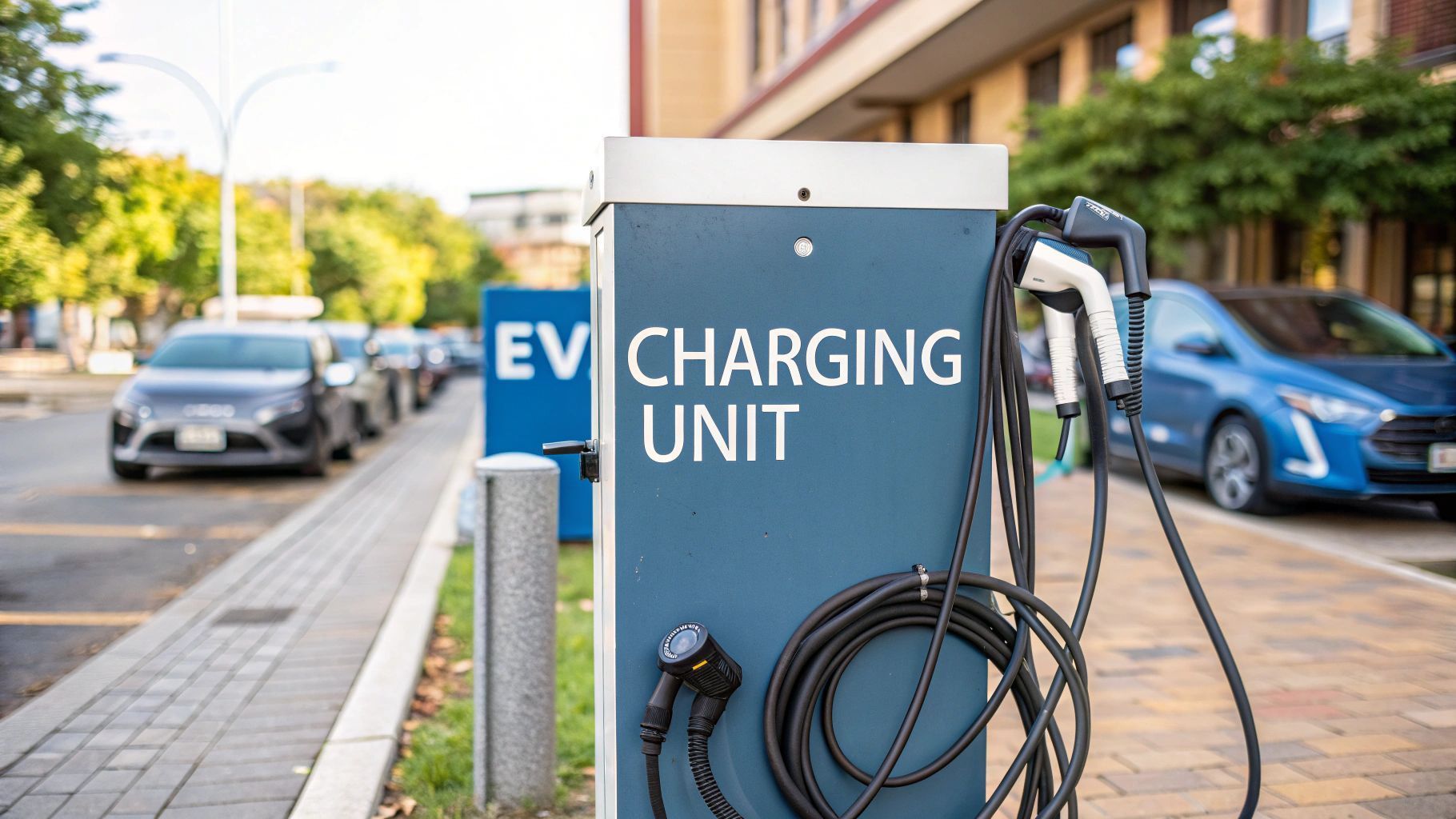
This is where FreeMe earns its place in the yard. It is a containerised charging hub built around a hybrid LTO and LFP battery, and it sits on the existing slab with no ground works and no DNO queue. Through the day, while the coaches are out earning, the unit quietly harvests energy off whatever grid connection the depot already has, plus the warehouse or canopy solar if there is any, and stores it. Then at night, when the fleet rolls back in, it dispatches that stored energy at a rate the thin grid connection could never sustain on its own. The battery does the heavy lifting. The grid just tops the battery up at its own gentle pace.
Because the chemistry leans on Toshiba SCiB cells with a genuine high C rate, the unit can push hard charging into several coaches at once rather than dribbling into one. The yard that could charge one coach properly can now clear the whole line before the morning. No motorway sized grid bill for a one hour a day peak. No two year wait. The hub scales as the electric fleet grows, so you add capacity in step with the order book rather than betting the farm on day one.
The away day problem, solved on wheels
Coaches do not stay in the yard, of course, and that is the bit operators forget. A tour coach on a five day Highlands run, a private hire sat at a wedding venue all afternoon, a school contract parked at a sports fixture, these vehicles are nowhere near the depot when the battery gets low. For those jobs a TitanMe van mounted rapid unit can bring a meaningful top up to where the coach actually is, and a MobileMe recovery charger turns a flat coach at the side of the A9 from a ruined day into a fifteen minute pause. Mobile power for vehicles that, by definition, move.
Lease it or let us run it
You can take the FreeMe hub on a lease and treat it as operating cost rather than capital, which keeps the balance sheet clean and matches the spend to the fleet as it grows. Or under our Energy as a Service model we fund, install and operate the kit and you simply pay for the energy your coaches use, with no upfront outlay at all. Two ways to electrify the yard, neither of which involves waiting for a grid that is not coming.
Get in touch: info@powerme.energy / +44 20 8050 8198 / www.powerme.energy