

Electric Car Charger Extension Cord: Essential Safety Guide
Let's get straight to the point. Using a standard household extension lead to charge your electric car is a terrible idea. Those orange or white cables you have in the shed are simply not designed for the immense and sustained power an EV demands and create a serious fire risk.
Why You Can't Just Use a Standard Extension Lead
When you plug in your car you're asking for a continuous high-power draw that can last for hours on end. A typical domestic extension cord isn't built for that kind of intense workload. It’s like trying to fill a swimming pool with a drinking straw; the system will quickly get overwhelmed.
This is precisely why official UK guidance prioritises professionally installed dedicated charging points.
The number one danger is overheating. The wires inside a regular extension lead are far too thin to handle the high amperage an EV requires. This causes them to heat up dangerously potentially melting the plastic insulation and creating a severe fire hazard. Beyond the immediate risk of fire you could also cause expensive damage to your car’s battery and sophisticated onboard electronics.
The Official UK Stance on EV Charger Extension Cords
Here in the UK the concept of an "electric car charger extension cord" isn't an officially recognised or regulated product. That's a deliberate choice.
The national strategy focuses on expanding a robust and safe network of fixed public and private charging points. The emphasis is on building reliable infrastructure not encouraging temporary non-compliant solutions that introduce unacceptable risks. You can learn more about the UK's EV charging infrastructure strategy and its focus on safety.
This is where professional mobile charging services come in. For drivers without easy access to a dedicated home charger—perhaps because they live in a flat or a terraced house without a driveway—a mobile charging service provides a crucial and safe alternative. These services use specialised compliant equipment that meets all safety standards delivering a reliable charge without any of the hazards.
Rather than searching for a risky shortcut like an electric car charger extension cord, the safer and smarter choice is always to use equipment designed for the job. This means either a fixed charge point or a professional mobile charging service.
Ultimately mobile charging offers more than just convenience; it offers peace of mind. By meeting this critical need in the market operators can build a profitable business providing a safe reliable and necessary service to a growing number of EV drivers.
The Hidden Dangers of Using the Wrong Cable
To really get your head around the risks of using a standard extension lead for your EV you need to understand what’s happening with the electricity. Picture it like water flowing through a hose. Your electric car needs a huge continuous torrent of power for hours on end—think of a fire hydrant blasting at full force. Plugging it in with a domestic extension lead is like trying to channel that hydrant through a flimsy garden hose. It just wasn't built for that kind of pressure and something's bound to give.
This mismatch between what your car needs and what the cable can handle is where the serious trouble starts. Before diving deeper getting a solid grip on understanding hazard identification is a great first step as it forms the bedrock of electrical safety.
The first and most immediate danger is overheating . The thin copper wires inside a regular lead simply can’t cope with the high current an EV demands creating too much electrical resistance. This resistance generates intense heat which can quickly melt the cable’s plastic insulation. Once that happens you’ve got exposed live wires creating a severe fire hazard that could destroy your car and damage your property.
The infographic below really drives home the key dangers of using the wrong gear for EV charging.
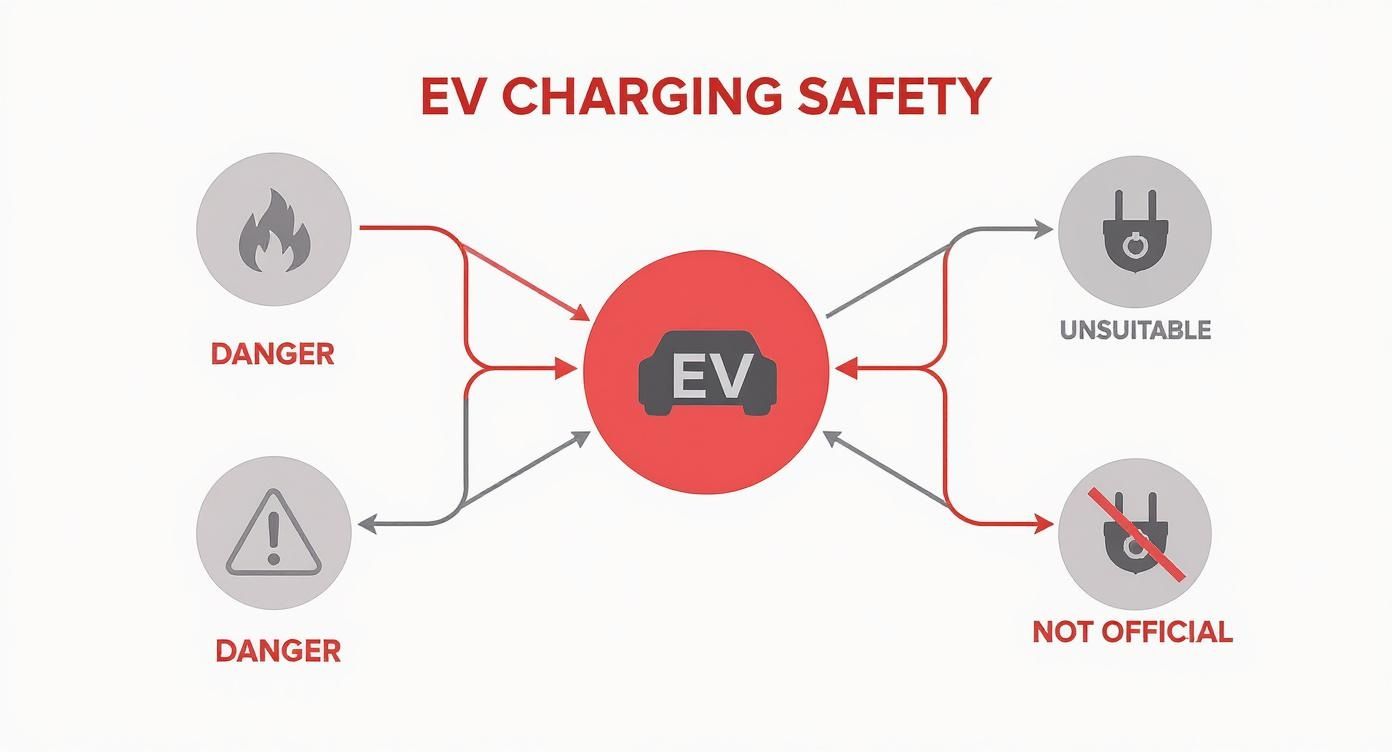
As this guide shows there’s a direct line between using unofficial unsuitable cords and a very real risk of fire.
Domestic Extension Lead vs EV-Rated Cable
It's easy to assume all cables are created equal but when it comes to charging an EV the differences are stark. A quick look at the specs reveals why a domestic lead is a recipe for disaster.
| Feature | Typical Domestic Extension Lead | Specialised EV Charging Cable |
|---|---|---|
| Current Rating (Amps) | 5-13A | 16-32A (or higher) |
| Wire Gauge | Thin (e.g., 1.25mm²) | Thick (e.g., 2.5mm² - 6mm²) |
| Thermal Monitoring | None | Integrated sensors at plug/connector |
| Smart Communication | None | Data pins for car-charger communication |
| Weatherproofing | Basic, not for outdoor use | High IP rating (e.g., IP55/IP67) |
| Durability | Designed for light indoor use | Heavy-duty, crush-proof materials |
This comparison makes it clear that we're talking about two completely different classes of equipment. One is for your kettle; the other is for your car.
Why a Purpose-Built Cable is Different
A proper purpose-built electric vehicle charging cable is engineered from the ground up to handle high power safely day in and day out. Its internal wires are much thicker—a larger 'gauge'—which drastically cuts down electrical resistance. To go back to our analogy this is like swapping that garden hose for a wide reinforced fire hose. It’s built to take the pressure without breaking a sweat which is exactly what prevents it from overheating.
But it’s not just about thicker wires. A genuine electric car charger extension cord alternative like the cable that came with your car or a high-quality aftermarket one is packed with crucial safety tech.
- Thermal Monitoring: Tiny sensors are constantly checking the temperature at the plug and the connector. If things get too hot the system automatically dials back the power or shuts down completely.
- Data Communication: These aren't just dumb cables. They allow your car to "talk" to the charge point ensuring the right charging speed is used and confirming a solid secure connection before any power flows.
- Durable Construction: They're built tough with robust weather-resistant materials designed to withstand being used outdoors driven over and generally knocked about.
Using an underrated domestic lead isn't a clever shortcut; it's a gamble with fire electrical shock and potentially catastrophic damage to your vehicle's sensitive battery management system. The engineering differences are not minor—they are the critical elements that ensure a safe and reliable charge every time. For safe flexible charging it is essential to use equipment designed for the task such as the Zapme super-light rapid charger cable available at https://www.zapme.biz/product/zapme-super-light-rapid-charger-cable.
Why Mobile Charging is the Smarter Alternative
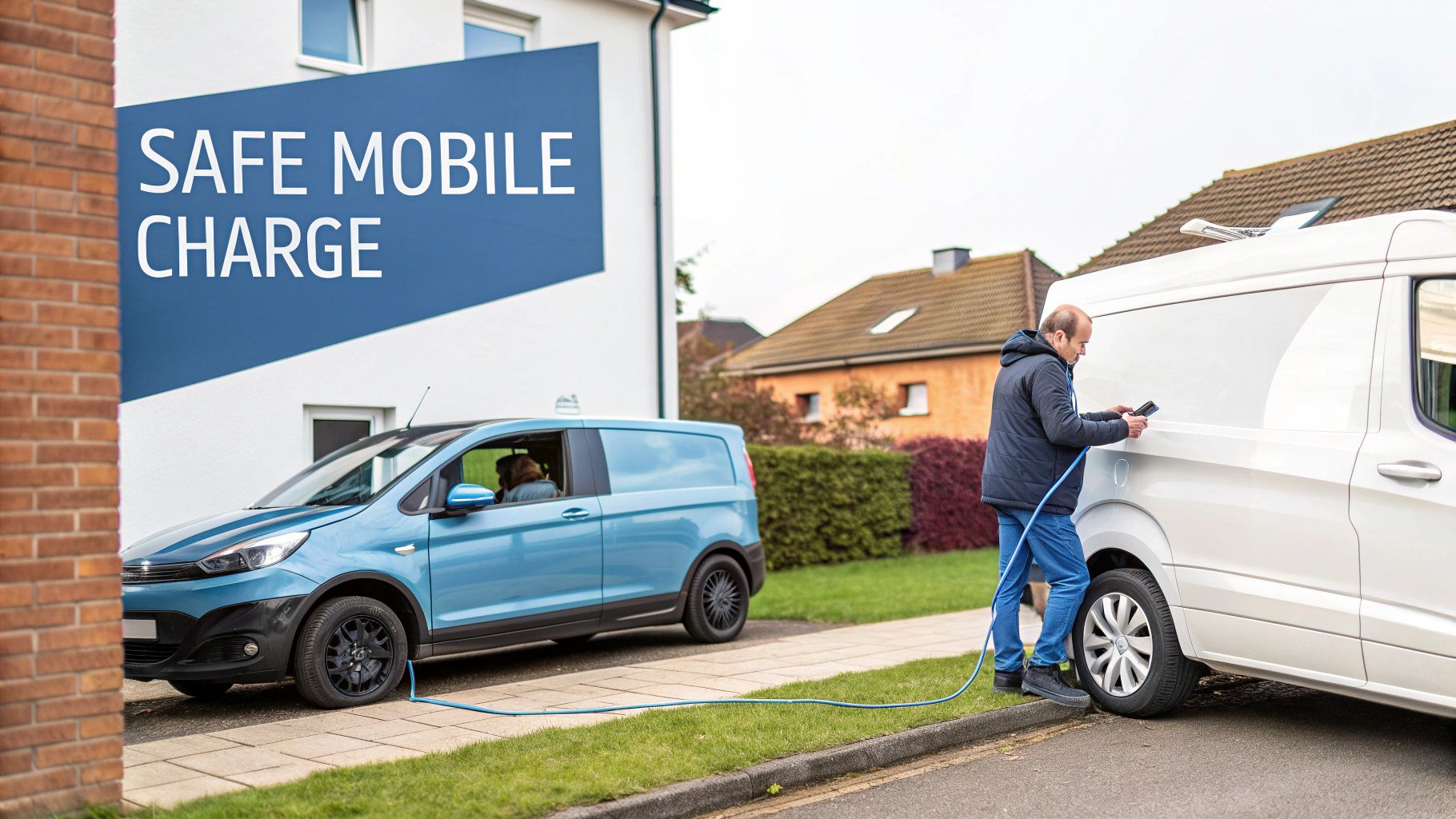
Given the obvious safety risks of using domestic cables for your EV the professional solution isn’t a better extension cord—it’s a completely different approach. I'm talking about mobile EV charging. Imagine a specialised vehicle kitted out with a powerful and safe battery unit pulling up right where your car is parked. It's the charging station that comes to you.
This immediately solves all the big safety headaches. You don't have risky cables trailing across public footpaths waiting for someone to trip over them. More importantly it completely removes the danger of overloading your home’s wiring because the power comes from a self-contained professionally managed source. For anyone living in a flat or a terraced house without a driveway mobile charging is a secure and genuinely stress-free solution.
The Financial Upside of Going Mobile
Beyond just being incredibly convenient for drivers mobile charging is also a compelling business opportunity. As the number of electric vehicles on UK roads keeps climbing the gaps in the fixed charging infrastructure are creating consistent predictable demand. An operator with a mobile charging service can tap straight into this growing market.
The business model itself is straightforward but incredibly effective with several ways to generate income.
- Per-kWh Energy Sales: This is your bread and butter. You charge a competitive rate for the energy delivered to the vehicle just like a public charging station.
- Call-Out Fees: A fixed fee for the sheer convenience of bringing the charge directly to the customer gives you a stable income base for every single job.
- Subscription Models: For commercial clients like business fleets or taxi services offering monthly subscription packages can create a predictable recurring revenue stream you can count on.
How Much Can an Operator Make?
The earning potential here is substantial. A single mobile charging van operating in a busy urban area can easily service multiple customers every day. When you combine a call-out charge with the energy sale the daily takings add up fast. For instance completing just 5–7 jobs per day can lead to a very healthy profit margin even after factoring in the cost of energy and running the van.
A well-run mobile charging service isn't just solving a logistical problem for EV drivers; it's a scalable and profitable business venture meeting a crucial market need. The demand is already here and is set to grow exponentially.
For anyone looking for a flexible charging option without compromising on safety exploring what's available in the UK is the logical next step. Our comprehensive UK guide to portable car chargers offers deeper insights into the solutions out there. As the industry matures operators who get established now will be perfectly positioned for long-term success in the booming EV support sector.
The Business Opportunity in Mobile EV Charging
Beyond just solving a problem for drivers mobile charging is a serious entrepreneurial opportunity. The number of electric vehicles on UK roads is surging but the fixed charging network still has plenty of gaps. This is where a mobile charging service steps in to meet a real and growing market need.
Anyone operating a mobile charging service is getting into a market with huge potential. It's a scalable business that can start small—think one specialised van—and grow into a fleet that covers an entire region.
The demand is already there. You’ve got drivers in flats without driveways office car parks with no infrastructure and of course the classic emergency roadside assistance calls. This isn't just a niche service; it's becoming an essential part of the EV ecosystem filling the void where fixed chargers can't reach.
How Mobile Charging Operators Make Money
The financial model for a mobile EV charging service is built on a few key revenue streams. When combined they create a profitable and surprisingly predictable business. Your income isn't tied to one single source but a healthy mix of service fees and energy sales which makes the whole venture more robust.
Operators usually structure their pricing to make sure every job is profitable.
- Call-Out Fees: This is your standard charge for bringing the service directly to the customer. It covers travel time and the sheer convenience of on-demand charging providing a solid revenue base for every single transaction.
- Per-kWh Energy Pricing: Just like a traditional petrol station operators charge for the amount of energy delivered. By setting a competitive price per kilowatt-hour you can build in a direct profit margin on the electricity you sell.
- Subscription Models: For B2B clients like business fleets or taxi companies monthly subscriptions are a fantastic source of recurring revenue. This model guarantees a steady income stream and helps you build valuable long-term client relationships.
Illustrating the Path to Profitability
The path to profitability for a new operator is clearer than you might think. Let's run some realistic numbers for a single van operating in an urban or suburban area. Even with conservative estimates the financial outlook is strong.
A single operator could realistically handle between five and eight charging jobs in a typical day. When you combine a call-out fee with the profit from energy sales each job adds a significant chunk to your daily earnings. Even after you account for the cost of electricity and vehicle running costs the profit margins hold up very well.
With the UK's EV market expected to grow exponentially the demand for flexible charging solutions will only increase. A mobile charging business is not just a service; it's a scalable investment in the future of transport.
For anyone looking to get in on this growing demand acquiring the right assets is the first step. Exploring options like equipment financing for startups can be a great way to secure the vehicles and charging units you need to get started.
As you dig deeper our guide on how to profit with a portable charging station for electric cars offers more detailed financial insights. This is a venture that meets a crucial market need and offers a genuinely profitable future-proof business opportunity.
Your Checklist for Safe and Compliant EV Charging
When it comes to charging your electric vehicle cutting corners is never an option. Forgoing a proper setup for a risky shortcut—like grabbing a domestic extension lead from the shed—isn’t just a bad idea; it’s a gamble with your car your home and your safety.
Making sure every charge is a safe one should be the number one priority. This simple checklist is your definitive guide to keeping things safe sound and fully compliant here in the UK.
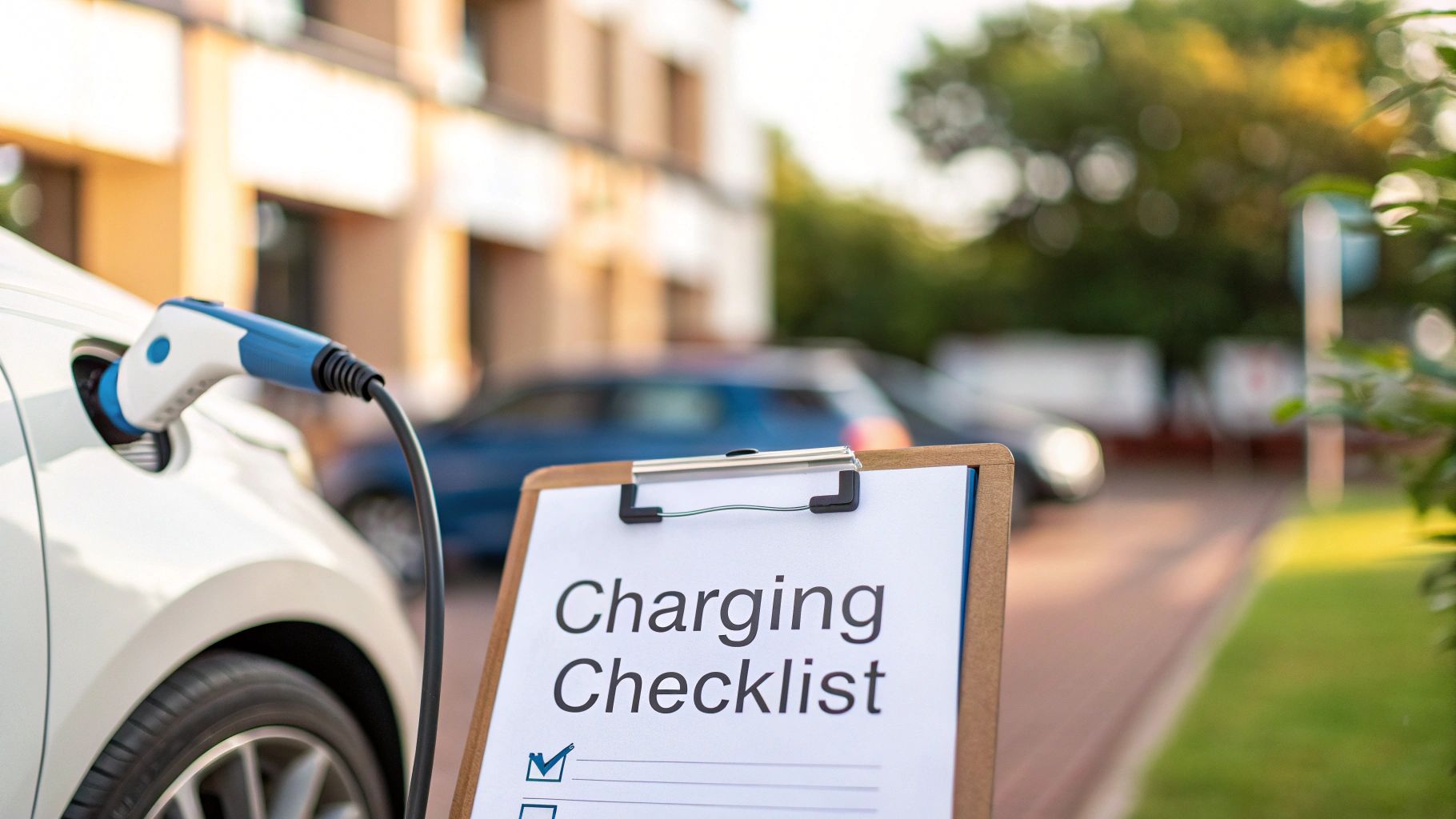
The golden rule is straightforward but absolutely critical: always use the manufacturer-supplied cable and connect it directly to a dedicated charge point. This gear is purpose-built for the high sustained power your car needs—something a standard cable was never designed to handle.
Your Essential Safety Do's
Getting into good habits isn’t just about following the rules; it's about peace of mind. Stick to these practices and you can plug in every time knowing you’re doing it right.
- Do get a dedicated EV charge point installed by a qualified electrician. A professional job ensures your circuit is up to the task and meets all UK safety standards.
- Do give your charging cable a quick once-over regularly. Look for frayed wires cracks or any other signs of wear and tear and replace it immediately if you spot damage.
- Do use a reputable mobile charging service if you're caught short without access to a fixed point. These services use compliant commercial-grade equipment built for the job.
- Do keep the connector and your car’s charging port clean and dry. A solid clean connection is key to preventing electrical faults.
Critical Safety Don'ts
Knowing what not to do is just as important. Some things might seem like a convenient fix in the moment but they bypass the very safety systems designed to protect you.
The most important "don't" is the one we’ve stressed throughout this guide: never ever use a standard domestic extension cord to charge your electric vehicle. The risk of overheating and fire is simply too high.
Beyond that cardinal sin here are a few other things to steer clear of.
- Don't use multi-socket adaptors or daisy-chain extension leads. This is a recipe for overloading the circuit.
- Don't leave cables trailing across public footpaths. They can become a serious trip hazard and are easily damaged by pedestrians or vehicles.
- Don't try to modify or repair a faulty charging cable yourself. EV equipment is complex and should only ever be handled by a professional.
At the end of the day safety and compliance go hand in hand. All electrical work in the UK including EV charger installations must follow BS 7671 (the IET Wiring Regulations). This ensures everything is installed safely by a competent person.
By opting for a professional installation and using reputable equipment you’re not just ticking a box—you’re making the smartest choice for your long-term safety.
Common Questions on EV Charging Safety
Navigating the world of EV charging often throws up a lot of questions especially around safety. With so much conflicting information floating around it’s easy to get confused. This section tackles the most common queries we hear giving you clear direct answers so you can charge with complete confidence.
We're here to bust some persistent myths and reinforce the critical safety messages from this guide. After all your safety and the health of your vehicle should always come first.
Is It Illegal to Use an Electric Car Charger Extension Cord in the UK?
This is a really common question and the answer isn't quite a simple yes or no. While there's no specific law that says "using a domestic extension cord for your EV is illegal" doing so is a serious breach of safety regulations. It's something that every official body from car manufacturers to fire safety services strongly advises against.
Think about the consequences. If an incident like a fire were to happen because you used an unsuitable cable it could easily invalidate your vehicle's warranty. Even worse it might void your home insurance policy leaving you to foot a massive bill.
Then there's the public liability issue. Trailing any cable across a public footpath creates a major trip hazard. If someone gets hurt you could be found liable for their injuries under the Highways Act 1980 . The only officially recommended and safe practice is to use a dedicated professionally installed charging point or a reputable mobile charging service.
How Can I Charge My EV If I Live in a Flat?
This is a real challenge for many people in flats apartments or terraced houses without private parking. But don't worry you still have several safe and effective options available—and a dangerous extension lead isn't one of them.
- Public Charging Network: The UK’s public charging infrastructure is growing every single day. Apps like Zap-Map are brilliant for finding nearby charge points whether they're in supermarket car parks or dedicated charging hubs.
- Workplace Charging Schemes: A lot of employers are now installing charge points for their staff. It’s always worth asking if your workplace offers this or if they're considering it for the future.
- Mobile Charging Services: For immediate hassle-free or emergency charging a professional mobile service is the perfect solution. It completely removes access issues by bringing a safe rapid charge right to your kerbside.
What Does a Mobile Charging Service Typically Cost?
The cost of a mobile charging service can vary but it's usually structured with a call-out fee plus a price per kilowatt-hour (kWh) of energy delivered. The rate per kWh is often very competitive with what you'd pay at a public rapid charger.
While it might seem pricier than charging at home you're paying for premium convenience safety and the absolute peace of mind that comes with having a charge delivered directly to you. It's an invaluable service when you’re stranded with a flat battery or simply don't have other safe charging options nearby.
A homemade electric car charger extension cord is a recipe for disaster. It lacks essential safety features like thermal monitoring proper earthing and the data communication needed to prevent electric shock fire and catastrophic damage to your vehicle.
Can I Make My Own Heavy-Duty EV Extension Cable?
Absolutely not. This is incredibly dangerous and should never ever be attempted. EV charging is a complex process involving high currents and sophisticated communication between the car and the charge point to manage safety protocols. A homemade cable would bypass all of these critical features.
Professionally manufactured equipment is designed and tested to rigorous standards for a very good reason. Always always rely on certified equipment from your vehicle's manufacturer or a trusted professional service.
For a safe reliable and convenient charging solution that comes directly to you trust the experts at ZAPME . Explore our mobile charging options and never worry about finding a charger again.