

Dual EV Charger A Smart Choice for UK Homes
A dual EV charger is essentially a single charging unit built to power up two electric vehicles at the same time. It’s a smart solution for homes or businesses with more than one EV, saving you the hassle, space and cost of installing two separate chargers.
The Rise of the Two-EV Household
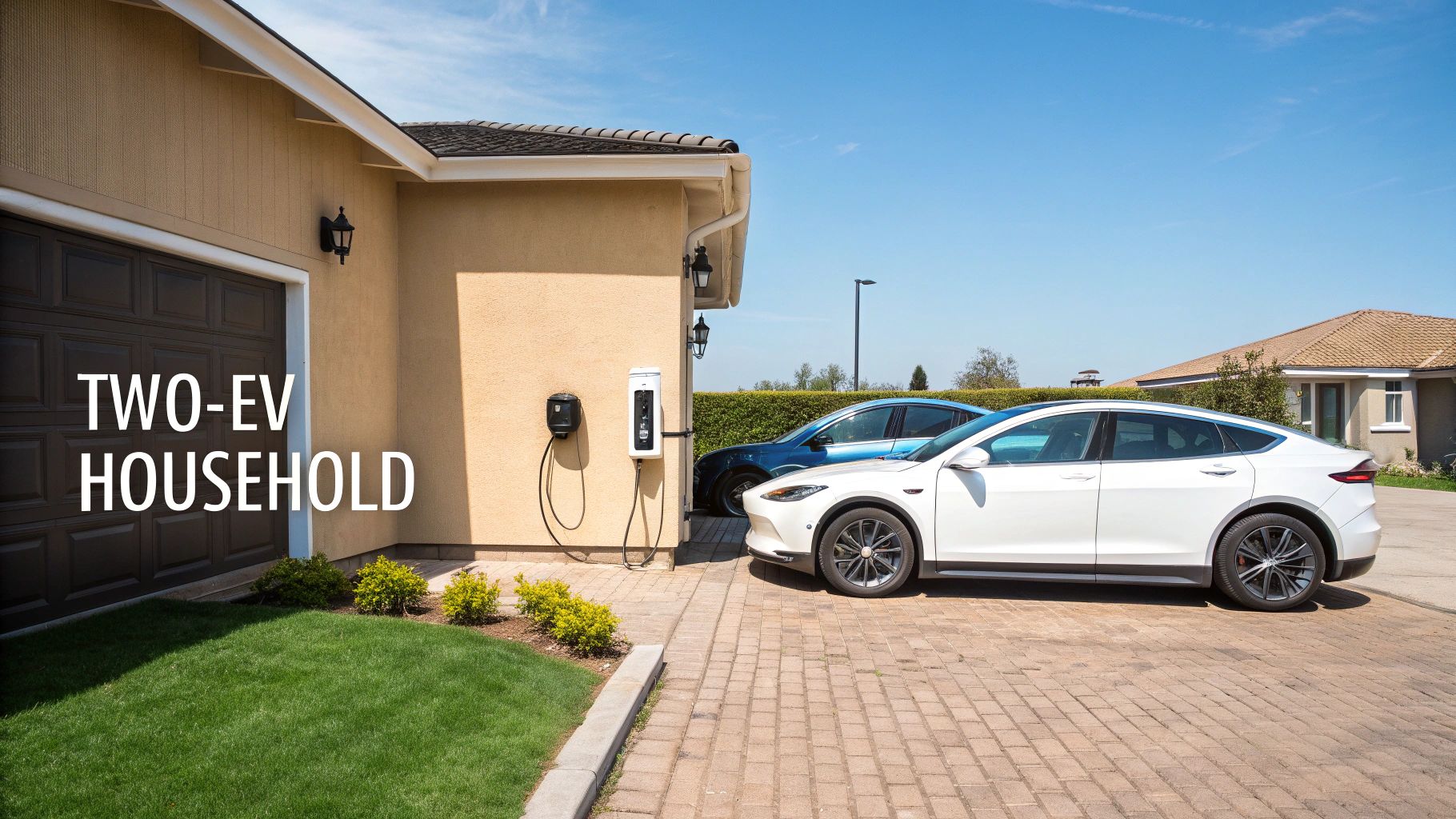
As electric vehicles become a familiar sight on UK roads, a new problem is cropping up for families and businesses alike. The dream of convenient home charging starts to fade when you have two cars and only one plug point. It’s a daily juggle of swapping cars around and scheduling charges just to make sure both are ready for the morning.
This is exactly where a dual EV charger shows its value. Instead of fitting two separate units—which costs more and takes up precious wall space—a dual charger gives you a sleek, efficient alternative. It streamlines everything from a single point of power.
Who Benefits from a Dual Charger?
The advantages of this setup are pretty clear for a range of users, all of whom share the same goal: efficient charging. For a multi-car family, it puts an end to the morning scramble for a full battery, ensuring both commuters can just get in and go.
Likewise, a small business can offer a great perk to employees without needing a massive car park overhaul. The benefits are straightforward:
- Convenience: Charge two vehicles overnight without the faff of moving cars or swapping cables.
- Cost Savings: One installation means you’re paying for less labour and hardware compared to fitting two separate chargers.
- Space Efficiency: A single, compact unit keeps your garage or driveway looking tidy and saves valuable space.
- Future-Proofing: By installing a dual charger now, you’re setting your property up for a fully electric future, ready to handle more EVs down the line.
A dual EV charger isn't just about adding another plug. It’s about putting in place a smarter, more integrated charging strategy that grows with the demands of EV ownership in the UK.
Ultimately, whether you're running a busy household or supporting your team's switch to electric, a dual EV charger is a practical, forward-thinking solution.
How a Dual EV Charger Manages Power
At first glance, a dual EV charger might seem like a complex piece of kit but the idea behind it is surprisingly straightforward. It’s a single physical unit with two charging cables or sockets, letting you plug in two vehicles at the same time. The real magic, however, isn’t just about having two outputs; it's about how the charger intelligently manages the electricity flowing to both cars.
The whole system is built around a concept called load balancing . Think of it like the water pressure in your home. If you turn on one tap, you get the full flow. But if you turn on a second tap, the pressure gets shared between them. A dual EV charger does something similar with electricity but with a smart brain managing the distribution.
This intelligent system is constantly talking to both vehicles. It checks their battery levels, their maximum charging capacity and the total power available from your electrical circuit. It then automatically divides the power to make sure both cars charge efficiently and safely, all without tripping your fuse box.
Understanding Power Ratings
When you're looking at dual chargers, you'll see power ratings like 7kW or 22kW . These numbers tell you the maximum power the charger can kick out. A bigger number means faster charging but it’s vital to understand what that means for you in the real world.
- 7kW Chargers: This is the standard for most home chargers here in the UK. It’s perfect for overnight charging and will typically add around 30 miles of range per hour .
- 22kW Chargers: These are much quicker but need a three-phase electrical supply, which is common for commercial properties but quite rare in UK homes. They can add roughly 90 miles of range per hour but only if your car can actually handle that much power.
A key thing to remember is that the charger will only ever deliver as much power as the car can safely take. Plugging a car with a 7kW onboard limit into a 22kW charger won’t make it charge any faster—it will just stick to its 7kW maximum.
Tethered vs Untethered Models
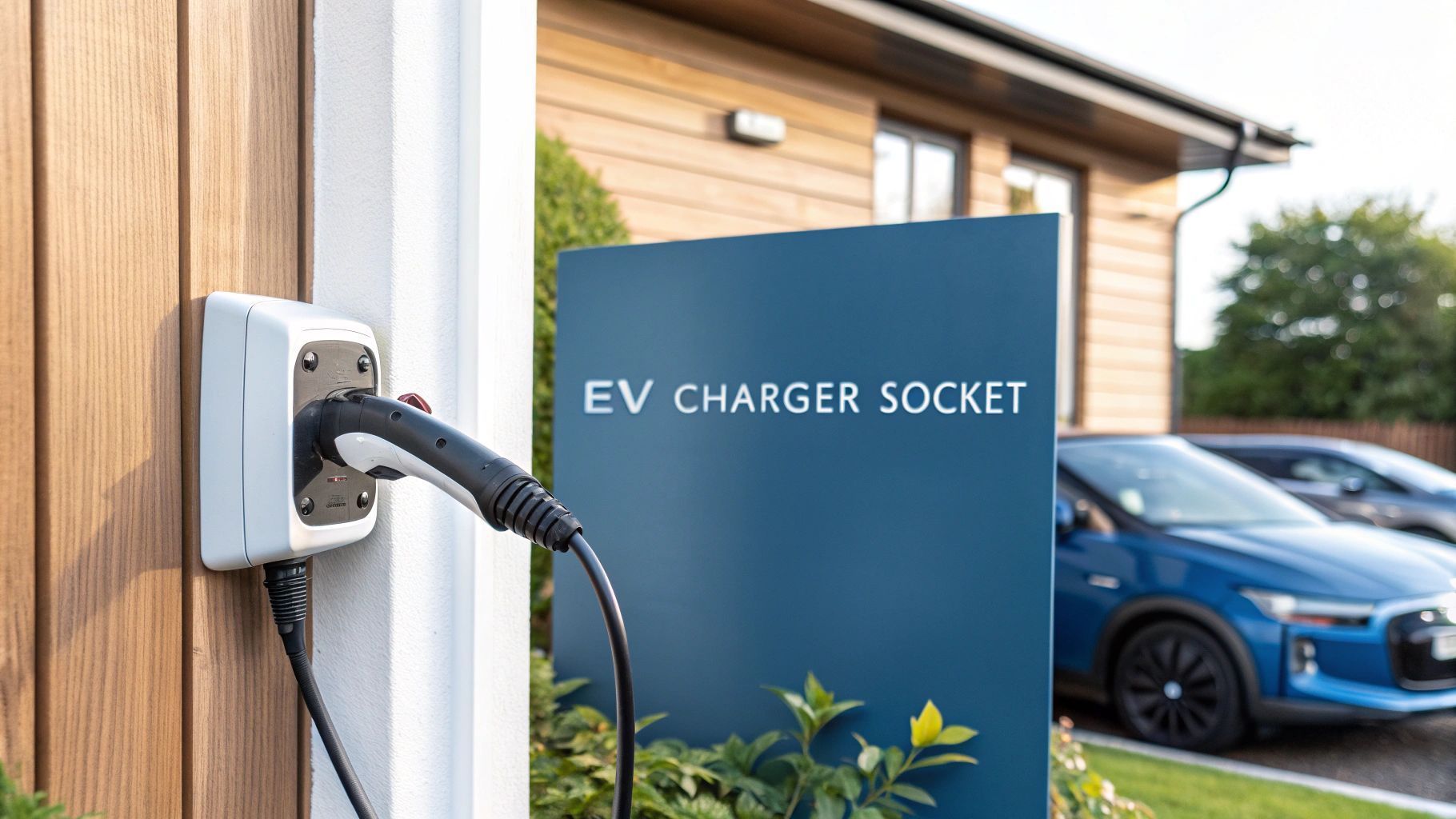
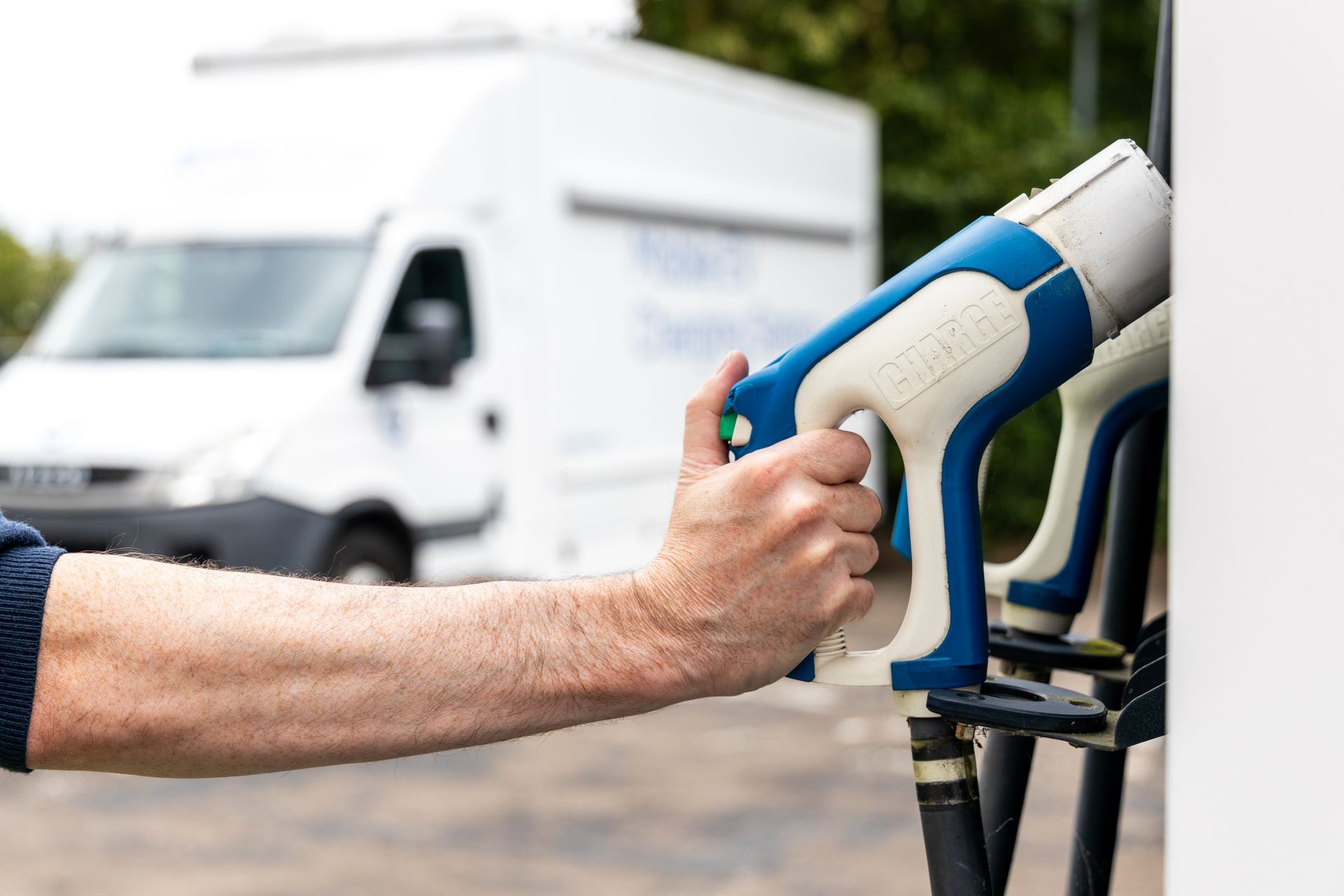
Another big decision is whether to go for a tethered or untethered model. A tethered charger has the charging cable permanently attached to the unit. It's incredibly convenient – just grab the cable and plug in. The only catch is you're stuck with that one connector type.
An untethered charger, on the other hand, just has a universal socket. You use the charging cable that came with your car. This gives you more flexibility if you have cars with different connectors or if you just prefer a cleaner look on your wall when it's not in use.
To really get to grips with how a dual charger works, it helps to understand the basics of how the charger, the car and your home’s electrical system all interact. You can find some general information on battery chargers that provides a good foundation. And to get a better handle on the units of electricity you’ll be paying for, our detailed guide explains how to calculate a kilowatt-hour.
Key Benefits of Installing One Dual Charger
Choosing a single dual EV charger over two separate units is a smart move, driven by some very practical, long-term advantages. The most obvious win is on the cost front. You're not just saving money on a second piece of hardware; you're also significantly trimming the installation bill.
Think about it: fitting one unit means one visit from an electrician and one set of cables running from your consumer unit. It's a simpler, quicker job, which translates directly to lower labour charges compared to the hassle of wiring up two individual chargers. Those savings can really add up, making a big difference to your total setup cost.
Maximising Your Space and Future-Proofing
Beyond the financial perks, a dual charger is just far more space-efficient. In a typical UK garage or on a driveway where every inch is precious, one sleek unit simply looks tidier and frees up valuable wall space. This minimal footprint keeps your property looking sharp while still packing the punch needed for two vehicles.
This single installation is also a brilliant way to future-proof your home or business. With more and more households going fully electric, having the infrastructure ready for a second EV is a savvy decision. You invest once and you're set for years to come, whether you're a family adding another car or a business looking to support your team.
The infographic below gives a great visual of how a dual charger intelligently juggles its power to meet different charging needs on the fly.
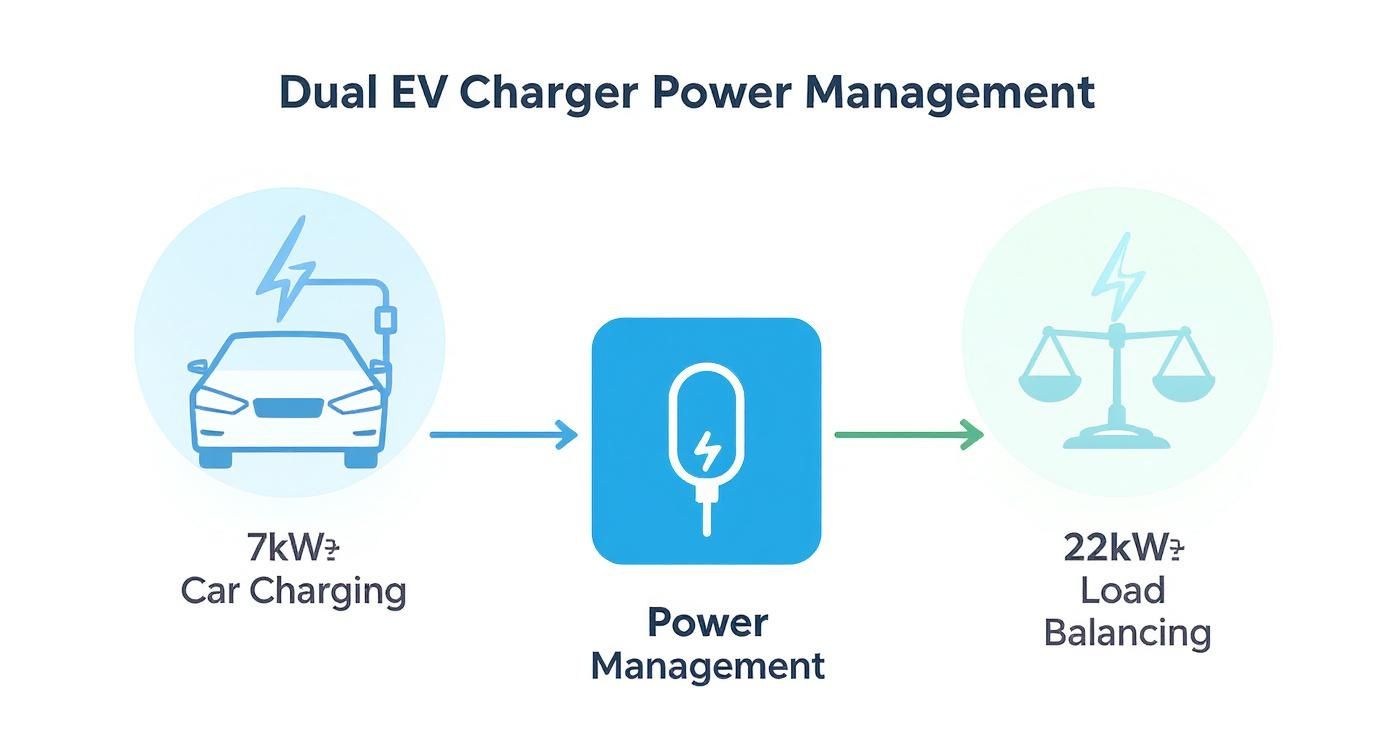
You can see how the charger adapts its output, using smart load balancing to handle whatever the connected vehicles demand.
Meeting Growing Public Demand
This shift towards dual charging isn't just happening on private driveways; it's a nationwide trend. Dual EV chargers have seen steady growth across the UK as part of the massive expansion of public charging infrastructure. By October 2025, the UK had 86,021 public electric vehicle charging devices and a good chunk of those are dual or multi-socket units, especially in cities where space is tight. You can find more insights on the UK's public charging evolution on evchargerpost.com.
A dual EV charger is more than just a convenient gadget. It is a strategic investment that saves money, conserves space and prepares your property for the inevitable increase in electric vehicle ownership.
Ultimately, installing one dual charger offers a much cleaner and more cost-effective way to get set up for multi-vehicle charging. For business owners, in particular, it’s a no-brainer—a practical way to double the charging availability in a limited car park from a single installation point. It’s an appealing choice for anyone thinking about long-term value and efficiency.
Who Really Needs a Dual Charger?
A dual EV charger isn't just a gadget; it's a practical fix for charging headaches in a bunch of different settings. Having the ability to power up two vehicles from a single unit makes it a smart move wherever space, cost and time are tight. But who stands to gain the most from this upgrade?
From busy family homes with two EVs in the driveway to businesses aiming for maximum efficiency, the real-world uses are clear. It’s not just about adding another plug—it’s about creating a charging setup that’s smoother, more reliable and simply makes life easier.
Multi-EV Households
For any UK household juggling two or more electric vehicles, the morning can feel like a game of musical chairs with charging cables. Figuring out who gets to charge overnight often ends in a last-minute scramble, with someone starting the day on a low battery. A dual EV charger puts an end to that daily friction.
Instead of taking turns, both cars can be plugged in and left to charge at the same time. This simple convenience means both vehicles are topped up and ready for the commute, school run or weekend getaway. It’s a straightforward way to manage your energy needs and get some peace of mind.
Businesses and Fleet Managers
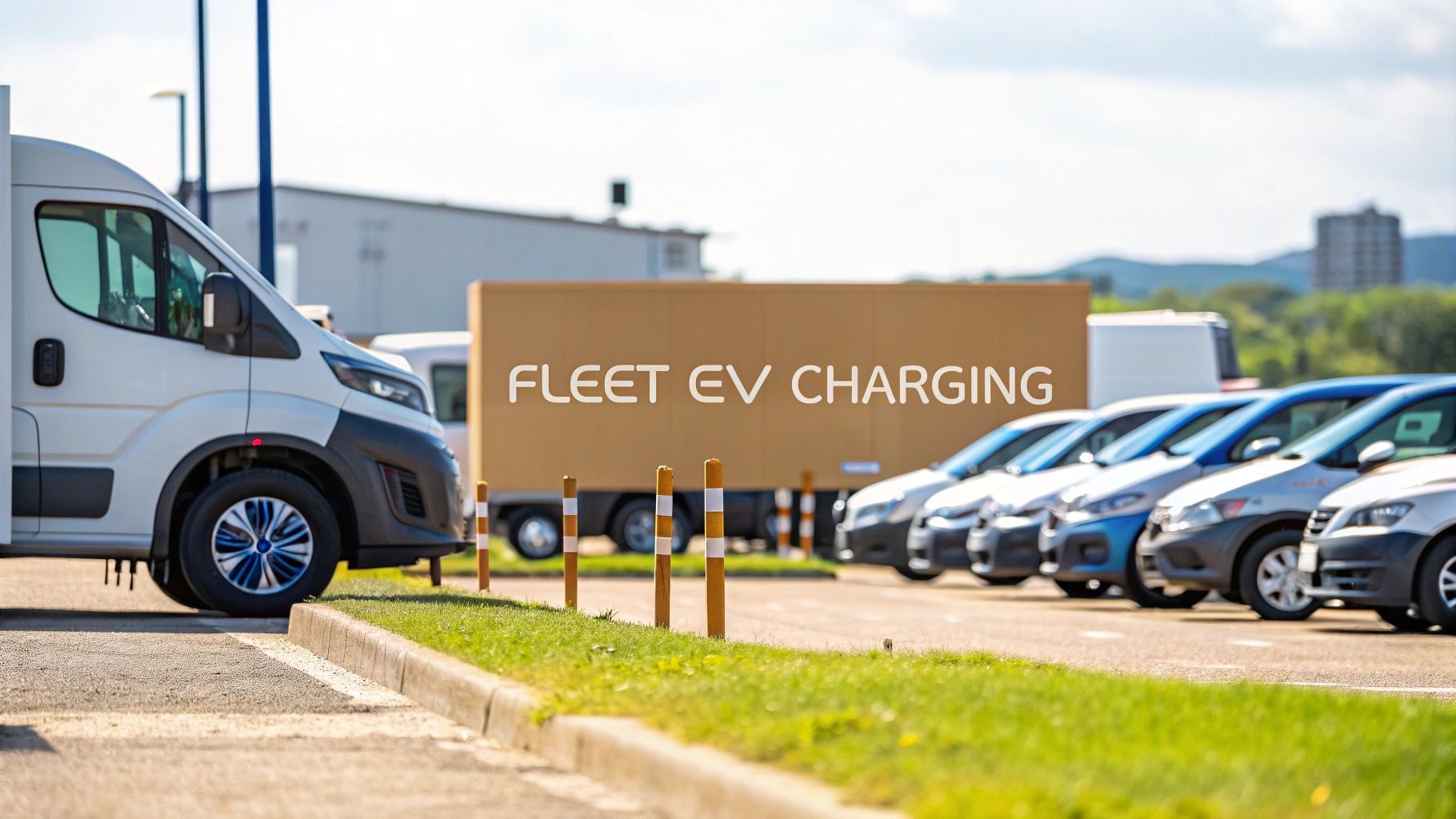
For any business running an electric fleet, downtime is lost revenue . A dual EV charger is a game-changer for operational efficiency. It lets fleet managers keep more vehicles charged and ready to go from fewer installation points, which is a massive advantage in depots or car parks where every inch of space counts.
This setup means vehicles returning to base can be put on charge immediately, getting them prepped for the next shift without delay. The knock-on effects are significant:
- Faster vehicle turnaround: More cars are ready to go at any given time.
- Fewer operational bottlenecks: No more queues for a single charging point.
- Happier drivers: A reliable and easy-to-use charging system is a real perk.
Public and Customer-Facing Locations
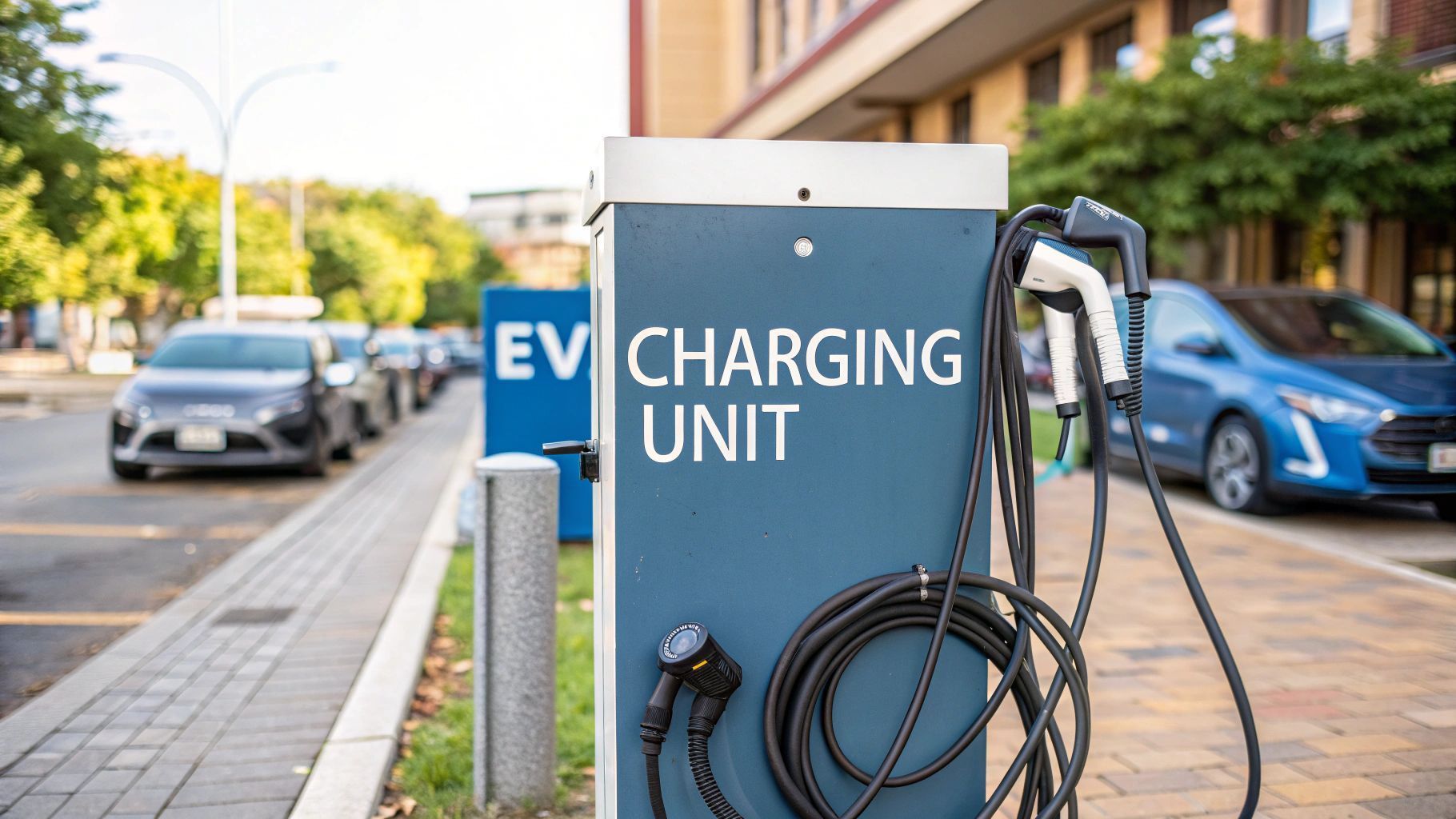
Retail parks, hotels, gyms and supermarkets can seriously level up their customer experience by offering decent EV charging. A dual EV charger is a perfect fit here, as it doubles charging availability from a single parking bay, making the most of those premium, high-traffic spots.
By providing reliable charging for two customers at once, businesses not only attract EV drivers but also give them a reason to stick around longer. This can lead directly to more footfall and sales, turning the charger into a valuable commercial asset.
The rise of dual chargers is a direct response to soaring EV ownership. As of July 2025, there were 84,218 public EV charging devices across the UK and a growing number of these are dual-socket units designed to meet demand in busy urban hubs. You can dive deeper into the numbers by checking out the latest UK EV charging statistics on uswitch.com.
To make it even clearer, this table breaks down the main advantages for each type of user.
Dual EV Charger Suitability by User
| User Type | Primary Benefit | Key Consideration |
|---|---|---|
| Multi-EV Households | Ends the "charging rota" and ensures both cars are ready for daily use. | Ensuring your home's electrical supply can handle simultaneous charging. |
| Fleet Managers | Reduces vehicle downtime and maximises the number of operational vehicles. | Integrating the system with fleet management software for scheduling and monitoring. |
| Public Locations | Doubles charging capacity in prime parking bays, attracting more customers. | Choosing a robust unit with simple payment and access options for the public. |
Ultimately, whether you're managing a family's transport needs or a commercial operation, a dual charger offers a more efficient and future-proof way to keep your EVs on the road.
What to Check Before You Install
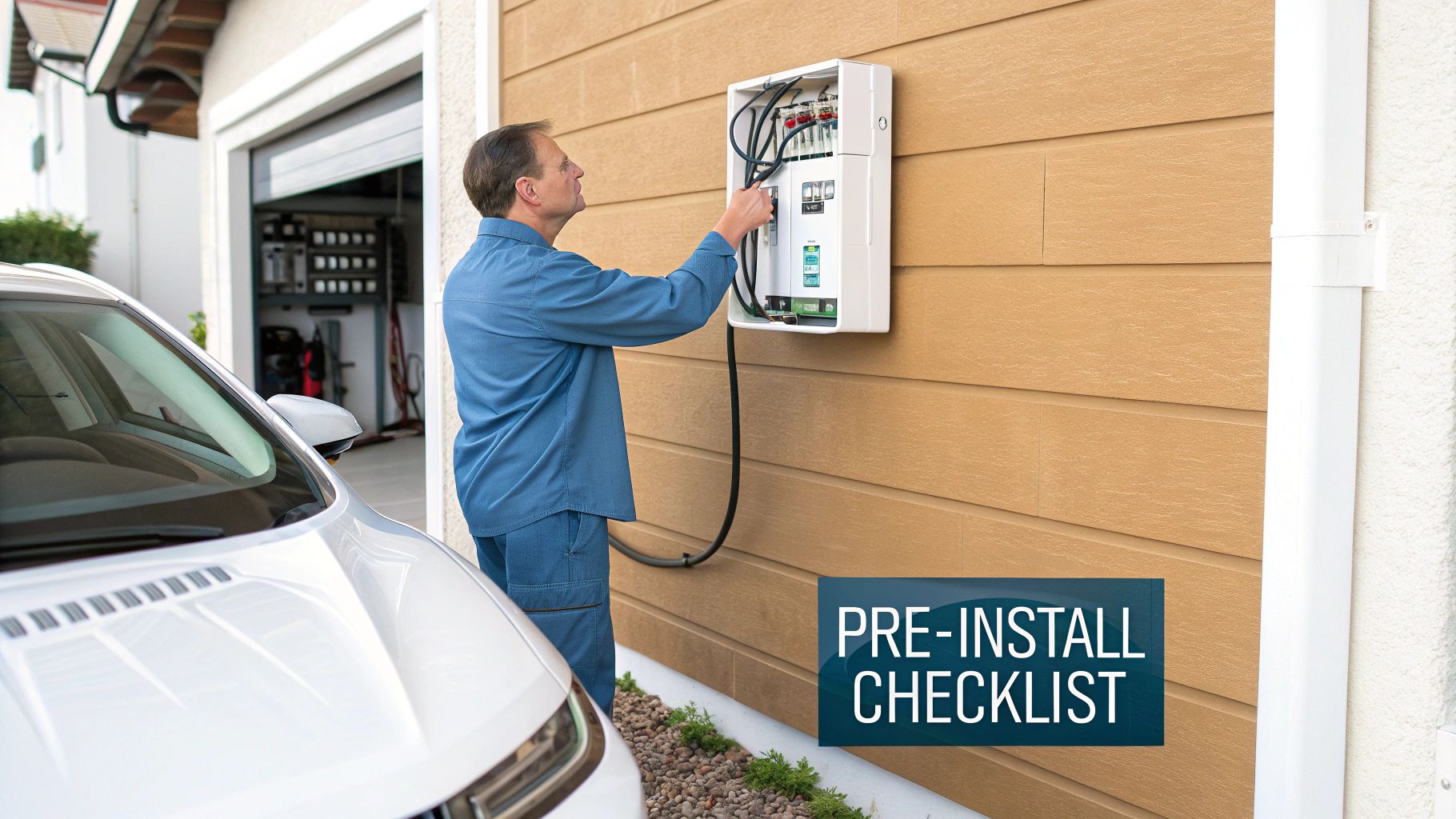
Before you jump into buying a dual EV charger, it's worth taking a moment to check the practicalities. Getting this powerful upgrade is exciting but rushing in without doing your homework first can lead to surprise costs and headaches down the line. Think of it as a pre-flight check to make sure your property is ready.
Your first and most important stop is your property’s electrical capacity. A dual EV charger, especially a punchy 22kW model, is a thirsty piece of kit that puts a serious load on your system. You’ll need to get a qualified electrician to have a look at your consumer unit (or fuse board) to make sure it can handle the extra demand safely.
Electrical Capacity and Location
The electrician will tell you whether your current setup is up to the job or if you’ll need an upgrade. Trying to run a high-amperage charger on a circuit that can't cope isn't just a safety risk; it means the unit won't work as it should. For a deeper dive into what’s involved, our complete guide on how to install an EV charger in the UK breaks it all down.
Next up, where are you going to put it? The ideal spot lets two cars park up and plug in easily, without leaving cables trailing across a walkway to trip someone up. The unit also has to be fitted somewhere that meets UK safety regulations, which means thinking about things like weather exposure and how close it is to other utilities.
Dual chargers have been a game-changer for the UK’s public charging network, helping it keep up with the explosion in EV ownership. By June 2025, the UK had 82,369 public charging devices across 40,479 locations and a huge number of these are dual or multi-socket units. They’re absolutely vital in busy urban centres where demand is sky-high.
Smart Features and Funding
Today's dual chargers do a lot more than just deliver power; they give you intelligent control over how you use it. When you're comparing models, keep an eye out for smart features like these:
- App-Based Scheduling: This is a big one. It lets you set charging times to take advantage of cheaper off-peak electricity tariffs, which can seriously slash your running costs.
- Energy Monitoring: Perfect for businesses, this feature tracks exactly how much electricity each vehicle is using, making it easy to manage expenses.
- Remote Control: Fancy starting or stopping a charge from your phone? Remote control gives you that convenience, wherever you are.
Finally, have a look at what grants might be available. While the schemes for home installations have changed, there are still various grants aimed at businesses, landlords and fleet operators. It's always worth checking the official government website for the latest on the EV Chargepoint Grant to see if you can get funding to make the installation more affordable.
Is a Dual EV Charger Your Next Smart Move?
Choosing the right charging setup is all about balancing what you need today with what you’ll want tomorrow. For many, a dual EV charger is a practical, forward-thinking choice that boils down to three big wins: serious cost savings, a tidier property and getting ready for an all-electric future.
If your UK household already runs two electric cars—or you’re planning on a second—the switch is a no-brainer. It instantly ends the daily headache of juggling charging schedules. For a business, it’s just as smart. Offering efficient charging for staff or customers with a dual unit doubles availability without the cost and hassle of installing multiple separate points. It's one investment that does the job of two.
Evaluating Your Charging Needs
The trick is to think about what you require right now and what you’ll likely need in a few years. A dual charger might feel like overkill if you only have one EV today but if another is on the horizon, installing one now saves you from repeating the entire process down the line. It sets your property up to handle growing demand without any fuss.
For many, the choice is clear. A dual EV charger is a highly practical investment for anyone looking to streamline their charging setup, save money on installation and embrace the future of electric transport.
While a fixed charger is a great permanent solution, it isn't the only way forward. For businesses that need flexible power on demand, mobile charging can be a powerful alternative. Operators can generate significant revenue by providing on-demand charging services where fixed infrastructure is lacking. For instance, an operator with a mobile charging unit could earn hundreds of pounds per day at events, business parks or in residential areas with limited charging access, simply by charging a premium for the convenience. Find out more about who needs to install EV chargers when you have Zapme.
Ultimately, the best decision comes from getting some expert advice. Your final step should always be a chat with a certified installer. They can properly assess your electrical system and give you recommendations tailored to your home or business, making sure you end up with the perfect setup.
Your Questions Answered
Stepping into the world of dual EV chargers can bring up a few questions, especially when you're upgrading your setup. We've gathered some of the most common queries to give you clear, straightforward answers.
Can You Really Charge Two Cars at Full Speed at the Same Time?
This is a question we hear all the time and the answer comes down to smart technology called load balancing . A dual EV charger is built to share the total available power between the two vehicles plugged in; it doesn't try to pull the maximum power for both cars at once from a standard home connection.
Think of it like this: if you have a 7kW dual charger and connect two cars, the system will cleverly split the power, giving each vehicle around 3.5kW . It constantly monitors how each car is charging and adjusts the power flow to make sure both are topped up safely and efficiently, all without tripping your home's main fuse.
Is a Dual EV Charger More Complicated to Install?
You might be surprised to hear that it isn't. The installation for a dual charger is remarkably similar to a single unit. It’s still just one physical device to fit on the wall, with a single armoured cable running from your consumer unit (or fuse board).
That said, while the job itself isn't much bigger, it's definitely not a DIY task. UK regulations are very clear that any EV charger installation must be done by a qualified and certified electrician. They have the expertise to fit it safely and ensure everything complies with the latest standards.
Are There Still Government Grants for Dual EV Chargers in the UK?
Yes, but they’ve become more targeted. The grant that was available to most private homeowners has ended but there are still valuable schemes out there for specific groups that can help bring down the cost of installing a dual EV charger.
Here are the key schemes to look into:
- The EV Chargepoint Grant for Landlords: This gives a helping hand to landlords and property managers who want to add charging points at residential or commercial properties.
- The Workplace Charging Scheme (WCS): This is a voucher-based system designed to help businesses, charities and public sector organisations cover the upfront costs of installing charge points for their staff and fleets.
Funding levels and who is eligible can change, so it's always a good idea to check the official UK government website for the very latest information before you buy. That way, you'll know exactly what support is available.
For businesses that need ultimate flexibility without being tied to fixed installations, ZAPME offers innovative mobile EV charging solutions. Find out how our on-demand power can support your fleet and operational needs at https://www.zapme.biz.